Rowley Regis was once a small ancient village on the top of a very high hill in South Staffordshire, now apparently absorbed seamlessly into the enveloping sprawl of the West Midlands conurbation. It has had several other municipal designations due to local Government re-organisations in the last century but historically, it was in South Staffordshire – that’s what it said on my school exercise books, so I know! The other, less defined, description is that Rowley Regis was in the Black Country, that nebulous area of industry, metal working, mining, quarrying and sheer hard work and where probably most of the population lived in what we would think of now as poverty.
Although Rowley Regis is an interesting name – yes, at one time, part of it was held by the King, possibly as a hunting area – by the 19th century the village was of no particular note, the main industries in and around the village were quarrying the very hard ‘Rowley Rag’ stone from various quarries on the hill, mining and, above all, in Rowley itself, wrought iron hand nail making which was mostly carried out in small ‘shops’ at the back of houses, and involved whole families, men, women and children from about the age of six. The metal working skills of the local people and the plentiful supplies of the raw materials required meant that, as the Industrial Revolution progressed, hand nail and chain making fell into history and the metal working and myriad engineering skills gave rise to a vast landscape of heavy and polluting industry, canals, mines and brickworks.
I am a Rowley girl. I was born there, grew up and was educated there and lived there until I was eighteen. My parents and grandparents and many of their forebears were born there too and lived out their lives there. My mother told me stories about the area when I was growing up and I started my family history research in about 1980 and have been working on it ever since.
Retired after many years working in local government and now living in the West Country, during the first Covid lockdown I volunteered to transcribe parish registers at home from photographs for FreeREG, for Rowley Regis and Blackheath, the adjacent town which developed just down the road in the mid 19th Century, after the glebe lands belonging to the church were sold. This has included many non-conformist registers, which have never been available online previously.
Very quickly I noticed that many of the family names in those registers were familiar although some of them I had not come across for many years, since I moved away. But I had been at chapel and school with those names! It was also apparent from the Registers and from the various censuses that as well as the village proper, there were a number of hamlets on the edge of the village, some large and some small, and that families tended to stay within these hamlets or nearby. They appear to have been close-knit little communities. Some of my ancestors seemed to stay very firmly in and around the hamlets of Perry’s Lake, Gadds Green, Tipperty Green and Turners Hill, for example, which were very small settlements barely a mile from the village church and within half a mile of each other. Gradually as houses were built, new roads opened, transport improved and development spread, addresses were formalised and house numbers began to appear in the parish registers and censuses and some of the old names for the hamlets became less significant.
There is a very active and informative Facebook page about memories of Rowley Regis and Blackheath, the town. Recently one person asked on the Facebook page where Gadds Green was, because Poppy memorials were being placed near the homes of soldiers who had died in the First World War and one of those had come from Gadds Green. She couldn’t find any trace of it. I had not realised until then that quarrying had completely obliterated Gadds Green, and much of Perry’s Lake and the houses on Turners Hill – they only existed now on old maps. Other local names do not even appear on maps – there has been some animated discussion on the page about where a place called ‘Finger-i-the-hole’ was and most local people will never have heard of Blackberry Town, which appears in the 1841 census.
Several of the local historians using the page were able to tell the Facebook enquirer where Gadds Green had been. But it seemed a pity to me that these lost hamlets, home to so many of my ancestors, have not only physically disappeared but are now fading from local memory. Through my various researches and transcribing church registers and censuses, I have gathered quite a lot of information about these places, who lived there, who ran the shops and pubs, where people worked and worshipped and who married who.
So I have decided to create a One Place Study about these ‘lost hamlets’. My study will initially concentrate on the hamlets of Perry’s Lake, Gadd’s Green and Turner’s Hill, clustered to the North-West of the village centre, during the period 1840-1921, principally looking initially at censuses, parish registers , maps and what these can tell us about the people who lived there. The people and their lives are my main interest. I suspect that it will expand both geographically and in time period as particular information and resources come to hand. I will be posting to this site with new posts about aspects of life in the hamlets and will add maps and photographs in due course.
And by starting a One Place Study, now registered with the Society for One Place Studies, hopefully information about the people who lived in those ‘lost hamlets’ and in due course, others of the ‘lost hamlets’ can be preserved in a study where other people can also contribute their knowledge to it and where later researchers can find the answer to ‘Where was Gadd’s Green?’.
The next family listed in the 1841 Census is that of William “Robinson“, it appears or that is how it is transcribed on Ancestry – bear with me. Start with the basics – this is the family group as shown on the page, as transcribed on Ancestry and on FindMyPast:
Christian name
Surname
Age
Occupation
Whether born in County
Whether born in Scotland, Ireland or Foreign Parts
William
Robinson
40
Coal miner
Yes
Jane
Robinson
35
Yes
Jeremiah
Robinson
15
Yes
Edward
Robinson
15
Yes
James
Robinson
13
Yes
Rodah
Robinson
11
Yes
Martha
Robinson
9
Yes
Ruth
Robinson
4
Yes
Elizabeth
Robinson
1
Yes
Fairly straightforward then, local family, all born in Staffordshire. But, unusually, there were very few clues about them on Ancestry which is usually quick to offer hints to other records for names I am researching. Although the hints can be spurious, sometimes they can offer useful links. But I did notice, looking on Ancestry at the details of the census entry for William, that someone had suggested that his name was actually Rollason or Rollinson. Ah, yes, now that is definitely a local name that I recognise.
Copyright: The National Archives. HO 107/997/3.
You can see how the name is difficult to read in this small extract from the 1841 Census (the other children are on the next page) and this looks more like Rolinson than Rollason but for someone not familiar with local names, Robinson was a reasonable guess. But from comparisons with other records over several decades of his life, I have settled on using Rollason for him as the name this man was recorded as most!
Copyright Mike Fenton.
Taken in the 1970s, this view is looking over Alsop’s Quarry and the houses and farms can be seen at the top of Turner’s Hill, though it is impossible to know whether these were exactly the same houses as in 1841. But it does show how far up the hill they were from the village of Rowley and may be a clue to why the families there often used Dudley, rather than Rowley as their church.
The Robinsons/Rollasons
Out of interest, I checked the Rowley Regis Parish Registers to see how long Rollasons had been in the parish and there was a first clue to potential difficulties to come. Searching the digital copy of the Parish Registers is a good way of finding when people were in the parish, how many there were, whether there were any other place links, how the spelling varied. And the spelling certainly varied for this family, perhaps more than I have come across with any other Rowley family. There were 31 entries for names beginning with Rol in volume 2 of the digital version of the parish Registers, none in Volume 1 – the first was in 1729 when Enoch Rolason married Mary Davis at St Giles. There were 15 entries for Rolasons in this volume with this spelling, another 10 with Roliston, 2 with Rolison, 1 Roleson, 1 Rolinson, 1 Rollison, and 1 Rolloson. And that was just for the period 1685-1772. And these related to several different branches of the family, several of them described as ‘of Dudley’ and one from Oldbury. The next tranch of the Registers – from 1771-1812- has another 96 entries, more than half spelled as Rolinson but again with another six different spellings in various parts of the register.
One of these entries was for the unfortunate Alice, wife of Stephen Rolinson. The Burial entry relates that in September 1802 she “was murdered by a red-hot nailrod being thrust into her side while at work in a nail shop. It penetrated through her stomach and a considerable way into the right lobe of her liver. She died about an hour after. The Coroner’s Inquest sat on the body from 12 o’clock at midday until 6 the next morning when a verdict was returned Wilful Murder. The murderer was acquitted at the following Stafford Assizes.” Poor Alice, what a terrible death but what a long time the jury took to return their verdict – presumably both parties were known to the jurors – oh, to have been able to hear their deliberations! I cannot find any other record of the inquest or the trial so we do not know who the other party was.
The final tranch of the Parish Registers (1813-1849), Volume 4, has 60 entries for names beginning with Rol, 46 spelled Rollason, 7 with Rolinson, 2 with Rolason, 2 with Rolaston, 2 with Rollinson, and 1 with Rollaston. So it appears that expecting any sort of consistency in identifying this name is a forlorn hope. And, for once, I do not appear to have any connection with this 1841 branch of the family, although I do have people with various spellings of this name on my tree there are only a few and they are mostly in the mid-1700s so no short cuts for me there.
The Rolinsons of Dudley
William Rol*son (1801-
So, back to basics. The 1841 Census gives me no information about where William Rollason or Rollinson was born. So I looked for him in the 1851 Census which would give a more detailed place of birth and also confirm relationships within the family. But William, now definitely shown in this census as Rollason, was no longer on Turner’s Hill. By 1851, he was, with his wife Jane and children James, Ruth, Elizabeth and several younger children born after 1841 – Sarah Jane (1842), Rebecca (1844), Phoebe (1846) and Ann Maria (1849), plus his daughter-in-law Sarah and her son Jeremiah (1849)– all living in Constitution Hill, Dudley which is on the Rowley side of Dudley, near Kate’s Hill.
And living next door in 1851 in Dudley was an Edward Rollason, presumably the Edward listed as William’s son in 1841, by now married and with his own wife Mary (Mary Ann, nee Ingley or Hingley) and two children, Rosanna and William. Lodging with Edward was his sister Rhoda with her husband Thomas Williams. So, with all these matching names, it is definitely the same family. By 1861, William and his family had moved to Bath Street, Dudley and again, Edward was living with his wife and six children two doors away, plus a lodger Henry Hingley who was presumably related to Mary Ann.
So, the 1851 Census tells me that William was born in 1801 in Dudley. In fact, all of his family were shown as having been born in Dudley which makes me suspect that they were living on the Dudley side of Rowley and of Turner’s Hill and counted this as Dudley. Now I was looking, in FreeREG, for the birth or baptism of a William ROLLASON in about 1801.
But there is no baptism for a William Rollason in this period, anywhere in Dudley or the surrounding area. There are clusters of Rollasons (with varied spellings) in Oldbury, Brierley Hill and Wednesbury, some of the fathers were William but there was no baptism between 1798 and 1805 for a William.
However, when I searched instead for ROLINSON for the same period, up came a whole list of 64 different baptisms, including just two for William, both at Dudley St Thomas, one on 15 March 1801 the son of Joseph and Phebe Rolinson and another on 4 November 1804 for William son of John and Phebe Rolinson. There was very little variation in the spelling of the surname here, the Rolinson family name was clearly familiar and well-established in the Dudley parish. Variations in spellings at this time often arose when different people – clerks, registrars, priests – wrote down what they heard or what they expected to hear.
Hmm, just to try to get some idea of how many Rolinsons there were in the area, and whether there were any particular names in use in any of the families, I looked at baptisms for Rolinsons in DudleySt Thomas, from 1790-1810. There were what appear to be twenty Rolinson couples having their children baptised at Dudley in this period of just twenty years, including Daniel and Mary;Edward with his first wife Hannah Parsons and second wife Prudence Griffiths;Enoch and Ann;James and Sarah; at least three, possibly four, different Johns with their wives Leah, Mary, Phebe, Sarah and Lucy; three Josephs with their wives Nancy (possibly the same wife as Ann), Mary and Phebe; Mark and Phebe;Nehemiah and Mary; Solomon and Ann;Stephen and Phebe;Thomas and Mary; and three Williams with wives Mary, Nancy and Sarah. They really weren’t very adventurous in their naming patterns, were they? But it seems very likely – though I have not researched this any further – that most of these were related to each other, brothers and cousins. This is indicated by the names they gave their children, too which all recur across the couples. All of the names are biblical, as is so typical of much of the Black Country at this period which is probably not surprising as the readings from the bible which they heard in chapel and church were probably the only narrative that they ever heard. I digress…
But the greatest of these was love.. sorry, I mean, the couple I was most interested in were Joseph and Phebe Rolinson . Joseph Rolinson married Phebe Davis (both of Dudley) on 2 Aug 1784 at Dudley St Thomas. They were married by banns and both made their mark so neither was literate enough to sign their names. Their children that I have found baptisms for are Jeremiah (1790), Elizabeth (1792), Mary (1793), Sarah (1796), Joseph (1797), Isaac (1799), William (1901), Benjamin (1802), and Dudley (1804). (Edward and his wife Prudence also named a son Dudley the following year so it recurs. And there was also a Dudley Rolinson baptised at DST in 1754, son of WilliamRolinson and Catherine (nee Dudley) so it was not completely new to the Rolinson family and was in fact a family surname brought forward.) So it looks likely that, if this was our William, and that he named one son Jeremiah, after his brother and a daughter after his sister Sarah.
The Rolinsons were not strangers to Rowley Regis. There were 49 Rolinson entries in the Parish Registers between 1772 and 1812, plus another half dozen with variations of Rolinson, rather than Rolason. But none of them appear to relate to the William on Turner’s Hill in 1841.
In fact William is one of the most challenging people I have ever tried to trace.
I shall work on the basis that I have correctly identified the baptism at Dudley of the correct William Rolason/Rollason/Rollinson.
William Rolinson married Jane Parkes on 23 November 1823 at Kingswinford St Mary, with Kingswinford given as the abode for them both. The witnesses to the marriage were William Parkes and Thomas Walker.
The GRO entries for their younger children, (born after the start of civil registration in 1837) mostly -that is for Sarah JaneRolinson(1842), Phoebe Rollason (1846) and Ann MariaRollason(1849) ) – give a Mother’s Maiden name as Parkes which fits with the marriage I had found. Rebecca Rolinson, born in 1845, has the Mother’s Maiden name as Vanes – which may be a Transcription error, as it is difficult to see how William could have changed wives in the middle of this period, unless she is the child of a different family – and ElizabethRollason, born in 1841 where the Mother’s Maiden name is shown as Smith. I cannot offer any convincing explanations for these differences, especially as William was still living with Jane in 1861 and all censuses in between.
I see also from other records that Rolinson and Rolason seem to be used interchangeably, including by children of the same parents, and also by the same person over their lifetime, just to add to the difficulties.
William and Jane’s children shown in the 1841 Census:
As the family appear to have moved out of the hamlets by 1847 at the latest I have not gone into great detail about the later lives of their children and have also limited myself to those children who were living on Turner’s Hill in 1841.
Jeremiah Rolinson (1825-1843)
Jeremiah died, aged 18 years and 9 months on 5 May 1843 and was buried at Dudley St Thomas on the 7 May, noted as ‘of Rowley’.
Edward Rollason (1826-1897)
Edward was born on 10 March 1825 and baptised at Dudley St Thomas on 16 December 1838, along with James, Rhoda, Martha and Ruth. The bonus for me of this family group baptism record is that the date of birth of the children was recorded in the baptismal register so that we unusually have accurate dates of birth for these children.
Edward married Mary Ann Ingley (sometimes Hingley) (1829-1895) at Sedgley on 6 September 1847 when he was ‘of full age’ (ie 21 or over) and she was still a minor, both said to be of Dudley. Mary Ann’s father William was a Vice Maker. The couple lived in the Dudley/Kates Hill areas and had ten children. These were Rosanna (1847-1918), William (1850), Samuel (1852-), James (1855), Reuben (1858), Edward (1860), Isaac (1863), Mary Ann (1865), Elizabeth(1867) and Minnie Martha (1869).
Edward gives his place of birth mostly as Dudley but in later censuses as Oakham which might also have been Turner’s Hill.
Up to the 1881 Census, Edward and his family were living in Constitution Hill and later in Bath Street, Dudley, often near his own parents or siblings. But in 1881, while Mary Ann Rollason, giving her marital status as Married, was living in Tower Street, Dudley with four of their younger children (aged from 12-23), Edward, now aged 60, was recorded living as a Boarder in St John Street, Dudley where he is shown as a coal dealer. He was living in the household of a widow, Mary Ann Hill, aged 41, a nailer and her son John who was a coal miner. And in 1891, when Mary Ann Rollason was living with her son Isaac and his family in Flood Street, Dudley, Edward was still living in the household of Mary Ann Hill, as a lodger, but they had apparently moved to Owen Street, Kates Hill. I say apparently because when you look at it on the map, St John’s Road appears to turn into Owen Street so it may have been the same house as in 1881. By this time Edward was described as a coal haulier and he and Mary Ann Hill were living next door to another coal haulier Charles Dewell so perhaps there was also a coal business here. These places were only less than a mile from each other but show two separate residences over more than a decade. So it does appear that Edward and Mary Ann had separated between 1871 and 1881.
Mary Ann Rollason, nee Ingley, died in early 1895 and was buried at Dudley St Thomas, on 3 February 1895, aged 66 and with her abode given as Flood Street, Dudley where she had been living with Isaac in 1891.
Edward Rollason died on 7 August 1897, at 65 St John’s Road, Dudley, of pneumonia and his death was registered by his daughter Rosanna, now married and still living in Tower Street, Dudley where her mother had lived in 1881. Rosanna had been present when her father died so presumably there was no estrangement between them, even if her parents had parted. Edward was also buried at Dudley St Thomas on 11 August 1897. Was he buried with his wife, who had been buried there two years before? I don’t know, but it would be interesting to find out!
James Rollason/ Rollinson (1828-1897)
James was born on 9 January 1828 and baptised at Dudley St Thomas on 16 December 1838, with his siblings. He was still with his parental family in the 1851 Census. But he had married, on 4 October 1847 at Tipton St Martin, to Sarah Wheale. They were both minors and neither have an abode shown in the marriage record so presumably were living in the Tipton parish. James was shown as the son of William Rollason, miner (James was also a miner) and Sarah’s father John Wheale was also a miner.
Their son Jeremiah was born in the September quarter of 1848 so is also living with William’s family in 1851. They had a further ten children thereafter, making a total of eleven. These were John (1852), James ((1854), Edward (1858), Job ((1860), Rosanna ((1862), Fanny (1865), Jane (1865), Sarah Ann (1866), Ruth (1868), Cornelius (1873) and Joseph (1876). James also stayed in the Dudley area for the rest of his life, dying on 24 December 1897 and buried at DST on 2 January 1898. His wife Sarah had died in 1895.
Rhoda Rollason/Rollinson(1829-1909)
Rhoda was born on 19 November 1830 and baptised at Dudley St Thomas on 16 December 1838, with her siblings. She was married at St Andrews Netherton on 15 May 1848 to Thomas Williams, a miner like her father, (although his father was a chainmaker) of Dudley. Both of them give their abode as Dudley so it appears the family had already moved from Turner’s Hill by this time, perhaps her father William had moved to work in a different mine.
In 1851, Rhoda and her husband were lodging with her brother Edward in Constitution Hill, Dudley, as already noted abovewith their 10 month old daughter Elizabeth.
By 1861, Thomas and Rhoda Williams were living at 13 John Street, Dudley with their children Elizabeth (10), John (8), Ann (4) and Emily (1), plus one Boarder John Garbett (23, a coal miner. plus a lodger Frederick Hawkes (19, who was a fishmonger). All three of the children were described as ‘Sunday Scholars’ and this may be another indication that they were Methodist or at least nonconformists, who had more Sunday schools than any of the other denominations.
Rhoda’s younger sister Sarah Jane (b.1842) had married a William Garbett in 1860 and another sister Rebecca Rollason ( b.1844) – was to marry this same Frederick Hawkes in 1862. Rhoda’s niece another Rebecca Rollason, (b. 1872) daughter of Martha and Joseph, was later to marry a John Garbutt (b.1870) in Pontefract in 1890, he was also from Dudley so it seems likely that these Garbetts and Hawkes were all inter-related and remained connected with the Rolason/Rollinson family over a long period.
In all Thomas and Rhoda had six children, the last two were Rhoda (b.1865) and Rosannah (1867). They were in Dudley in the 1871 Census but then moved to Havercroft in Yorkshire by 1881 where Thomas was shown as a Coal Miner and in the next two censuses they were living in Featherstone, near Pontefract. Thomas died there in 1895 and Rhoda died in Royston, Yorkshire in 1909.
Martha Rollason/Rollinson (1836-1874)
Martha was born on 13 February 1836 and baptised at Dudley St Thomas on 16 December 1838. She was with her family in the 1841 Census. married her first cousin Joseph at Sedgley on 16 February 1852 when her abode was given as Gornal. He was the son of William’s older brother Joseph and Lucy, nee Rose. Joseph was 23 and a miner, Martha was said to be 20 in the marriage details but she was actually 16!
Martha and Joseph had Benjamin (1854), Obediah (1858), Joseph (1860) all born in Dudley and in 1861, they were living at Waterloo Street, New Dock, Dudley. But in 1871 they were living in Featherstone, a coal mining town near Pontefract, Yorkshire. Their daughter Rebecca was born in 1872 in Harrington, Durham and in 1874, Martha appears to have died giving birth or soon after to William who also died in the same quarter, she was buried at West Herrington, Durham on 7 May 1874.
In the 1881 Census, Joseph was back in Dudley, living at Chapel Street, Dudley with Moses and Rebecca and his widowed sister Caroline who was presumably helping to look after the children. But Caroline re-married in 1884. I have been unable to trace him in the 1891 Census but Rebecca was married in Featherstone in October 1890 to John Garbett and they settled there and had eleven children. And Moses was also married in Featherstone in 1891 and remained in the North, Yorkshire and Durham area for the rest of his life, so Joseph may well have moved back to the area, too. In 1901 he was definitely back in Featherstone living with Rebecca and her husband and family. In December 1901, there was a death registration for a Joseph Rollason in Wortley, Yorkshire. This Joseph had died, aged 73, in the County Asylum there and I think that this was this Joseph Rollason as I can find no other trace of him after that time. He had been admitted on the 12 July that year and died on 27 September so he may have been there as a hospital patient, rather than because of mental problems.
Ruth Rollason (1838-1885)
Ruth was born on 15 January 1838, and was baptised at Dudley St Thomas on 16 December that year. She was living with her family in Constitution Hill, Dudley in the 1851 Census.
On 27 Apr 1856Ruth married at Dudley St James, aged 18. Her husband rejoiced in the name Manassah which is another Old testament name and a great deal easier to track than Rolason/Rollinson. Perhaps it was a relatively unusual name as the biblical Manassah was ‘The Evil King of Judah’, who ruled for 55 years and introduced not only child sacrifices but also sorcery and demonic worship… fortunately, our Manassah did not exhibit any such antisocial tendencies!
Manassah Plant gave his occupation as an Engineer in the Marriage Register, as did his father although at this period this is likely to have meant that they looked after stationary pumping engines,in mines and factories, rather than the more general engineering we think of today. There is a full scale working replica of the Newcomen atmospheric steam engine at the Black Country Living Museum. Thomas Newcomen invented the first successful engine in 1712, although nothing remains of the original now, it was known to have been put to work in the Black Country in pumping water out of deep coal mines.
In 1861Manassah and Ruth, with their eldest children Phoebe (b.1858) and James (1860 – aged 5 months), were living in Portway Road and Manassah was shown as an Engine Driver. By 1871, they had moved to Tipton, where they were living at 1 Newels Road, Dudley Port, just four doors away from the Mallin family which I have looked at during my study of the Alsop family. By this time, Phoebe was 13, James 10 and Rebecca (b.1863), Martha (b.1865), Ruth (b.1867), Sarah Jane (b.1869), and Fanny, aged 1 month had been added to the family. Living next door to them, at 2, Newels Row, were Christopher and Phoebe Plant, Manassah’s parents and on the other side of them at No.3 was Manassah’s sister Phoebe with her husband Charles Bridgwater and their four children. So a tight little family grouping, as we have so often seen in these Black Country families. The 1881 Census finds Ruth and Manassah at 14 Railway Terrace, Tipton with three additional children Manassah (b.1873), Moses (b.1876), and Lilly (b.1878), so a total of 10 children.
That was the last census in which Ruth appears. She died in 1885 in the West Bromwich Registration area and was buried on 2 June 1885, although the record of this does not indicate where, other than ‘West Midlands’ which is a modern reference because there was no such administrative region in those days.
In 1891, the widowed Manassah was living at 43, Moor Street, West Bromwich and was listed as a ‘Stationery Engine Driver’. With him were Fanny, Manassah Jnr, Moses and Lilian who was now 13. In December 1897 Manassah re-married at Blackheath St Paul’s to a widow, Louisa Woodhouse (nee Barnsley) who had two sons and a daughter from her first marriage. At the time of the marriage, both gave their abode as Halesowen Street, Blackheath. But in 1901, they were all living in Bradley Street, Tipton along with two children of Manassah and Louisa, John (b.1899) and Maud (b. 1900) – Louisa was more than twenty years younger than Manassah and had been 37 when they were married, he had been 58. However in the 1911 Census, Louisa was living in Brades Village with these two youngest children and, although she was described as Married, she was also Head of the household. In this census Manassah was with his widowed son Manassah at 81 Moor Street, West Bromwich and working as an Engine Driver (Stationary) at an Iron Foundry.
And in 1921Louisa was living at 12 Henry Street, Langley and gave her occupation as a Housekeeper, still with John and Maud living with her. Manassah, however, was living at 54 Thynne Street, West Bromwich with his daughter Sarah Jane and her husband Edward Aston and their three grown up sons. Manassah’s age was shown in this Census as 94 years and 3 months.
Manassah died in April 1922 and was buried at Heath Lane Cemetery, West Bromwich on 15 April. This may well be where Ruth was buried, too. Although both the death registration and the burial record (and the 1921 Census) show his age as 93, in fact he was 85 – but there would have been no-one to dispute the matter and the ages of very old people (and he was old, for those times) are often exaggerated, I find. In any case, they are only as accurate as the facts known to whoever was registering the death!
Elizabeth Rollason or Rollinson (1843-1909)
Elizabeth was born in about 1840 in Rowley, almost certainly while the family were living on Turner’s Hill. She was baptised on 2 February 1840 at Dudley St Thomas. Three more sisters followed her, Rebecca in 1844, Phoebe in 1846 and Ann Maria in 1849 but I have not explored these last children in as much detail as they did not appear in the 1841 Census. Elizabeth was with the rest of the family in Constitution Hill, Dudley in the 1851 Census.
Elizabeth was married at All Saints Sedgley on 4 October 1858, when she was 18, to Edward Fisher, who was a Grate Moulder, presumably in an iron foundry. Their first son George Henry was born in early 1860 and a daughter Sarah Jane was born in late 1861. Another daughter Elizabeth followed in the third quarter of 1863 but sadly her father Edward died at about the same time, when he was only 24.
In 1867, Elizabeth married at St John, Kates Hill to William Finch, a miner who was a little younger than her at 22. The 1871 Census finds them living in one of the Courts off Fountain Street, Dudley with the three children of Elizabeth’s first marriage, all listed under the name Finch but with no children of their own. But by 1881, William Finch had also died, aged 36 and he was buried at Dudley St James in March 1881.
So by the time of the 1881 Census, Elizabeth, now 38 and described as a pipe maker (tobacco, unemployed) was living with her daughters Elizabeth and Sarah Jane in the Minories, Dudley. However, in July 1882, Elizabeth married for a third time, at Dudley St Thomas, to Joseph Freeman.
In 1891, Elizabeth Freeman, a widow, is living at 54a, Birmingham Street, Dudley with her daughter Elizabeth Fisher, aged 26, William Matthews, a Boarder who was 30 and a chairmaker, Jane Wakefield, aged 17, and Henry Harper aged 14, also both boarders and then George Fisher, aged 8 and Thomas Fisher aged 3. All of these were born in Dudley, and it may have been that Elizabeth was in effect running a boarding house. So where was Joseph Freeman? It seems that this was the Joseph Freeman of Birmingham Street who had died in Dudley, aged 48 in the June quarter of 1888 and was buried at Dudley St Thomas. Poor Elizabeth really didn’t seem to have much luck in choosing husbands for longevity, did she?
But who were the George and Thomas Fisher who were living with her in this census? They are shown as the sons of the Head of the Household which was Elizabeth Freeman. But the clue is in their surname – they were not Elizabeth’s sons, they were both illegitimate and I suspect that they were the sons of her daughter Elizabeth Fisher who was listed just above them in the census. Certainly in the 1901 Census, George is still living with Elizabeth Freeman and is shown as her grandson and Thomas was living with this Elizabeth Fisher, now married, and described as her son and I suspect that George(b.1882) was her son, too as Elizabeth Rollason/Fisher /Finch/Freeman would already have been 42 when this George was born and 48 when Thomas was born, having had no children since 1863 in either of her subsequent marriages. And she already had a son named GeorgeHenryFisher (b.1860) who was Elizabeth Fisher’s older brother. I have been unable to find baptisms for either of these two boys so there is no clue from that quarter. However I have resisted the temptation to buy the birth certificates as I am satisfied that these two boys were the grandsons of Elizabeth Rollason/Fisher /Finch/Freeman.
Elizabeth died in August 1909, aged about 67 and was buried at Dudley St Thomas.
Summary
So there we have the household of William Rollason who were living on Turner’s Hill in 1841.
Although there were undoubtedly other Rollasons/Rollinsons in Rowley and Blackheath, it seems fairly clear to me, from their baptisms and burials, that this branch regarded themselves as a Dudley family and, although they all moved around, rarely staying in one place for very long, for William and Jane and three of these children, those places were mainly in the Dudley area. Martha and Rhoda’s husbands and families ended up moving north to Yorkshire for work and settling there but Edward, James and Elizabeth stayed within a few miles of Dudley and each other. There is little of the deep-rooted attachment to Rowley and the immediate area which characterises so many of the families in the Lost Hamlets. And there appear to have been several instances of marriage breakdowns with couples living separately for many years, at a time when divorce was essentially not possible for people of this class. Again, not something I have observed very much in other family studies but a practical solution for those times.
This has been a challenging family to track because of all the name changes and variations and frequent changes of abode. For once, I have not found a connection to my own family tree and I started out thinking that I would not need a tree, working from paper notes which accumulated rapidly. After a few frustrating days, I gave in and created a separate family tree for this family on Ancestry and this did help to keep them straight. So if anyone has connections to this family, there is a tree on Ancestry with all my research so far.
I did not do a general search on the Rollason name, until I had completed this piece, as I prefer to reach my own conclusions before seeing whether there is anything to confirm or refute them. But a general search produces the AI generated information that there is, apparently, no formal One Name Study for Rollason registered with the Guild of One-Name Studies, although individual genealogical research and regional name collections (such as historical Warwickshire and West Midlands records) frequently track the name. And happily, despite my rant recently about the dangers of AI, all of that fits neatly with my own findings and needs little further explanation. The AI report also notes the variations of the name and also notes that there were a number of Rollason Christenings at the Ruiton Independent chapel at Sedgley in the 18th and 19th centuries, again, all of which tallies with my researches for this piece. So there were no great surprises or additional areas for exploration there. A similar search for Rollinson reveals that this is generally taken to be a variation of the Rollason name which again bears out my own conclusions.
There is a website dedicated to the Stubbs Family but which has a page about Rollasons living in Witton, Birmingham so if any Rollasons are reading this, they may find that of interest. Glancing quickly through it, I could see that these Rollasons appear to be partly in West Bromwich and that one of them married a Mallin – some names keep popping up! https://stubbsfamilyhistory.wordpress.com/2011/01/11/rollason-linneage/
Another interesting finding was that there is a book entitled The Old Non-Parochial registers of Dudley comprising those of the Society of Friends … by a certain Arthur A Rollason. I was pleased to find this book on the Internet Archive and was able to download a copy. I searched it eagerly – there was one Rollason entry found – the author! Hey ho… There is also – according to the Sedgley Manor website – another book by him entitled Dudley Pedigrees but I have been unable to find out any more about this book, nor to trace where it can be seen. Hopefully, it will be at Dudley Archives when I am next able to visit again.
Creating a tree on Ancestry also enabled me to see trees created by other people for individuals in this family which were mostly pretty well in line with my own research. However, this did bring home to me the advantages of having FreeREG with its very full transcriptions, as it meant that I had usually accessed full details of the fathers of couples at their marriages to confirm I was looking at the correct couple. I came across more than one instance in other trees where someone had obviously not seen the full marriage record and had attached the bride or groom to the wrong parents, whereas FreeREG shows the name of the fathers where it has been recorded at the time. So those trees have gone off at a tangent, researching the wrong line for all the earlier generations, which is unfortunate. However, messages about such things are not always appreciated or accepted. Perhaps Ancestry will offer them some hints once it has absorbed the tree I have created. Thank goodness for FreeREG!
I had not anticipated that this one family would expand to take up a whole piece but it has. I hope to be able to fit in more than one family in future pieces!
Onward in my next piece on the 1841 Census to the family of Joseph Redfern and possibly to Joseph Downing. Although I also have a short diversion of more general interest in preparation which I hope to slot in soon.
I have succumbed to the temptation to repeat the analysis of local residents in the 1841 Census with the other hamlets, including those of Perry’s Lake, Tippity Green and Turner’s Hill. As before, some of these will already have been looked at in previous family studies or pub studies and I will not go into great detail on the children here but will try to identify how these families related to each other.
So Turner’s Hill. Was it once owned by someone called Turner? Or does the name come from another source? I do not claim to know the definitive answer to this but I have heard a suggestion that back in the mists of time, the Devil was on Romsley or Clent, trying to defeat the God Thor who was on this hill, by hurling spears (or some sort of weapons) so this hill became known as Thor’s Hill. Difficult to prove that one way or another…
Another theory I read a few weeks ago was that the hill was named for the painter Turner who was supposed to have painted scenes from it. However, J M W Turner was born in 1775 and there is a parish register entry for the burial at St Giles of “John Woodhouse Snr of Turner’s Hill” in December 1727 so the name was in use at least 50 years before he was born and probably longer. Certainly there are parish register entries for the name Turner in Rowley Regis as early as 1614, so it is entirely possible that the name relates to one of that family. And the earliest entry for the name of the Hill spells the name with an apostrophe, implying that it was possessed by someone.
So, who lived on Turner’s Hill in 1841? The names of families in nearby Finger i’the-Hole are familiar to anyone who follows this blog and many of those surnames also appear in Perry’s Lake and Tippity Green so it will be interesting to see whether there are any unfamiliar names on the Hill.
Copyright: Alan Godfrey Maps.
This map was first surveyed in 1881 and again in 1902 so is considerably later than the 1841 Census. However, it is the only detailed map I have been able to find which shows individual buildings and it does show the separation between Gadds Green, the Hill enclave and the heights of Turner’s Hill, referred to on some maps, including this one, as Cloudland! At this time, the toll road between Halesowen and Dudley went over the hill from Perry’s Lake, the new road down to Portway did not exist so this would have had quite a lot of traffic on it. Some of the houses shown in this map may not have existed in 1841, I believe that Turner’s HIll Farm was occupied by Joseph Downing as he is the only farmer listed on the Hill without the name of the farm.
The route taken by the enumerator notes that he went from “Windmill Farm, through the Tippity Green Toll Bar to Perry’s Lake, thence to Finger Hole and William Bridge’s house, taking the whole of Turnershill, back by Samuel Round and Josiah Parkes houses (more accurately, named farmhouses), back by the Bull’s Head, (so back to Hawes Lane, but not mentioning Tippity Green) to Cock Green”. So, as far as I can work out, he treated ‘Fingerhole’ as one unit, ignored for the time being the Stone Farm and what he called Freebury Farm and went on to Turner’s Hill where the listings do indeed have William Bridge as the second entry for Turner’s Hill. The first entry is that of Mary Cooper and two other women.
Having worked his way round the houses on Turner’s Hill, the enumerator then appears to have gone back past Fingerhole to the two farms partway up the hill to the left of that community on local maps. I think that the ‘Stone Farm’ he mentions must be what was otherwise known as Hailstone Farm – and which was indeed the nearest building to the Hailstone itself so this would be a logical name for it – and that what he called Freebury Farm was the farm a few yards from Hailstone Farm and which was noted in other records, including a Parish Register entry in 1744, as Freebodies Farm. But clearly in his mind these two farms were quite separate from Finger i’the-Hole which may reinforce the local perception at this time that this was a self-contained entity.
So, in 1841, the first household listed on Turner’s Hill is this:
Christian Name
Surname
Age
Occupation
Whether born in County
Whether born in Scotland, Ireland or Foreign Parts
Mary
Cooper
75
Wash for hire
No
Yes
Hannah
Cooper
45
Yes
Pheby
Brinton
25
Yes
Alas, this 1841 census gives us no helpful information as to relationships or occupations for anyone other than the head of the household but it is possible, indeed likely, that this is a family group of some sort. There is a tick in the column for this entry for Mary which appears to indicate that she was born in “Scotland, Ireland or Foreign Parts” but it does not tell us which. From other entries in this batch of entries however, where this box is ticked, I have developed a theory that the enumerator treated anywhere other than Staffordshire as ‘Foreign Parts’!
I have had little success in finding out much more about these ladies or their relationships to each other. It appears that Mary Cooper died in February 1851 and was buried at St Giles on 9 February, her abode shown as Turner’s Hill, aged 86, the cause of death shown in the burial register entry as ‘old age’.
Being a washerwoman/wash for hire/laundress was no easy career choice in those days. Washer women had very difficult jobs. They had to haul water for long distances, (especially true at the top of Turner’s Hill, as there were few springs up there, they had to make their own soap, and scrub clothes endlessly on top of maintaining their own households. And for all of their intense labour, wages for washerwomen were low. Washerwomen, while not high-status persons, performed an essential job given the lack of laundry facilities in most smaller houses.
This 19th century painting of a washerwoman by H. Valkenburg is in the Netherlands Art Collection so unlikely to be set in England but probably still gives some idea of a washerwoman’s working conditions. Although I suspect that – as when in our times when tv cameras go into people’s homes, the background may have been somewhat sanitised, I would have expected there to be rather more laundry around.
Perhaps Mary and Hannah went to the houses of better-off folk to do laundry in their houses, perhaps local farmers or landowners, this way they might have several clients and such more prosperous people might have more room for the laundry work.
Hannah and Pheby also appear in Turner’s Hill in the 1851 Census where Hannah, born in Rowley, is shown as a laundress and Phebe/y, born in Dudley, as a needlewoman. By 1861 the two women had moved to Cock Green, Hannah still working as a laundress and Phebe as a Sempstress. Both were shown as unmarried in both of these latter censuses, Phebe was shown as an inmate or boarder with Hannah.
Since the 1851 and 1861 Censuses both show that Hannah was unmarried and was born in 1794 in Rowley Regis, I looked for a baptism for her at St Giles. There were two possible Hannah Coopers baptised in that period – Hannah, the daughter of Richard and Mary Cooper (no abode shown) on 29 September 1793 and Hannah, daughter of James and Jane Cooper (also no abode shown) on 22 November 1795. Since Hannah was living with a Mary Cooper in 1841, it seems likely that she was the first of these.
Again, there is only one marriage of a Richard Cooper and a Mary in the area and the right period to be the parents of this Hannah and that took place at Dudley St Thomas on 12 February 1782, when widower Richard Cooper married Mary Brown. Catherine, the wife of Richard Cooper had been buried at St Giles a year earlier in January 1781, so that may well have been the same man. The 1841 Census shows that Mary was not born in Staffordshire but if she was a Dudley girl, that would fit, she would have been born in Worcestershire. I can find no other trace of this Richard alive, although there was a Richard Cooper, aged 80 who was buried at St Giles in 1794 who may have been the husband.
There is a death of a Hannah Cooper, aged 73 in the Dudley Registration District in the December quarter of 1866 which may well be this Hannah as she does not appear to be in the 1871 Census. And there is a burial of a Hannah Cooper at St John (Kates Hill) on 30th December 1866 which is likely to be the same person. It is possible that residents on Turner’s Hill regarded this newer church (opened in 1840) as serving that community so that our Hannah was buried there.
Pheby Brinton, I thought, might have been Hannah’s daughter but since she was apparently single in later censuses, that would not explain why she had a different surname. But Pheby is a mystery in all ways. Censuses indicate that Pheby was born in about 1816 in Dudley but I cannot find a baptism for a Pheby Brinton in a ten year period from 1810-1820 in Dudley or anywhere within 7.6 miles of Dudley. Neither Ancestry nor FindMyPast can find much about her other than the three censuses that I have already found. There are other Phoebe Brintons in earlier generations in the surrounding area and the Brinton name was not unknown in Blackheath when I was growing up. There were also Brintons in Oldbury and Halesowen. But I can find nothing about Pheby/Phebe after the 1861 Census, not even a death or a marriage.
What a contrast then, this little household presents to their neighbours just down the road in Finger i’the-Hole where everyone was related or connected to each other whereas the three members of this household, who may or may not have been related, appear to have been self-contained and leaving little trace of their lives behind them.
The next household listed was:
Christian Name
Surname
Age
Occupation
Whether born in County
Whether born in Scotland, Ireland or Foreign Parts
William
Bridge
60
Farmer
Yes
Elizabeth
Bridge
50
Yes
James
Bridge
15
Yes
Sarah
Bridge
2
No
Yes
Maria
Harrould
25
Yes
William
Bradshaw
40
No
Yes
William Bridge (1780-1845)
William Bridge was not to appear in any later Censuses. He died in 1845, aged 63, of ‘numerous complaints’ according to a note in the Burial Register and he was buried at St Giles on 13th January 1845. So, although we know that he was born in Staffordshire, we do not know whether he was born in Rowley itself.
William, like Edward Alsop, was one of the signatories to the advertisement in 1829, requesting sporting gentlemen from trespassing on their land so presumably he was farming in the Rowley area for some decades.
When I searched FreeREG for a baptism for William Bridge over a ten year period from 1775 and within an eight mile distance from Rowley there was only one result. I believe that this William was the William, son of James and Elizabeth Bridge whose baptism on 5 January 1780 is in the Halesowen Registers which would fit with the age shown in the census and at his burial; William’s third and fourth children were also named Elizabeth and James which is another helpful indicator. Halesowen Parish, at this time, included Oldbury and the priest or clerk did not always keep the records separate so he could have come from that area and the Rowley Registers include references to other members of the Bridge family from Oldbury and also in the parish of Rowley. By 1781 children were being baptised at Rowley to a James and Elizabeth Bridge so it seems possible that William’s parents moved into the Rowley parish at about that time. There were at least four Bridge couples baptising children at Rowley in the early 1800s, likely to have been related in some way but I have not investigated this yet.
William Bridge, a bachelor, had married Elizabeth Siviter, a spinster, on 15 January 1815 at St Giles, both presumably of the parish as no mention is made of any other parish. William and Elizabeth appear to have farmed at Plant’s Green, down in the valley near Old Hill for some years and where they had Joseph (1816), William (1818), Elizabeth (1820), James (1822) – probably the James shown in the census above, and John (1824), all while they were living in Plants Green. By 1841, most of these had presumably moved away to be married or work elsewhere. Plant’s Green was located between Old Hill, Cradley Heath and Saltwells Colliery and is shown on the 1881 OS Map but by the next edition in 1901 it had been built over. Surrounded by iron works, foundries and collieries, Plant’s Green was also a centre for back yard chain and nail making shops and was apparently later deeply tied to the 1910 Cradley Heath Chain Makers’ Strike. However, while William and Elizabeth’s children were born there in the 1810s and 1820s while he was farming, one can imagine that as the area became much more polluted and unsuited to farming as the heavy industries developed around it. Turner’s Hill must have seemed rather different than this area down in the valley.
Elizabeth Bridge (1787-1860)
Elizabeth Bridge, nee Siviter was born in about 1790 from her age in the 1841 census, 1788 is indicated by her age of 63 in the 1851 Census. This makes it likely that she was the Elizabeth, daughter of Richard and Hannah Siviter who was baptised on 10 June 1787 at St Giles. In April 1789 the same couple had a daughter Hannah, of which more anon.
By the 1851 Census, Elizabeth, Sarah and Maria Harrold had moved to Old Hill. Elizabeth was shown as a retired farmer. I think that Elizabeth died in 1860 as an Elizabeth Bridge, aged 73, of Old Hill was buried at St Giles on 17 August 1860.
James Bridge (1822-1860)
The James Bridge shown in the 1841 household, whose age was rounded down for this census to 15 was probably the James who was baptised on 4 August 1822 at St Giles. James was still farming on Turner’s Hill in the 1851 Census, apparently on the same farm as his neighbours in that census were still Hannah Cooper and Phoebe Brinton, just as they had been in 1841. By 1851 James was 28 and married. James Bridge and Anne Eliza Hodgetts had married by licence at St Giles, Rowley Regis on 22 May 1849 when he was listed as a farmer of Turner’s Hill and she a spinster of the village. His father was listed as William Bridge, farmer and her father John Hodgetts, also a farmer. The wedding was witnessed by William Whitehouse and Maria Harrold who also appears in the census in 1841. Marrying by Licence involved a fee and was sometimes seen as a status thing so perhaps the farm was prospering. Certainly by 1851 there was a female servant at the farm, Sarah Preston, aged 24 who was a Shropshire girl and an agricultural labourer, the young Reuben Ingram who was 18 in 1851 and born in Sambourne,Warwickshire, he has cropped up in various other family studies.
Was Anne related to Betty Hodgetts who was married to Edward Alsop the farmer at Mill Farm in Hawes Lane? Very possibly. When time permits, I will explore the Hodgetts family more. Alas, JamesBridge was not to make old bones, he died in 1860, aged only 37 and was buried at St Giles on 29 Mar 1860, his abode given as Turner’s Hill.
Sarah Bridge (1838-1861)
The Sarah Bridge shown in the census was apparently not born in the County, according to the census here. There is a tick in the column for this entry for Sarah which indicates that she was born in “Scotland, Ireland or Foreign Parts” but my other research indicates that this was not so and all future records refer to her being born in Oldbury which appears, for this enumerator to count as Foreign Parts. There was a baptism of a Sarah Bridge at St Giles on 9 December 1838, which would fit with the age of this child, and her parents were shown in the baptismal register as Joseph and Ann Bridge of Turner’s Hill and that he was a labourer. So perhaps Sarah was William’s granddaughter?
It seems likely as Joseph, eldest son of William Bridge, Farmer, was married in May 1838 at West Bromwich to Ann Davis, whose father Benjamin Davis was also a farmer. Once more, families marrying into other families with the same occupation, so that the new spouse already knew the ropes of the job. Later JosephBridge and his family were living in West Bromwich where he was a corn factor. I had never heard of corn factors until I started researching the Alsop family where Isaac Mallin was also a corn factor – perhaps this was a profession that the sons of farmers went into when they were either not needed or wished to work on the family farm, or perhaps it was simply an ancillary trade to farming and milling or just simply more profitable.
Sarah Bridge was still living with her grandmother Elizabeth Bridge in Old Hill in the 1851 Census, by now aged 12 and a scholar, though now her place of birth was shown as Rowley Regis. In the 1861 Census, taken on 7 April, following the death of her grandmother, she was living in High Street, West Bromwich with her Corn Factor father Joseph and younger brother William, aged 20. However, Sarah died of tuberculosis in September of that year and was buried at Holy Trinity, West Bromwich on 20 September.
Maria Harrold (1815-1885)
Also still in the household with Elizabeth Bridge in 1851 was Maria Harrold, now described as the niece of Elizabeth Bridge and a servant though whether she was a servant to her aunt is not stated. Maria’s place of birth was now given as Oldbury, Worcestershire so perhaps the places of birth for her and Sarah had been transposed in the 1841 Census.
The Harrolds were another family who seemed to live in the Turner’s Hill/Portway/Birchfield Road/Titford area. They first appear in the parish registers for St Giles in about 1769.
Maria’s baptism at St Giles had taken place on 6 August 1815, daughter of Joseph (which has a ? after it in the Transcript so it is possible that this was John or even James) and Hannah Harrold of Birchfield Lane, so not a great distance from Turner’s Hill and I have noted that Elizabeth Bridge, nee Siviter had a sister Hannah so it is possible that this was Maria’s mother, although I have not been able to find a marriage for either Hannah Siviter or Joseph Harrold. In 1817 a William, son of Joseph, a farmer and Ann Harrold, of Birchfield Lane was baptised but in March 1818, Joseph Harrold, aged 27 of Birchfield Lane was buried. There were several other burials in the following years of young Harrold children from the Portway area being buried at St Giles, so it seems that there were several branches of the Harrold family living there in the early 1800s. But it appears that Maria’s mother had been widowed at a young age and that may have been why Elizabeth Bridge took in her niece. Or it is possible that Hannah remarried (there was certainly a marriage of a widowed Hannah Harrold in West Bromwich in 1836) and a new husband might not welcome step-children. Whatever the cause, it seems that Maria lived with her aunt for a number of years.
In 1861, Maria was back on Turner’s Hill, staying with Anne Bridge, the widow of James Bridge who was still farming at Turner’s Hill Farm, with two labourers. Maria was noted as a cousin to Anne. However, after her aunt’s death in 1860, and soon after the census Maria was married. On 15 October 1861, only a few weeks after the death of Sarah Bridge, Maria, aged 46, a spinster, of Rowley, daughter of Joseph Harrold, was married by licence at St Giles to none other than Joseph Bridge, aged 45, a widower and corn factor of West Bromwich, son of William Bridge, a farmer. The witnesses to this marriage were William Woodall and Sarah Whitehouse. So this was Maria’s cousin and father to Sarah Bridge. ( Joseph’s wife Ann Bridge had died in 1858 in West Bromwich where they were living and he was trading as a corn factor.
Not even three months later, sadly, it seems, however, that this short marriage ended. Joseph Bridge died in January 1862, aged 46 and was buried in West Bromwich on 8 January 1862. Joseph died of heart valve disease, gout and asthma. With such ailments, it seems that Joseph cannot have been a well man even at the time of his marriage, perhaps he wished to make provision for Maria in view of her long association with the family.
In 1871Maria was visiting in Moseley Road, Birmingham, staying with Maria Nichols, aged 84 who had also been born in Rowley Regis. Both women were described as ‘living on income derived from house & Property’. In 1881, Maria was living as a boarder in New Road, Kings Norton and was described as an annuitant.
Maria died in 1885 and was buried at St Giles on 5 June 1885, aged 69. Her address was given in the Burial entry as Fox Cote, Hagley.
William Bradshaw (1800-?)
William Bradshaw was listed as a Male Servant but was probably what was more usually described as an agricultural labourer. He was apparently born in about 1800 but not in the County of Staffordshire and was no longer at the farm in the 1851 Census. There is a tick in the column for this entry for William which indicates that she was born in “Scotland, Ireland or Foreign Parts” but That leaves a fairly broad range of possibilities! It seems likely that he was a casual labourer and could have gone anywhere from there. A search of local parish registers, per FreeREG, does not show any likely marriages or burials in the immediate area up to 1880. There are 62 possible William Bradshaws in the 1851 Census born in about 1800, scattered far and wide across the country without any means of deciding which if any of them was this William Bradshaw so I have not attempted to pursue this any further!
The Hipkiss family
Christian name
Surname
Age
Occupation
Whether born in County
Whether born in Scotland, Ireland or Foreign Parts
James
Hipkiss
55
Nailmaker
Yes
Pheby
Hipkiss
45
Yes
James
Hipkiss
10
Yes
Ezekier
Hipkiss
5
Yes
Thomas
Morton
15
Coal Miner
Yes
The Hipkisses are one of the core families of the Lost Hamlets, families who lived there over many generations and intermarried with the other core families frequently.
James Hipkiss (1781-1851)
It seems very likely that James Hipkiss is the son of Thomas and Esther Hipkiss (nee Whitehall) who was baptised at St Giles on 16 September 1781.
I think that he may have had an earlier marriage to Jane Hackett at Tipton in 1808 and had five children with her. I am still exploring this possibility.
However he married Phebe Moreton on 27 November 1826 at Tipton which ties this family firmly into the Hill family living just down the road. Phoebe (or Pheby as it is spelled here) Moreton was the sister of Ralph Thomas Moreton who had married Elizabeth Hill. The widowed Elizabeth Hill was still living in Finger I’ the Hole in 1841.
James and Phoebe, together with their younger son Hezekiah had moved to Spring Row by 1851 where they were living with Thomas Moreton, probably the same Thomas Moreton who had been living with them in 1841 and his wife Mary. They are described as his parents-in-law in this census but I think that this is Phoebe’s illegitimate son Thomas Moreton, born in 1822, as –in-laws was also used to describe step-relationships and James was his step-father. James was described as a Pauper/Nailer and Phoebe as a nailer. My blog pieces on the Hill family, specifically Elizabeth Hill, deal with the Moreton family in some detail.
James died in 1851 and was buried at St Giles on 14 December 1851. The burial entry gives his cause of death as ‘old age’, he was about 70. However, his son James had been killed in a pit accident a few weeks earlier which may have caused or accelerated his decline.
Phoebe Hipkiss nee Moreton (1894-1876)
Phoebe was the daughter of Francis Moreton and Ann Milles who were possibly from the Bromsgrove area and, like several siblings, Phoebe was baptised at Harborne Parish Church, in her case on 18 May 1794. It is possible that at this time, the parish of Harborne extended almost as far as Whiteheath so the connection to Rowley may not have been as distant as it appears at first sight.
Phoebe had an illegitimate son Thomas Moreton in 1822 in Rowley Regis and married James Hipkiss four years later so it seems unlikely that James was his father. She and James were living with Thomas Moreton and his family in 1851 in Spring Row so had moved down from Turner’s Hill by then.
In 1861, Phoebe was living in Blackheath as a lodger in the household of Thomas Butcher, a labourer, I do not know of any other relationship between them. In 1871, at the grand age of 81, she was living in Causeway, Blackheath and Henry Hadley, her grandson, was living with her, plus a lodger Thomas Willetts. I have no details of a Henry Hadley so cannot tell which of Phoebe’s children he belonged to. I shall continue to research this as it is possible that there were other children of hers that I am not aware of.
Phoebe died in November 1876 and was buried at St Paul’s, Blackheath, on 5 November 1875, aged 86. Her abode was shown as ‘The Hill’ which seems to have covered the whole area between Blackheath and Quinton and Gorsty Hill so an exact location is unclear. There was another Phoebe Hipkiss, aged 78 and of Perry’s Lake who was buried at St Giles on 20 January 1868 but the 1871 census shows that the Blackheath Phoebe was born in Harborne which is correct for James’s wife so clearly this was not the Phoebe who was buried in 1868. I suspect that this Phoebe may have been a sister of James Hipkiss but this is unclear as I am unable to find any census entries at all for this Phoebe Hipkiss. It is possible that she was married to a Hipkiss.
James Hipkiss (1828-1851)
James was about ten at the time of the 1841 Census and the only baptism of a James Hipkiss in this period was on 6 April 1828, at Dudley St Thomas, when James, the son of James (a nailer) and Phebe Hipkiss of Dixon’s Green was baptised. Although there is a three year difference here, in the 1851 Census James gave his age as 22 which is closer to the correct age.
James married Phoebe Ruston on 25 December 1850, at Dudley St Thomas. They were living with the Ruston family in Club Buildings in the 1851 Census, along with their five month old son Joseph. Another son James was born on 26 November 1851. This was less than a week after the burial of his father James at St Giles, aged 23, after he was killed in a coal pit, as noted in the Burial Register.
PhoebeHipkiss subsequently remarried, to Philip Whittall in 1858 with whom she had three children Ebenezer( 1859-1864) , Sarah Jane (1861-), and Ann Maria (1862-1863) , before Philip died in 1864, aged 37. In 1870, when Phoebe was 42, she married William Taylor, a nailer aged 33, at Dudley St Thomas and she was living with him in the 1871 and 1881 Censuses in Blackheath. In 1891, Phoebe was living in Long Lane as a boarder with Thomas and Elizabeth Hill, presumably the same couple who had acted as witnesses to her marriage to William Taylor in 1870. Elizabeth Hill was Phoebe’s sister and according to this census Thomas was born in Gadd’s Green so he is certainly one of the Hill tribe. In 1901, Phoebe was living in Hackett Street, Blackheath, aged 72, as a Boarder with John Blakeway, a widower aged 78. I think that it was this Phoebe Taylor who was buried at St Pauls, Blackheath on 19 January 1905, her age given as 73 which is a couple of years out but such discrepancies are not unusual for people of this age at this time, when there would have been few people alive who actually knew her correct age.
Hezekiah Hipkiss (1836-1888)
(probably Hezekiah, but sometimes recorded as Issachar or Ezekiel any of which may be attributed to whatever name the writer at the time thought they heard!)
Poor Hezekiah, it appears that no-one knew how to spell his name as it appears as Hezekiah, Ezekier, Issachar and several other variations in various records. I have been unable to find a baptism for him and it may well be that the family were non-conformist and their children were baptised in a chapel for which no records have survived. I did check every Hipkiss baptism in the FreeREG database in the area for a period of several years around 1836 in case there was another spelling obscuring the entry and also for any children of James Hipkiss but, alas, still no joy.
In 1851, Hezekiah, now 15, was living in Spring Row, Springfield, with his mother and father in the household of his half-brother Thomas Moreton and his family. Both he and Thomas were coal miners.
On 25 December 1855, Hezekiah (with that spelling) married Mary Ann Willetts, daughter of Thomas Willetts, (a nailer) at Dudley St Thomas. The witnesses to this marriage were Joseph Redfern and Maria Taylor. This seems likely to be the Joseph Redfern living next door but one in 1941 on Turner’s Hill and his future wife, Ann Maria Taylor. At Joseph and Ann’s wedding in June 1856, Hezekiah and Ann Hipkiss returned the favour and acted as witnesses. Hezekiah and Joseph would have grown up together on Turner’s Hill and were obviously good friends. Joseph remained living on Turner’s Hill for the rest of his life, more about him later – Hezekiah moved on.
By 1861, Hezekiah (this time named as Isacher) had moved with Mary to Rowley Village, a few doors from the King’s Arms. In 1871, they were to be found in Causeway, Blackheath, this time as Issachar and he was still working as a miner. In 1881,now listed as Isaac (though the spelling is unclear and has been overwritten), by now 45 and still a coal miner, the couple had moved to 32 Hackett Street, Blackheath.
On 26 February 1888, Isachar Hipkiss, aged 52, of Blackheath, was buried at St Paul’s, Blackheath. Issachar or Hezekiah and Mary had no children, it seems.
Thomas Moreton (1822-1895)
Thomas was the son of Phoebe Moreton, baptised as the ‘base-born son of Phebe Moreton’ on 24 February 1822, at the Poorhouse – which was somewhere in the Brickfields/Cock Green area. There are no clues who his father was and, since he continued to use the Morton or Moreton name throughout his life, there is no reason to suppose that James Hipkiss, who married Phoebe four years after his birth, was his father, although he grew up in the Hipkiss household and members of the family lived with him later in life. His own Christian name might be a hint, but Phoebe had a brother Thomas and she may have named her son after him. And Thomas is not exactly an unusual name in the village. DNA might provide some clues if any descendants are really keen!
Thomas was a coal miner, and lived on Turner’s Hill at least until 1841, although at the time of his marriage to Mary Ruston at Dudley St Thomas on 17 Apr 1843, his abode was shown as Dudley Wood, as was Mary’s. Thomas and Mary had ten children – Emma (1843-1843), Ann Maria in 1844, Joseph in 1847, John (1848-1849), Mary Ann in 1850, Thomas in 1851, Caroline in 1856, Rebecca in 1857 and Alfred in 1860.
By 1851Thomas and his family, including his mother, step-father and half-brother Hezekiah were living in Spring Row which was in Springfield. In 1861 they were to be found in Bell End, and in 1871 in Long Lane, Blackheath, Thomas always shown as a coal miner. In 1881, he and Mary were in Newtown Street, Cradley Heath , although they may simply have been staying temporarily with their son Thomas and by now, aged 60, Thomas had taken up rivet making, an occupation also followed by his son. 1891 finds Thomas and Mary lodging in Malt Mill Lane, Blackheath. Thomas died on 5 November 1895, of bronchitis, perhaps a legacy of his many decades working as a coal miner, perhaps simply from the heavily polluted air locally from all the foundries and chimneys. He was buried at St Paul’s, Blackheath on 10 November, his age shown as 74. His abode was shown as Long Lane, as it was for his widow Mary who died on 12 June 1908 and was buried at St Paul’s on 17 June, aged 86. So, like so many natives of Rowley Regis, Thomas and Mary lived out their lives within a mile or so of the village and quite possibly never travelled further afield than a couple of miles.
Conclusion
Although I have only looked at three households on Turner’s Hill so far, I think this is a good point to stop this piece and will begin another piece with the next household – The Robinsons.
It is now more than 45 years since I began researching my family history and I still have some of the original hand written notes I made at that time.
In those days, to confirm a birth, death or marriage reference, you had to go to Somerset House in London to examine the physical indices for registrations of Births, Marriages and Deaths – and haul huge hardbound registers down for each quarter and each type of register off a shelf and pore over it page by page, always supposing that you could get to London in search hours and someone else wasn’t using the volume you wanted. I never actually had this experience as the friend who introduced me to this fascinating world was a regular researcher and looked up various events for me but I have often seen people who did it recall it. Now, of course, these registers have not only been indexed and put online, the main genealogical websites all have access to them and will offer you the appropriate (or sometimes inappropriate) entry as they see your interest. And there are finding aids like FreeBMD, done by volunteers. No hauling of heavy books, no travelling to London or waiting your turn, all available 24 hours a day from the comfort of your own computer – brilliant! This technology has made a huge difference and still allowed us to have accurate references.
Censuses were not exactly accessible either – in those days there was a copy of at least one of the censuses for Rowley Regis at the Local History Research Room at Smethwick library – the 1851, perhaps. And someone had created an index for at least one census, on cards, in a wooden card cabinet, as such things were in those days. And I remember a loose leaf book which had references to many of the local streets, again created by volunteers, so that you knew which microfilm to look at. Many of the censuses we have access to now had not been released then, of course, because of the 100 year rule and I can remember waiting eagerly for the 1891 census to be released, then the 1901, the 1911 etc, etc.
We who were researching Rowley Regis were fortunate that many of the parish registers had been transcribed by Miss Henrietta Auden, before the disastrous fire at St Giles which destroyed or damaged so many registers and these had been published in a printed volume by the Staffordshire Parish Registers Society, which also included an index – so helpful – providing no-one else was using the only copy when you wanted it. There was a copy of this book at Smethwick , the print was rather small. I remember searching rapidly through the index, watching the clock to do as much as possible before the library closed. Now I have a facsimile reproduction of this book (with somewhat larger print, thank goodness) and this is also available online, free to download at the Internet Archive. I also have also a digital version of the registers from Midland Ancestors which goes later than the book and which can also be searched digitally. Another vast improvement for the researcher.
And then there was the computerised index called the IGI, done by the Mormon church, divided into counties and available on microfiches in libraries and archives – oh, yes, the technology was definitely moving on. We even eventually had a microfiche reader at home and copies of the fiches for the counties we had particular interests in, at one stage.
There were no computers available to plebs when I started, of course so all of the outcomes of research had to be on paper. And although I used computers and word processing at work from the 1980s onwards, at that time there was no internet either. I can remember going to a training session sometime about 1990, I think, as a parish clerk and being told about this amazing new invention called the World Wide Web and how it was going to transform our lives and have so many different uses. I was a tad sceptical, I admit and I was wrong.
And, having not done a great deal of hands-on research for a few years when I was busy with work and growing family, my daughter got me started again when she used her computer to find the baptism of my 3xg-grandfather (for which I had been searching, on and off, for about twenty years) in Gloucester. I had explained this ‘brick wall’ to her and she picked up her laptop and five minutes later said “do you think this is him?” and showed me exactly what I needed. I was thrilled and hooked and my interest was rejuvenated… and I was astounded by the variety and number of online resources now available for genealogists.
And over the last few years, I have made use of the plethora of records and programs for family and local history in my own family research and for my One Place Study – and I have been hugely grateful to be able to do most of it from my own computer in my own home. The internet has indeed revolutionised family history research and enabled so many people to trace their families with ease, though not always with accuracy.
Then came DNA which has also opened up all sorts of channels, some of them unexpected. Have I done my DNA? No, I haven’t. Partly because I am cautious about new developments and partly because I do not trust the security of online storage of what is essentially very personal information and because I just do not know what use will be made of it in the future and by whom. Will we find insurance being refused because of some newly discovered trait that we were not aware of? Will some people with a particular line of DNA suddenly find themselves pariahs for whatever reason – a susceptibility to a particular disease, a greater likelihood of developing Alzheimers which might be responded to by not treating other issues – who knows? Could we reach the stage where the ‘wrong DNA’ might lead to ‘Do not resuscitate’ being put into our medical records, as it seems may have happened with some patients during the Covid outbreak, not least because they were elderly? Far-fetched perhaps but just imagine what it might have been like if the Nazis had had access to DNA. No, not for me at the moment, thanks, I’ll work on in my research with the methods I have used up to now.
And now – the latest development which seems to be seen as a brilliant development – Artificial Intelligence!
Now I open a digital copy of an old Will on my computer and am immediately told that it seems to be a long document and would I like to see a summary prepared by AI? Would I like AI to transcribe it for me? ‘No, thanks’ to both from me. Yes, old Wills can be long and wordy but many of them are written in standard phrases and once you get used to reading the old handwriting, the only way to be absolutely sure that you have a correct transcription is to do it yourself. And you can learn so much about that ancestor and his family and his relations with them and often his property, holdings and living standards that Wills are a rich source of information which cannot easily be found elsewhere. I have been told by people who have tried such transcriptions that if AI can’t make sense of a word or a phrase or a paragraph, it puts what it thinks should be there. Not what I want.
But now another reason for extra caution has come to my notice. Twice in recent weeks, I have read reliable first hand accounts from researchers who have used AI to discover details of particular events. In each case, a very plausible report has arrived promptly with lots of details, references, sources and pictures – easy peasy! But too easy. In both those cases, the experienced researcher had then gone on to check those quoted sources to other records. And failed to find them at all. And, in both cases, eventually, when challenged about these sources, a grovelling admission has arrived admitting that these records did not actually exist and that suitable sounding references has been invented to add authenticity to the story. This has included inventing details of trials which never happened and even inventing National Archives References which of course, lead to nothing.
Bob Adams was recently investigating the story of a murder in Rowley Regis in 1863 which he had seen mentioned in various historical accounts.
“The Case: Matilda Stringer was murdered at the Hailstone quarry by a man named James Griffin, who was subsequently tried and executed for the crime in Stafford in August 1863.”
And Gemini produced a whole page of references to the story, some parts of which were correct but others which were completely invented.
Bob sent me a copy of the explanation he eventually got and has said that he is happy for me to share it, as he feels that people, especially researchers, need to be aware of this.
Bob pointed out to Gemini that there was no record of any trial or execution of James Griffin at Stafford. This is what Gemini said:
“You are completely correct, and I apologize for the misstep in my previous answer.
There is no historical record of a “James Griffin” being tried or executed at Stafford Gaol for this crime—that was an error in my prior output.”
Bob asked “Why mislead me?”
To which the response was:
“I didn’t mean to mislead you, and I sincerely apologize for doing so.
What happened is a classic AI failure known as hallucination. Here is the honest breakdown of how my mistake occurred:
1. Pattern Matching Over Fact-Checking: I can read the text printed directly on the image—”THE HAILSTONE, ROWLEY RAG. Scene of the murder of
Matilda Stringer.” However, rather than simply telling you, “I see the caption, but I don’t have verified historical records about who Matilda Stringer was or when this happened,” my system tried to complete the pattern.
2. Fabricating Plausible Details: Because I know that The Hailstone was a real geological site in Rowley Regis, that “Rowley Rag” is a real type of stone, and that historian F.W. Hackwood wrote about Black Country history, my system blended those real facts with invented specifics—generating a fictitious killer named “James Griffin,” a made-up year (1863), and fake trial details to present what sounded like a complete historical answer.
3. Double-Down Error: When you called me out on the lack of trial records, I acknowledged the missing execution record, but I still failed to be transparent about the bigger picture: the extra names and dates I gave you earlier were generated out of thin air.
You deserved a clear “I don’t know” or a transparent search for verifiable records rather than a confidently presented guess. I appreciate you calling it out, and I’ll use this to keep my responses grounded in facts rather than plausible-sounding storytelling.”
Well, that’s okay then. Not. I have become accustomed to being sceptical about images and videos online, a huge number of which are now generated by AI but now it seems that I must be even more sceptical about historical research and whether it originates from. AI, it becomes ever clearer, has no moral or ethical context and is not concerned with the truth.
Incidentally, I checked and couldn’t find a burial for Matilda Stringer anywhere in the Rowley Regis area anytime in 1863 or the surrounding ten years. So I checked the GRO Index for death registrations for two years either side of 1863. And there was only one death registration for a Matilda Stringer (aged 43) in 1863 but it was in the Foleshill Registration District – which is in Coventry. But deaths are supposed to be registered in the area where they occur so this can’t have been her. And I found a death notice in the Coventry press for this Matilda which says she was the wife of Mr Thomas Stringer with no hint of anything untoward about her death so that rules that out. So it seems perfectly possible that this murder never happened in Rowley Regis in the first place!
The recommended Genealogical Standard is that you should always have confirmation about any given fact from three different sources. This is not always possible, of course, especially in earlier times, sometimes a baptism or a burial may be the only source of information available. I have, however, in my own research, always followed the practice of checking the original sources when I have seen information on other people’s trees online or anywhere else and if there is no source shown, I do not accept it, other than to check it out in my own resources as a possibility. Now I shall be even more cautious about information online.
So, a cautionary tale – be vigilant and sceptical to check the origins of what you see, especially if it may have been produced with AI. Check the sources, be prepared to discover that you have been told a fairy tale, because AI thought that would please you! Me, I will steer clear of AI for now. If that is possible in this new technological world!
Since writing this piece, it has been drawn to my attention that this ‘problem with hallucinations’ is not limited to genealogy and has potential to do serious damage in many other fields. This is so, particularly in high-stakes industries where a wrong decision can have huge financial, legal or reputational consequences. I recall a judgment a few months ago where totally fictitious legal precedents and cases had been used by a judge which, apparently unbeknown to him, had been created by AI, rendering his judgment severely compromised to say the least. For businesses, these hallucinations are an insurmountable barrier: In sectors like healthcare, finance, legal services, and insurance, mistakes have real consequences. There is apparently a current reported 48% error rate in some models which makes human oversight mandatory which in turn wipes out most of the supposed improved efficiency for businesses and makes such uses highly suspect for genealogy purposes. Only yesterday, I saw a Facebook request for assistance in reading words in a 1680 Will. Suggestions of using AI to transcribe the whole thing were swiftly countered by the experiences of other users that words, phrases, whole paraphs had been invented where the AI could not recognise the word – so use AI if you wish but be prepared to then check the whole document word by word to be sure it is accurate.
New models of AI are apparently being developed which use different mechanisms to overcome these problems but it may be a while before these become apparent to the less technical user. In the meantime, my caution remains fully in place!
Life at Windmill Farm and the village of Rowley may not always have been as peaceful as one imagines. In August 1830 a group of Rowley Regis land owners and occupiers had placed an advertisement in Aris’s Birmingham Gazette, addressed to ‘all qualified and unqualified Gentlemen’ and requiring them to refrain from sporting or trespassing on the Lands in their respective occupations, as they would be deemed ‘wilful trespassers’ after the notice. The signatories were Joseph Downing, Joseph Cooks, Josiah Parkes Jnr, Benjamin Woodhouse, William Clift, Joseph Merries, William Bridgwater, Thomas Smart, Mark Pitt, Benjamin Hadley, William Woodhouse, Benjamin Davis, Edward Alsop, Samuel Smith and John Hodgetts. (There is a useful list of major local landowners! )
I do not know what gave rise to this advertisement, as I have noticed similar notices for other areas. After a long period of war which ended in 1815 with the Battle of Waterloo, demobilisation of the army had led to mass unemployment. At the same time the first of the Corn Laws had been passed, helping farmers but with a disastrous impact on the poor. This was followed by dire harvests due to bad weather in 1816, causing widespread hunger in what was described as a ‘Year without a summer’. This led to a steep rise in the numbers of people who left Britain for good, by the 1830s, in particular those who had been affected by the agricultural depression. So perhaps men were poaching to feed their families.
Or perhaps, now that not so many young men were away with the army, there were more ‘gentlemen’ with the time and inclination to go out hunting and who may not have been particular about trespassing on land belonging to other people. None of the landowners or occupiers listed were gentry so perhaps they had more of a need to assert their rights. And there was no police force to address bad behaviour.
The killing of Richard Hunt
But certainly it appears that of those men, Mary Ann’s father Edward Alsop at least was prepared to defend his property to the death. In December of 1841 and January of 1842, reports appeared in the local papers, of an inquest on a man called Richard Hunt which showed that on 12 December 1841, he had been killed by Edward Alsop of Rowley Regis, a farmer, when he was caught in the act of committing a robbery in an outhouse of the premises. The jury returned a verdict of ‘justifiable homicide’. (This is not a formal verdict now at least in England and Wales, self-defense is now the preferred option). The deceased, it was noted, was about sixty years of age, and “had long been known as a most profligate and notorious thief”. His accomplice Edward Steward pleaded guilty in court in early January 1842 to a charge of stealing three iron punches and a peck of potatoes, the property of Edward Alsop. He was imprisoned for four calendar months. So clearly Edward Alsop was not a man to cross!
So looking at the story of Rhoda, it begins in much the same way as for her siblings. Rhoda was born on 18 November 1821 at the Windmill Farm and was baptised at St Giles on 18 November 1821. For the next three censuses – 1841, 1851 and 1861 she continued to live at the Windmill Farm, with her family, aged 39 and single in the last one.
But life had not been easy for Rhoda over that period. As I noted earlier, Rhoda’s father Edward Alsop was not one to tolerate offence easily and it appears that Rhoda may have been of a similar mindset. I found a whole series of press reports when Rhoda sued a former swain for breach of promise.
Fortunately for us, the newspapers reported in great details on the circumstances of the case. A report in the Staffordshire Advertiser on 21 July 1855 (subsequently similar accounts appearing in newspapers across the country) explained that Thomas Sergeant had broken a promise to marry her. She stated that there had been an engagement between them for two or three years, tht she was always ready and willing to marry him and that he had married another person.
She was, the report said, a “young lady of some 31 or 32 years of age, the daughter of a farmer of considerable respectability, a gentleman whose ancestors had been tenants of Lord Ward for more than a century, of the Mill Farm, at Rowley Regis. Mr Sergeant was a builder, and a person of considerable landed property, living at North Fields, about four miles from Mr Alsop’s house; and was a person of a suitable age for Rhoda, being some 37 or 38 years old. He met Miss Alsop in the autumn of 1852, and paid great attention to her; was received in her father’s house, introduced to her friends, and acknowledged in every way as her suitor. As he lived at so small a distance from her father’s he used to pay continual visits to her and proposed for her to her father, an old gentleman of about 70 who referred her to Miss Alsop, with whom he had already settled matters. For more than two years this engagement continued, and letters passed between them, the only impediment to their union being the illness of Rhoda’s mother.
Matters went so far that a church was fixed upon for the performance of the ceremony, Mr Sergeant insisting that it should take place at North-field church, where his fathers before him had been married. He also made arrangements for the festivities that should take place on the occasion; the children at the school were to be treated; there was to be a balloon ascent, and other festivities of a rustic character. He also took from her a ring she usually wore, in order to get one of the same size; in fact every preparation was made for the marriage.”
Quotations from various letters from Thomas Sergeant, referring to his affection for her and many of a religious tone, including one which recommended that Rhoda should read Dr.Hook’s Meditations and put her trust in God.
In July 1854 Rhoda’s mother died “and then that which up to that moment had been all tender affection on the part of Mr Sergeant gradually cooled. He was less frequent in his visits and Miss Alsop was astonished to receive, on the 4th September, the following letter. It had been up to this time ‘My dear Rhoda’ or ‘My dearest Rhoda’ and terms of fond endearment; now the letter came without any heading whatever; it ran thus:
“I assure you I sympathise with you in your troubles, for I have felt the same myself. One above knows how great mine have been the last month, and then, after all anxiety, loss of time and rest, and through that finding my health giving way, to be accused of dishonour and deception and trifling with your feelings, it is certainly very hard. For I must declare, it was never my intention to act dishonourably. Your dear mother’s death caused me to weigh matters over very carefully, and I found that, after all my efforts, I was acting against the will of God. I could no longer stand against the will of Him who sees farther than us sinful creatures, with all our bright hopes of worldly happiness. In all our troubles, we may be sure all things work together for good to them that love him. I would have you to weigh all future affairs now, and I have no doubt you will come to the same conclusion, that I have to appreciate your own home rather than risk your happiness elsewhere. I thank you for all acts of kindness, and shall be happy to reward you, and see you as a friend at any time. Sincerely, T Sergeant”
Oh dear. Poor Rhoda, she was apparently distraught and even sent a cousin to speak to Mr Sergeant and to ask him why he had abandoned her but the only reason he would give was that it was the will of God. He had wept and said that he would never marry anyone else and that if he was to marry at all it should be Miss Alsop. Then he visited her at home and again, wept bitterly and again declaring that it was the will of God, leaving her in ‘a state of despair’.
Mr Alsop, Rhoda’s father, had then written a letter to Mr Sergeant which ran thus:
“In consequence of not seeing you personally for some time, I have taken the liberty of writing to you on a subject, as much as I feel dissatisfied that you have been keeping company with my daughter for about two years, and you do not say what offence any of us have given you, as you stop and slight her. She has fixed her affections on you, and from what you have told her she expected you to be quite a different person and not false. I myself always endeavoured to make you welcome at my house, not expecting that you would treat her in this way. She has not had a day or night’s comfort since, crying and lamenting continually, night and day. She is very ill from your false behaviour, and you have done that you ought not to have done.
I have plenty of living witnesses of your courtship and correspondence and promises of marriage, and so forth, and if you do assign some just reason for your false treatment of conspiracy and delusion against my dear daughter, whom I much adore, my full determination is to enter an action at law of conspiracy and delusion against you, Mr Thomas Sergeant; if you have any defence to make you had better say what you mean to do in this case as you have played the same game with others, and leave them to bear the rubs without defence.
But it will not be so in this case, for Rhoda Alsop has a very close friend that will see her righted.”
Mr Sergeant responded to the allegation that he had ‘played the same game with others’ by saying “I truly say it is the second unfortunate affair of the kind with which I have been concerned’. Hmmm, as Lady Bracknell would say, “to lose one fiancé is unfortunate, to lose two looks like carelessness.” (Oscar Wilde).
More evidence of trifling gifts given to Rhoda by Thomas, commencing with ‘damsons’ and ‘port pies’ and ending with a ‘book with gilt letters’. Evidence was also given by her father, her cousin Miss bates and Mr Alsop’s housekeeper, Mrs Farnell.
However, despite his promises about not marrying anyone else, Mr Sergeant had married Ann Ayre, a spinster aged 33, in February 1855. This had prompted the court action.
The case seemed to cause some amusement in court, and it appears that the counsel for the defendant tried to pass this off as a frivolous matter.
In his summing up, the Judge made it fairly clear that he did not approve of this case, saying that an action for breach of promise was not one upon which, as a lawyer, he looked with remarkable favour but it was part of the law of the land and they must deal with it. He also noted that such cases were rarely brought by parties above a certain rank in society; sensitive persons naturally shrank from bringing such an action; but when the action was brought they must bear with it and do justice between the parties. Well, that makes it fairly clear what the Judge thought about the standing of the Alsop family!
However, despite this, the jury took only a few minutes to find for Rhoda and awarded her £50 damages, worth about £7,000 today so not an inconsiderable sum.
Edward Alsop died five years later in 1860 and Rhoda was still at the farm in 1861 with her brother Thomas who had taken over the farm and her eldest sister Sarah. However, following the death of Thomas in 1865, things changed a lot. Sarah, described in the 1871 census as an ‘idiot’ was living with her sister-in-law Eliza in Mincing Lane. So where was Rhoda?
Rhoda had set up in business as a pawnbroker. Had she used her damages? Possibly. She was living in Lichfield Road, Aston and had two unmarried women described as her cousins, Emma Bates, aged 44, also described as a pawnbroker so perhaps they had gone into business together , and Marian O’Donellan, (also described as a cousin, although I cannot work out how she could be a cousin), a pawnbroker’s assistant.
Well ,well! Two years later the same Marian O’Donellan married Rhoda’s nephew Joseph Vaughan, son of Rhoda’s sister Mary Ann. When I was writing about Joseph and Marian in my previous piece, I had not been able to find Marian in the 1871 Census because, I now realise, her surname had been wrongly transcribed and was therefore not turning up in my searches. And comparing dates, I see that Marian’s father Michael was also a pawnbroker at this time – he is listed as such in trade directories in 1868. So perhaps Marian was getting some experience by working for another pawnbroker. Or perhaps the pawnbroking business was a tight knit community.
Although Rhoda describes Emma Bate as a cousin, (and her father did have Bate half-siblings) and the story of Rhoda’s cousin Emma Bate visiting Thomas Sergeant on behalf of Rhoda, was mentioned in the court reports, I have not been able to find out much more about Emma Bate so far. However, I suspect that it was this Emma Bate who died in 1880 and was buried at Northfield Church.
There is a newspaper report in 1877 that Rhoda Alsop was charged with “taking pledges from a person under 12 years of age” after her assistant Eliza Ann Jones had lent a lad 1s6d, on a pair of boots. The boy, aged 11 years and 2 months, was charged with stealing the boots, valued at 10s, from his employer Mr Oakley and, on the instructions of his stepmother, had pawned them and destroyed the pawn ticket. Rhoda said that the lad had claimed to be 12 and her assistant confirmed that he had told her on a previous occasion that he was over 12, so Rhoda was discharged with a caution. The stepmother who was charged with receiving stolen goods, claimed that she had not known that the boots were stolen but she was committed to the Winter Assizes for trial. The boy was very fortunate that the magistrates considered that he had been led astray by his stepmother and that his employer was willing to take him back provided that the stepmother kept away from him. As a result, the magistrates did not send him away for five years, as they would otherwise have done, but found him guilty and sentenced him to one day’s imprisonment. He was then allowed to leave with Mrs Oakley with the hope expressed by the magistrate that he would be suitably grateful for this kindness.
Lichfield Road, Aston. Copyright unknown. Date also unclear but possibly early 1900s.
In 1881, Rhoda was still at 36 Lichfield Road, Aston, still a pawnbroker, this time with a new assistant boarding with her, Caroline Kent. Rhoda was also shown as a pawnbroker in trade directories at this address in 1876, 1879 and 1884. But, after that, things changed considerably for her.
In the first quarter of 1886, at last, Rhoda got married! At the age of 59, Rhoda married widower David Round who was also a pawnbroker, in Netherton. He had two sons and four daughters by two previous marriages. Rhoda moved to Netherton where the wider Round family had several businesses, including the pawnbroker’s shop at 14 High Street. This was where David and Rhoda were living at the time of the census in 1891. They had one pawnbroker’s assistant (Ada Mitchell, aged 21, born in Birmingham) and a servant in the household. Both David and Rhoda were described as pawnbrokers so Rhoda had clearly not retired from the pawnbroking business on her marriage.
David Round died in December 1891, with probate being granted to his son James, leaving a modest estate of £1203 7s 1d. so poor Rhoda only had five years of marriage.
The census in 1901 shows Rhoda still living in Netherton in St Thomas Street, although she is no longer described as a pawnbroker, her age being given as 79 when she was living with one boarder, Sarah Gill who was 81.
Rhoda died on 28th January 1903 and was buried at Witton Cemetery, the resting place of her sister Mary Ann, and much of her family. Probate was granted to her executors Charles Vaughan, iron-caster – her nephew, son of her sister Mary Ann – and Henry Strange, brass caster. I do not know who Henry was or whether he was related to her. But, as ever, it appeared that the Alsop family had remained close through the years.
So Rhoda was the last of the children of Edward Alsop and Betty Hodgetts. Rhoda was clearly an independent woman who set up and ran a business for a number of years, in what must have been a challenging trade and in a busy and poor area of Birmingham.
Pawn Broking
By what is perhaps a curious coincidence, Rhoda ‘s brother EdwardAlsop was living next to the Bennett/Collard family who had a draper’s business next to the Alsop boot and shoe business in Blackheath Market Place for some years and the Bennetts had pawnbrokers in their family too. There is no apparent direct connection but it is interesting that both families were involved in pawnbroking in this period.
But the pawnbroking connection does not end there. When I researched Lucy Bennett, I was interested to note that she had been born in Chipping Sodbury, Gloucestershire (which is about eight miles from where I live now!) and she had arrived in Blackheath by 1871 when she was Lucy Roberts.
At that time she was 18 and living in High Street, Blackheath with her uncle William Dudley who was – oh, look! – a Pawnbroker but also a draper and a Local Preacher – interesting combination, but I can see that his near neighbour Benjamin Shaw was also listed as a Stationer and Local Preacher in the same census. Another neighbour was a miner and ironmonger and yet another – William Darby – was a Grocer and Maltster. On the following page is a Benjamin Hadley, also a stationer and Methodist Local Preacher while Zachariah Willetts was a Carter and Greengrocer. Multiple occupations seemed to be quite common but clearly being a Local Preacher was a matter of some pride.
William Dudley had previously had a pawnbroker’s shop in Church Street, Oldbury but moved to High Street, Blackheath after his marriage to Mary Collard. Lucy, Mary’s niece, was an assistant in the drapery in 1871. Also living with them was William Roberts, Lucy’s brother, also born in Chipping Sodbury and also a Constantine Lovell, aged 23, born, the census says, either in Gloucester or Somerset –he was a first cousin to Lucy, their mothers were Collard sisters and poor Constantine apparently wasn’t even sure where he had been born. He was actually born in Clifton in Bristol, I was able to confirm with today’s searching resources available to me but later in life he gave his place of birth as various parts of Somerset and Gloucestershire.
Several of the Collards and their extended family appeared to combine pawnbroking with their outfitter’s trade.
Lucy’s brother WilliamRoberts, by 1881, was a pawnbroker in Halesowen Road, Netherton and appears to have stayed in Netherton until his death in 1918, but he was buried in Chipping Sodbury, his birthplace. Was it possible that this business was tied in somehow with David Round who married Rhoda Alsop and who was also a pawnbroker in Netherton? Perhaps or perhaps there was sufficient pawnbroking business in the town to support more than one pawnbroker.
ConstantineLovell was also William Dudley’s nephew, also became a pawnbroker and shipping agent in Harborne. But by the time of his son Frederick’s marriage in 1908, both Constantine and Frederick were shown as tailors, so back to the drapery/outfitters/pawnbrokers connection, it seems. Perhaps unredeemed pawned items were sold on in the drapers or outfitter’s shop? But it seems that pawnbroking could be combined with various other trades.
I had never been aware of any pawnbrokers in Blackheath and they were probably no longer around by the time I was growing up there. But only a couple of weeks ago, I was very interested to see a photograph of Blackheath High Street in 1915, posted on Facebook and there, above the Loan Office, were the three balls which denoted a pawnbroker! Not Rhoda’s shop but definitely in Blackheath so that may at one time have been where William Dudley originally had his shop.
High Street, Blackheath, 1915. Copyright unknown.
Conclusion
So – at considerably greater length than I had originally expected – this concludes the family study for the Alsop family, one time millers of Tippity Green. Like so many local business families, their children took up similar or complementary occupations to their parents and siblings and married into the same sort of families, several of them becoming very prosperous indeed in the fullness of time. But few of them seem to have remained in Rowley Regis and mostly made their lives elsewhere.
The Alsop family was very different from most of the core families who made nails or worked in the quarry or in local foundries and who had lived in the hamlets for so many centuries but it has been interesting to me to explore their ventures through these posts. I hope in particular that these stories will be of interest to Dennis Allsopp and the members of the Allsopp One Name Study.
I have known, for as long as I can remember, that some of my family were nailmakers in Rowley and Blackheath. Both of my parents could remember their parents or uncles making rivets or nails in workshops behind their houses. And both of my parents thought of themselves as Blackheath people, as they were both born and grew up there. It was only as I built our family tree, after they were both dead, that I discovered that their roots were very much in Rowley.
In a similar way, I grew up respecting the skills of artisan craftsmen. My father was apprenticed and qualified as a Cabinet Maker, although most people thought of him as a simple carpenter and he was proud of his skill. And I have long been conscious that some writers dismissed Black Country folk as uneducated drunkards. This did not tally with my knowledge of the many Methodists in my family who founded, built and worshipped at numerous chapels, in the 1800s and early 1900s, some of the chapels very substantial and who then managed them as Trustees, keeping records, priding themselves on their Sunday schools and chapel communities and – for many of them – never setting foot in a pub in their lives! These people too educated themselves and ensured that their children were brought up in the same way, sober, hard-working, honest.
And many local men worked in foundries – hot, dry, dirty and dangerous with very few health and safety regulations to protect them but nonetheless skilled work. Or in quarries, blasting and shattering the hard Rowley Rag, or in mines – again, dark, dangerous, hard work. I understand that this was true also of the various glass making industries a little further afield from Rowley, another hot dry workplace.
So, it seems to me, if those men went to the pub for a drink when they finished work, that would not be surprising. Beer was considerably safer than water to slake their thirsts. Some of them, no doubt, stayed too long and spent too much but I somehow doubt it was all of them.
Since I have been working on my One Place Study, I have realised that, other than these outside jobs, the overwhelming work in Rowley village and the immediately surrounding area was nail and rivet making, at home and with employers such as the Gadds and Lenches, a specialisation in tube making also developing in later years. I knew also that other local places had their specialisms.
Carl Chinn summed this up beautifully in the first paragraphs of his book ‘One thousand years of Brum’, when he described a gathering of the Unions in Birmingham on 7 May 1832 to demand electoral reform. He listed numerous places where people had come from and referred specifically to those who came from the Black Country:
“tens of thousands of chaps and wenches who’d strode in from the Black Country. There were manufacturers of tubes from Wednesbury, lock makers from Willenhall and saddlers from Walsall. There were hardware workers from West Bromwich, nailers from Dudley and fashioners of metal from Smethwick. And there were puddlers from Bilston, chain makers from Cradley Heath and colliers from Cannock. As these determined folk poured into Birmingham, they were met by a tide of Brummies sweeping out from each street and yard. It seemed that every trade in the town was represented, from button makers and pin workers to smiths and jewellers, and from engineers and minters to gun makers and brass workers.
It was the greatest gathering in brum’s history. No. It was more than that. It was the greatest gathering in the history of England. There they were all assembled, over 200,000 men, women and children, packed into that natural bowl flanked by Summer Hill, Newhall Hill and easy Hill. Many were ragged and barefoot, others were well clothed and shod but the differences between them mattered not. For the bond that joined them overrode all distinctions of status. The poor and the well-off, the able-bodied and the halt, the young and the old had all come together with one intent – to press for reform. United they cried out for all men to have the vote. United they shouted out for each industrial town to be given its own member of Parliament. United they called out for the ending of rule by a few and for the coming of democracy.”[i]
Stirring stuff, isn’t it? It makes me proud to come from Black Country stock. He goes on to describe the meeting and the eventual reforms which followed. The more I read of Carl Chinn’s work, the more I learn. What a gift he has.
So yes, each town and community had a particular skill which was passed from generation to generation, at least until the coming of the industrial revolution and massive expansion of factories.
And we hear a lot about nails and chains in the Black Country and about foundries and blast furnaces. However, I had not appreciated, until I looked into the Vaughan family, how many skilled blacksmiths in the area were engaged in the specialised trade of making tools with sharp edges. While most men in Rowley were nailers, there was an occasional horse nail maker (more usually a Dudley skill) and there was one jobbing smith, living in Cock Green. I wonder where he worked and whether he was also a tool maker? Most blacksmiths could make some tools and nails for use in their communities and probably catches, hinges and fasteners for doors, etc for local use. But obviously some smiths in the Black Country developed the specialised skills needed for edge tools. It was not just in Oldbury, although the Brades Works was founded there quite early. There were, of course, also edge tool makers in the Sheffield area but there was a distinct and versatile industry in the Black Country and Birmingham.
Ned Williams in his book about Netherton[ii] has a photograph of employees of Swindell & Co of Netherton, each holding a different tool produced by the Company. And on the same page there is a 1930 advertisement for another company – Samuel Lewis & Co of Withymoor, near Dudley who listed what they manufactured. Here we go –
“Manufacturers of every description of Wrought Nails, Rivets, Chains, Cables, Anchors, Bolts and Nuts. Chain harrows. Coach screws. Engineers and Plough bolts, etc. Cart Hames, Horse, Mules amd Ox shoes suitable for all markets. Anvils, Vices, Hammers, Pan Bits, Staples etc. Welded iron hinges, Builders’ and General Iron Oddwork etc. Spades, shovels, forks, etc. “ This company, founded in 1750, was one of the oldest in the area. It seems to me that the skills available to Samuel Lewis & Co, meant that they could and would create almost anything made of metal that was needed. I have often seen photographs of the massive chains and anchors produced for ships like the Titanic but these other less obvious skills were also at play in Black Country communities.
I had come across clues about edge tools elsewhere, over the past few years, when I was transcribing parish records of places where edge tools were being made. Sometimes of a specialised nature, sometimes more general. In the baptism records for the Old Hill Primitive Methodist Church, I came across an occupation for a father of the baptised child where he was said to be a ‘tree turner’. This puzzled me until a vague memory surfaced from what passes for my brain that the handle of some garden implements was called the tree – because it branches at the top! So perhaps this man was turning the handles of spades. And in the same register an entry for the same man described him as a ‘spade tree turner’. And looking at where he lived in Wrights Lane, nearby was a works where spades were made. Puzzle solved!
And I had noted that parish registers for Clent showed a number of scythe makers living there. Clent Parish Council note in their brief history of the village that from the 16th Century scythe makers and later wheelwrights, locksmiths and nailers all thrived in the area.
But one sentence in Ned William’s caption of the picture of the workers at Swindell & Co in Netherton stuck in my mind. The photograph of the workers had been shared by George Roberts Jnr. And one man in the photograph was identified as George Roberts (presumably an ancestor of the owner of the photograph) who was holding a hay knife, “one of the edge tools in which he specialised.”
And there it was. These skilled workers, blade workers, and their employers specialised in particular tools, just as the Vaughan brothers later, in Aston, divided their labours and responsibilities between factories producing particular bladed tools, with some tools, such as hoes and rakes or sheep shears, being produced in small specialised workshops and factories.
The toolmakers were innovators, they registered patents for improved ways of producing tools, developed new markets such as sets of gardening tools for ladies. They described themselves almost universally as ‘toolmakers’. So here was another artisan trade which I had not really understood. I knew that some engineers called themselves ‘toolmakers’ who worked in industry but until now, I had not fully appreciated the nuances of their profession, the makers of tools which required particular skills in their manufacture and which enabled endless other workers, all over the world, to carry out their own work. And they turned their enterprise to new areas during war time, producing both tools, such as trenching spades and pick axes but also horse shoes and weapons such as bomb heads.
And in those circles in life which I have written about recently, another of those came full circle for me this week.
In 2007, I went to a small farm near Ypres where my great-uncle John Thomas Hopkins was killed in action in Passchendaele on the 26 October 1917, for the 90th anniversary of his death. That anniversary was marked with reverence and solemnity at the farm that day by visitors and locals alike. This week I was reading again the account I wrote on my return of this visit and was reminded that I had been given by the owner of the farm an item from the ‘iron harvest’ of wartime items recovered from the soil during recent farming work. This was a rusting trenching tool, such as my great-uncle may have used there. This is the tool or what remains of it.
Copyright: Glenys Sykes
And below is a picture of a better preserved trenching tool made by Septimus Vaughan for use in that war. I have been writing about the Vaughan family and their tool making for several weeks recently. Was my trenching tool, retrieved from the Belgian battlefield decades after the war and given into the care of this Black Country girl, made by his company? It probably was, the design is the same and is that the edge of the circular stamped maker’s mark I can see on the right hand side of the damaged tool? Another history circle snapping into place over 100 years and twenty years.
Copyright unknown.
Near where I now live in rural Gloucestershire there is a company which produces some of the most advanced measuring tools in the world, originally developed for use in the Concorde engines being built at Rolls Royce in Bristol. Like the companies started by the Vaughan brothers, this company had started here in this small country town with a few workers in small premises. Before growing into an international leader in the field, employing thousands of people. But the original invention and later ones were subsequently developed so that these measuring devices are now an integral part of almost every machine tool in the world, to aid accuracy in production. So the workers there are also tool makers: some of them will be electronic engineers and various other more modern professions but in essence they are still ‘tool makers’, still enabling others to do their work better, faster, more accurately, just as the edge tool makers of the Black Country did.
I have a new respect for tool makers!
[i] One Thousand Years of Brum by Carl Chinn. Published 1999 by Birmingham Evening Mail. ISBN: 0-9534316-5-7
[ii] Netherton by Ned Williams. Published by Sutton Publishing 2006, reprinted 2009 by the History Press. ISBN: 978-0-7509-4182-2
The Vaughan family, into whom Mary Ann Alsop married, were – at least in 1841 – jobbing-smiths living – presumably fairly humbly – in Rounds Green and my presumption has been that they were employed making edge tools at the Brades Works.
I have mentioned earlier Joseph Vaughan (1795-1851) and his wives Amelia Page and Lucy Nixon.
Joseph’s children were: William James (3rd son of Joseph) had:
Charles Vaughan (1816-1892) Joseph Edward (1845-1909)
Sampson Vaughan (1818-1837) William James (1846-1928)
William James Vaughan (1820-1869) Charles (1849-1912)
Betsy Vaughan (1825-1859) Richard Henry (1851-1928)
Emma Vaughan (1826-1908) Thomas (1853-1886)
Richard Vaughan (1827-1885) Amelia Page (1855-1939)
Mary Anne Vaughan (1828- Mary Anne (1856-1928)
Selina Vaughan (1830-1882) Emma Eugenie (1858-1932)
Joseph Vaughan (1832-1882) Lewis Ralph (1861-1931)
John Vaughan (1833-1896) Septimus (1863-1938)
Septimus Vaughan (1836-1907)
Octavius Vaughan (1837-1838)
As you can see, there is a large crossover of family names with the children of William James, who we have already looked at in great detail, so that has led to ample opportunities for confusion, in researching the family, especially as most of them moved to the Aston area, including their father Joseph. But I suspect, from his second marriage to Lucy Nixon, in 1843, that the family already had links, in the business community at least, there. Also there is a considerable overlap in dates so extra care has been required to check which generation any given piece of information relates to. And I won’t go into all the other brothers in both generations and what they named their children…
Of these brothers, Dix’s General and Commercial Directory of Birmingham dated 1858, lists a generic ‘Vaughan Brothers’ as manufacturers of hoes, rakes, forks, ladies’ fancy garden tools in sets, ship scrapers etc, at the Garden Tool Works, Dartmouth Street which was in the Duddeston/Aston area. But below that, there are entries for the various brothers which appears to show that – in various combinations – they ran factories specialising in various tools – hoes and rakes, etc.
A list in the Birmingham Daily Gazette dated 13 February 1868, shows Charles, of Victoria Road, Acocks Green, as an Edge Tool maker; Septimus, of Birchfields, also an Edge Tool maker. Was that the Birchfields at Oldbury? I suspect it was.
Did they all leave the Black Country?
But, as I worked through the sons of Joseph and the businesses that some of the brothers set up in Birmingham, which tended to result in their children, brought up mostly in Aston and Duddeston eventually settling in the greener suburbs around Sutton Coldfield, there were clues that some of the family had stayed in the Oldbury and West Bromwich area.
There was a newspaper report of an insolvency hearing in March 1846 for a ‘Sampson Vaughan, late of Dudley, Worcestershire, journeyman smith’. My first thought was that this was the Sampson, son of Joseph but he had died in Birmingham in June 1837, buried at St Martin’s, Birmingham and described in the burial entry as ‘son of Joseph and Amelia’, aged 20, although his abode was shown as Oldbury. So there was another Sampson Vaughan not far away, also in the smithing trade!
The Vaughans were certainly active in the local community in Oldbury in 1835 when Joseph Vaughan was listed as the Treasurer of the Oldbury Co-operative Society and Charles Vaughan as the Secretary, so they must have had some public spirited intentions.
And there was a most interesting report of a party for the coming of age of Alfred Vaughan, son of Septimus, in 1896 when ‘Mr Septimus’ hosted a dinner at the Waggon and Horses at Great Bridge for employees of the Staffordshire Edge Tool Works, where 140 employees and family sat down to dinner. The article gives an account of the entertainments and the speeches and shows a family deeply embedded in their company and their employees. So clearly there was still at least one substantial Vaughan edge too-making company in the area, not all of the Vaughan interests were in Aston.
Copyright: Uncertain but gladly acknowledged if known.
Some random searches and what they revealed
Much of my research for this study is done via the usual family history sources with which most family historians are familiar, with plenty of cross checking across sources, plus newspaper articles which often reveal small items of interest. But sometimes I will just type the name I am interested in into a general search engine with a date or a profession to narrow the results and often this brings up some matter of interest.
So when I searched google for Vaughan tool makers 1800s UK, I was fascinated to see that the first result was for Vaughan Brothers (Drop Forgings) Limited at Willenhall, founded in 1874. willenhallhistory.co.uk lists H&T Vaughan amongst the most important lockmaking firms in the town by the end of the 19th century. I had not previously known of any connection with the family and Willenhall and indeed this may not have been the same branch. But they were in a similar metal based industry.
Another article revealed that the firm of Vaughan & Bushnell was founded in Chicago, USA in 1869 by an Alexander Vaughan, who patented an improved auger and who made various hand tools. More edge tool makers, more innovations, more patents! I know this because there is a Vaughan & Bushnell All Metal Hay Hook for sale on ebay!
A Philip Vaughan, I learned, who was an ironmaster in Carmarthen, Wales, invented the Ball Bearing and obtained a patent for it in 1794, to improve ‘axle trees, axle arms and boxes for light and heavy wheel carriages’ Obtaining such a patent in 1794 was a laborious and expensive process costing around £100-120 with no guarantee of success and only covered England and Wales. But this decision to protect and innovative process was repeated by several later Vaughans. There is also a note in the article I found which says that in 1800, Vaughan formalised his business interests through a co-partnership deed with four partners including John Morgan and William Morgan. Morgan is, of course, a common name in Wales but I do wonder whether this is the origin of the Vaughan Morgans I note below.
Septimus Vaughan (1836-1907)
A search for Septimus Vaughan brings up a huge number of results, including information about the company of Septimus Vaughan Limited of Henry Street, West Bromwich which, during the Great War, made trenching tools, pickaxes, Stokes’ bomb heads and horseshoes. There are any number of trenching tools made by this company for WW1 on eBay, too!
There are numerous other Septimus Vaughans popping up in America and in other places – were they all related? Very possibly!
There was a Septimus Vaughan Morgan (1832-1913), the son of a hostel keeper of Abergavenny, who was one of four brothers (including Walter, William and Octavius Vaughan Morgan) who founded the Morgan Crucible Company (more hot metal working!) – and also –lest he be thought single minded, he joined his brothers in a drug and hardware factors business in London (he had qualified as a medical doctor) and also published newspapers ‘The Chemist and Druggist’ and ‘The Ironmonger’. One of his brothers was Lord Mayor of London in 1905-06, his brother Octavius sat as a Member of Parliament for Battersea for some years. A family of many talents and high achievers. Were they related to the Vaughans of the Black Country and Birmingham? I don’t know but there is a certain cross-over of names and of interests so it seems possible and I have mentioned previously my theory that the family had links with Wales.
Black Country Vaughans
But the Black Country Vaughans were no slouches either. An article on the website The Annals of Tipton refers to the Company of Revo. A man called Frederick Reeves went into partnership with one Septimus Vaughan whose father Ernest Vaughan (son of Septimus) had founded Vono, a manufacturer of mattresses and bed fittings.
Revo produced a vast range of products, most designed in-house. Early products included lighting, radios, loudspeakers, cookers, switchgear and fans. By the 1930s the firm became a household name and their electric street lighting was widely introduced thoughout the country, and their traffic lights in the late 1920s and 1930s.
Revo became one of the largest local employers with over 3,000 employed by the late 1950s. The Britannia Works at Dudley Port was alongside the Birmingham Canal and expanded to cover over sixty acres, extending into the boroughs of Dudley and Rowley Regis. I gather that the Company was later taken over and subsequently disappeared, as so often seems to happen.
An industrial accident
A newspaper report on the inquest into the death of an employee at the works of Septimus VaughanLimited appeared in February 1909, after a grinder was caught in machinery. It appeared that the employees, probably unknown to the company, used to put the belt round the drum at night, while the machinery was in motion to save time in the morning. He had been wearing his overcoat, ready to go home which may have got caught. Mr Arnold Vaughan, a director of the company, told the inquest that this was the first accident of the kind in fifty five years, (which seems to be to me to be quite an impressive record, given the nature of the machinery in use) and it was thought that he had gone inside the fence around the machinery intended to protect him. The company representative also expressed willingness to carry out suggestions to prevent such accidents in future.
I was interested also to note that there was a further report at the end of March that year that compensation of £205 5s.9d. had been awarded to the widow and the judge directed that £20 should be paid to the widow forthwith and that the residue should be invested in the Court , to be paid out at the rate of £1 per week for the maintenance of the widow and her five young children. It is not absolutely clear whether the payment came from the company or an insurance company but it is good to know that she was not left completely destitute.
Civic duties
And, like the Vaughan Morgan family, at least some of this part of the Vaughan family also had a sense of civic responsibility. A newspaper article in the Birmingham Gazette in 1914, is about Mr Alfred Vaughan, he of the coming of age dinner mentioned earlier. He was standing as an independent Candidate for the West Bromwich Town Council and was described as a familiar and popular figure in the borough. He had received his training at Messrs Tangye’s works in Smethwick before joining his father in the management of Septimus Vaughan Limited, edge tool manufacturers which he subsequently managed and expanded. Another article in the Evening Despatch in 1917 notes that Mr Alfred Vaughan JP, had been admitted to the Freedom and Livery of the City of London in the Felt-maker’s Company. The article recounts that his father Septimus Vaughan had founded the well-known firm of Septimus Vaughan Limited, makers of plantation and railway tools at West Bromwich.
In addition to his work there, Alfred was also a director of ‘four other important manufacturing establishments in South Staffordshire and Worcestershire’, and Chairman of three sections of trade associations connected with the edge-tool and other industries. His companies had clearly been involved in manufacturing for the war effort but in this ceremony he spoke of the need for the relationship between capital and labour to be put on a better footing after the war, with joint organisations and labour must have a larger share of the results and also of the responsibilities. He was also a member of West Bromwich Town Council and other local committees. A hard-working and industrious but also able man, clearly, and deeply involved in his community.
Final note on the Vaughans
It has been interesting to observe how many and varied companies emerged from this branch of the Vaughan family over a period of 100 years or so, providing many jobs and companies quick to develop new products or innovations as new technologies emerged. From the patents for improving the manufacture of edge tools in the mid-1800s to the developments of radios, street lighting and a vast range of other goods a century later. From jobbing smiths to major industrialists, still in the same area, the Vaughan family were, it seems to me, a dynasty to be reckoned with.
All of this information (which, believe me, has only scratched the surface of the information out there) has emerged during my research into William James Vaughan who married Mary Ann Alsop. While it has proved to be a fairly lengthy side-track into this large and successful local family, I hope my readers have found it of interest, albeit with only the tenuous link to the Lost Hamlets through Mary Ann Alsop.
These four are the last of the children of Mary Ann Alsop and William James Vaughan.
Mary Ann Vaughan 1856-1928
Mary Ann was born in Birmingham on 11 October 1856 and was baptised at St Matthew Duddeston on 25 October that year. She was at home with her family in Poole Street, Aston in 1861 and with her widowed mother and siblings in 1871. In 1881, the family had moved to 117 Albert Road, Aston, no occupation was shown at that time for Mary Ann.
I cannot find Mary Ann in the 1891 Census. Her father had died in 1869, her mother had died in 1882, and her older brother Thomas in 1886. Her brother Richard had emigrated to Denver in 1888, her younger brother Lewis had followed him at some point and her sister Amelia was acting as housekeeper for their widowed brother William. But Mary Ann is elusive. There is a possible M A Vaughan in Edgbaston as a boarder and a sewing machinist but the age is a few years out. However, ages are not always accurately recorded by householders for their boarders and it may be her as she continued to live in Edgbaston after that time.
By 1901, Mary Ann was living at 42 Pershore Road, Edgbaston (also described as Stirchley) where she was shown as a general domestic servant to Miss Blanche Suckling who was aged 22 and living on her own means, ie had no need to work. Mary Ann was still at that address in 1911, shown as a ‘domestic help’ but by this time the Head of the household was Sophia Hambridge who was 68 and also as of independent means. Blanche Suckling was also in the household but as a visitor. And in 1921 the same three women were at the same address, with Blanche this time shown as Sophia’s daughter and Mary Ann as Housekeeper.
Mary Ann Vaughan died on 12 July 1928, aged 71 at 5 Cannon Hill Road, Balsall Heath, of cardiac and bronchial issues. Her death was registered by her sister Amelia Page Vaughan who had been present at her death and who gave her own address as 6 Twyning Road where Amelia was living with her niece Adelaide and her family. Amelia described Mary Ann, in the registration, as a spinster and ‘formerly a Housekeeper/Companion, daughter of William James Vaughan, edge tool manufacturer’. She was buried in the family plot at Witton Cemetery.
Another spinster daughter but not an idle one, like so many of the Vaughans, she remained in employment and looking after other people for most of her life.
Emma Eugenie Vaughan 1858-1932
Emma Eugenie was born in 1858 in Birmingham. She was at home with her family in Poole Street in 1861 and 1871. By 1881 her mother the widowed Mary Ann had moved to Albert Road and Emma, by then aged 21 was listed as a Milliner (maker of hats). Mary Ann died in 1882 and on 3 October 1885, Emma was married by Licence at St Stephen’s Church, Birmingham with her abode shown as Perry Barr. Her groom was Arthur Price, a butcher, living in Newtown Row, Aston. It is not clear why the couple chose to marry by licence, rather than Banns and it was a greater cost but, perhaps for this reason, was apparently sometimes chosen by families who could afford this as a demonstration of their financial status!
Copyright unknown. Apologies for the poor quality!
In 1891, Arthur and Emma were living in Victor Street, Walsall where Arthur was again listed as a butcher and with their first child Mabel who had been born in 1886. Although Mabel was later to give her place of birth as Perry Barr, her birth was registered in the West Bromwich RD. In 1901, the family were living in Tanworth village, Arthur a butcher again. Tanworth, more properly Tanworth in Arden, is South of Birmingham, in a rural area, which must have been quite a change from Aston and Walsall. By this time Mabel was 14 and a son George who was 7 and had been born in Kings Norton so the family did seem to move around. Both children had Vaughan as their second names.
After that, things changed a lot as Arthur died in the last quarter of 1906. There were a lot of men called Arthur Price at that time but it seems probable that this Arthur was the Arthur Price whose death was registered in the Solihull RD in that quarter, aged 44 and that he was buried in November 1906 at Lodge Hill Cemetery which is in the Kings Norton/Selly Oak area.
It appears that Emma moved to Alberta, Canada in about 1910, with both her children and she appears in the 1916 Canada Census of Manitoba, Saskatchewan and Alberta, in the 1921 Census of Canada, in the 1926 Prairie Census of Canada and the 1930 Census of Canada. In each of these she was living with her married daughter, but George was not present in the latter two. Emma died on 6 September 1932 at Sundance, Alberta, Canada, she was buried at the Sundance Little Volga Cemetery, Seba Beach, Edmonton.
I have mentioned previously about this Vaughan family that I suspected that they had connections to a family of Welsh Vaughans who used very similar Christian names. So I was very interested to see that the Canadian censuses ask about the Racial or Tribal Origin/Ethnicity and that in two of these censuses – the 1916 and the 1926, Emma gave this as Welsh and in the 1921 and 1931 as English, as did her children although all of them gave their nationality, in all the censuses as Canadian, so they clearly took Canadian citizenship quite early. So the family clearly viewed themselves as Welsh by ethnicity, even though they and their parents had been in the Birmingham or Black Country area for at least four generations.
Copyright – Library and Archives Canada . Part of the 1926 Prairie Census of Canada, showing the nationality of Emma and her children as Canadian but their ethnicity as Welsh. Two other members of the household describe their ethnicity as English.
Lewis Ralph Vaughan (1861-1931)
Lewis was born in Aston on the 31 July 1861, although his birth registration has his name as Eli Ralph Vaughan (unless that is a transcription error which is possible). However, he was baptised as Lewis Ralph at St Stephens, Birmingham in September that year and used the name Lewis Ralph all his life. He was born just a few weeks after the 1861 census so his first appearance in the census was in 1871 when he was listed as a scholar and his widowed mother was living in Poole Street, Aston. By 1881, he was living with his brother Charles and his family in Upper Sutton Street and working as a Clerk.
In 1889, Lewis followed his brother Richard, ten years his senior, to Colorado. He became naturalised in 1904. Whilst visiting relatives in Birmingham in 1919, he applied for a USA Passport at the American Consulate in Birmingham, to enable him to return to the USA. His temporary address then was 83 Legge Street, Birmingham which was where his sister-in-law Emmeline, widow of his brother Charles (d.1912) was living. Lewis had lived with Charles and his family at one point so was presumably still close to them.
By the time of the 1930 USA Census, Lewis was living as a Lodger in Cripple Creek, Colorado and divorced, but no occupation was shown so presumably at 70 he had retired. Curiously in the USA censuses from 1900 to 1920, he was in Denver and listed as a Teller, or Clerk and single. So any marriage must have been very late in life and very brief. I have not been able to find any marriage or divorce for him.
Lewis died in September 1931 and was buried at Crown Hill Cemetery, Wheat Ridge, Jefferson County, Colorado, USA.
Copyright unknown. Lewis’s gravestone is decidedly scant with information!
Septimus Vaughan 1863-1938
Yes, Septimus was the seventh son and last child of William James Vaughan and Mary Ann Alsop. He was born in mid-1863, probably late June or July as his birth was registered in the third quarter (Jul-Sep) and he was baptised at St Stephen’s on 2 August of that year. But he was not the first Septimus Vaughan, his father William James had brothers Septimus and Octavius who were – yes, the seventh and eighth sons of that family.
It was perhaps his uncle Septimus Vaughan who was listed as living in Castle Bromwich in Birmingham in Kelly’s Directory for 1868, since our Septimus was living in Poole Street, Aston in the 1871 Census with his mother, his father having died in November 1869. By 1881, now aged 18, he was still living with his family, by now in Albert Road, Aston and was a toolmaker. His mother died in 1882 and his brother Thomas in 1886 so it is not obvious where Septimus was in 1891. Certainly I cannot find him anywhere in the census for that year. Perhaps he was visiting one of his brothers who had emigrated. But wherever he was, he was back in West Bromwich when he married Amy Halladay on 22 September 1899 at Handsworth St Mary, aged 36 and still a bachelor with his occupation given as a manufacturer and his abode as New Hall Hill.
As we have noted so often, the Vaughans and Alsops usually married into other families in business and this was the case here. Amy’s father Henry Halladay was a manufacturer of buckles, in the 1881 Census he and his family were living in Burbury Street, Lozells and he employed 17 hands.
In 1901 Septimus and Amy were living at St George’s Crescent, Brearly Street, Birmingham where Septimus gave his occupation as ‘manufacturer of small stamped goods in metal’ – including such small things as buckles, perhaps? Their first child Clifford Ernest was born on 15 April 1902 and was baptised on 7 September at Birchfield Holy Trinity but sadly died aged only 5 months and was buried on 4 October 1902 at Handsworth .
Their next son Howard Hallaway Vaughan was born in September 1903, followed by his sister Ida Kathleen in 1906, both in Handsworth and Constance Amy in 1909 in Aston. In 1911, the family were living in Sutton Coldfield where Septimus again gave his occupation as Stamper and Piercer of sheet metal’. Another son Donald was born and died in the first quarter of 1918 in Tamworth, Staffordshire. Finally their last child Bryan James was born in 1920, also in Aston. Which I thought was slightly odd, as the family were at Wylde Green, Sutton Coldfield in the 1921 Census and the place of birth of both Constance and Bryan is shown in that census as Sutton Coldfield. But Familysearch tells me that Sutton Coldfield came at that time under the Aston Poor Law Union and was in the Aston Registration District which I found slightly surprising but looking at the map, it is North of Aston and Erdington and Wylde Green where several of the Vaughan family settled is between Erdington and Sutton Coldfield.
Septimus, in a death notice published in the Evening Despatch in April 1938, was described as ‘late of Vaughan and Williams’ and a notice in the London Gazette of the dissolution on 31 July 1931 of the business partnership of ‘Septimus Vaughan and Frederick James Williams, carrying on business as Stampers and Piercers at Brearley Street, Birmingham’, by mutual consent. Frederick Williams then continued the business under the name of Vaughan and Williams.
Septimus Vaughan died on 2 April 1938 and was buried at Sutton Coldfield Cemetery. His Probate record gives an address of Acacia Road, Bournville and his son Howard, a ‘stamper and piercer’, so clearly also in the family business, and his daughter Ida who was at that time unmarried were the executors. The remaining family were living at 1 Mayfield Road, Sutton Coldfield in the 1939 Register. His wife Amy died in 1953 and was also buried at Sutton Coldfield Cemetery.
Septimus and Amy’s children:
Clifford Ernest Vaughan 1902-1902
Born in Birmingham, and died in Handsworth, aged 5 months. Buried at Handsworth St. Mary.
Howard Halladay Vaughan 1903-1975
Howard was born in Handsworth on 2 September 1903. In 1911 he was living with his parents and two younger sisters in Sutton Coldfield, and in 1921 he was still with the family in Wylde Green, Sutton Coldfield, when no occupation was given for him and he was described as undertaking home duties. Howard may have been an active young man as I found a newspaper report in the Derbyshire Times in June 1932 which reported that he had slipped and fallen some distance while climbing Cratcliff Rocks, near Youlgreave, Derbyshire and had fractured his wrist and had other minor injuries, but had been able to return home after treatment by a local doctor.
It appears that Howard married Claire Holloway in 1937 in Sutton Coldfield and she was living there in the 1939 Register, marked as married and with her parents in the same household. But of Howard there is no sign in the 1939 Register. He may have been travelling or with the armed forces but he was not with his wife or with his mother and siblings. A son Richard was born in the third quarter of 1942 but he appears to have been their only child.
As tends to happen with later 20th century records, there is very little to be found about him after that until his death on Christmas Day 1974 at his home in Troutbeck, Windermere, a death notice in the Birmingham Post referring to him as the ‘dearly loved husband of Claire and father of Richard. No flowers or letters please.’ I have been unable to find any details of his burial. His probate record showed that he left a relatively modest £11,404 at that time. His widow Claire died in 1992, also in Windermere.
Ida Kathleen Vaughan 1906-1984
Ida was born on 3 August 1906 in Handsworth but by the time of the 1911 Census, the family were living in Jockey Road, Sutton Coldfield. Another ten years on and they had moved to Highbridge Road, Wylde Green. The 1939 Register shows Ida living at 23 Mayfield Road, Sutton Coldfield with her mother and younger siblings, with no occupation given but ‘living on private means’.
In the early part of 1947 Ida married widower Charles Lightfoot in Sutton Coldfield, and they appear from Voters Lists to have moved to Erdington. Birmingham Voters Lists shows her living with her husband in Erdington until at least 1956. Charles died in 1973, Ida in 1984, both in Sutton Coldfield. They appear not to have had any children.
Constance Amy Vaughan 1909-1993
Constance was born in Aston in 1909 and in the 1911 Census, the family were living in Jockey Road, Sutton Coldfield. Another ten years on and they had moved to Highbridge Road, Wylde Green. The 1939 Register shows her living with her mother, older sister Ida and younger brother Bryan at 23 Mayfield Road, Sutton Coldfield. Like her sister Ida she was at that time ‘living on private means’. I have been unable to find Constance after that date, until her death in 1993 in Lichfield, Staffordshire. She never married. A Death notice in the Birmingham Daily Post notes that she was buried in Sutton Coldfield but there is no mention of any surviving family.
DonaldVaughan was born and died in the first quarter of 1918 in Tamworth Registration District, Staffordshire. At that time the Tamworth Registration District included Sutton Coldfield so it seems likely that he was born there.
Bryan James Vaughan 1920-2003
Bryan was born on 2 June 1920 in Sutton Coldfield, when his mother was 44. In 1921 and in the 1939 Register he was living with his family in Sutton Coldfield, in the latter listed as a student. In 1950 he married Betty McCormack in Sutton Coldfield. He died in Suttton Coldfield in 2003, aged 83 and I have been unable to find him anywhere in between! However, a Death Notice for his wife Betty in 1994 (published in the Birmingham Post) shows that she and Bryan were living in Lichfield, not even a mile from Bryan’s sister Constance and that they had two children Paddy and Jackie.
Summary
So these were the last children and grandchildren of Mary Ann Alsop and her husband William James Vaughan. The Vaughans were part of a vigorous, enterprising and ambitious family who developed numerous businesses and provided employment for many people. They began as jobbing smiths but took their expertise to found companies elsewhere. At the same time, they were a close family who often worked together, across generations and cared for each other’s children, their children also marrying into other business families and almost all ending their lives miles from sleepy Rowley Regis and in relative prosperity, sometimes in very real prosperity.
So, like her sister Hannah who had married into the Mallin family, Mary AnnAlsop had ended up as the matriarch of a large and successful family.
Mary Ann and William James had ten children, all of whom lived into adulthood, but the relatively modest number of twenty-five grandchildren, partly due to two unmarried daughters and one or possibly two unmarried sons. Three of their children emigrated to the USA and Canada.
But not all of the Vaughan family had moved away from the Black Country. Some remained and they were an interesting branch of the family so merit an short diversionary post of their own! Soon…
Gosh, that has brought back a brain worm memory of Noel Harrison singing ‘windmills of your mind’ in the 1960s, that will be going round in my brain all day now…
Am I the only person who finds that their life seems to move in circles? Where somewhere that you lived or played decades ago suddenly comes back into your life?
How could I have known, when I played in the playground of Rowley Hall Primary School, hearing the bull that sounded when blasting was taking place in the quarry above us, that one day, that quarry and the communities that lived around it, would become such a fascinating subject for me?
When, as a teenager in the 1960s, I stood at the window on the top floor of the classroom block at RRGS, or at the top of the drive on Hawes Lane on my way home after a school day, looking out at lovely sunsets over the busy streets and furnaces of Old Hill, Cradley and Netherton and the whole industrial landscape, I could not have guessed how keenly, more than half a century later, I would be poring over old maps and looking at how those communities interrelated.
Family and Kinship
A few weeks ago, when I was summing up my Family Study of the Hill family, I talked about Kinship and how the little community in Gadd’s Green seemed to encapsulate so much of what sociologists now understand about how kinship binds people together.
The word kinship kept coming back into my mind, after I had finished the article, nagging at me that it was a familiar word to me. And when I really thought about it, a book title came into my head. ‘Family and Kinship in..?’ was it East London? I had had it on my bookcase for years but it had gone a while ago. How did I come across that book, as I had never been a sociologist? Then I remembered.
When I first left home at eighteen, I moved to Birmingham and lived for about three years at the Birmingham Settlement in Summer Lane, Aston. Settlements were charitable organisations which began in the 1880s and were residential houses, in which educated people, often university students, lived in poor industrialised areas and offered everything from classes and clubs to legal advice and health support to the local population. The Birmingham Settlement, which I came across through a friend who lived there, was in a modern building and had something like sixteen rooms, some for tw0, most for one, plus a warden and staff. There was one payphone, under the stairs – how did we manage? We had a small kitchen but the residents generally ate together in the dining room in the evening, big old circular tables for eigt, great for chatting with different residents – a tiny but feisty local lady called Lil was the cook – and the Settlement, mainly through the residents, provided services to the surrounding area, including meals on wheels, youth club, legal advice and other outreach services. At weekends, there was a cold supper on Saturdays and on Sundays, residents were encouraged to cook for everyone. Which was how I learned to cook for sixteen+…
It was a good place to live for me then. Quite a few of the residents were students but not all. I was a junior civil servant, in the salubrious Aston office of the Department of Health and Social Security and there was at least one barrister living at the Settlement, who was very involved with the legal advice service provided and who roped in various colleagues to assist. The social workers at the Settlement would have been very familiar with ‘Family and Kinship in East London’ where there were, of course, numerous settlement houses, the book had been published in 1957, only ten years before I arrived at the Settlement and is now acknowledged by many sociologists as being one of the most influential sociological studies of the twentieth century .
I got to know the Aston area at a time when the City of Birmingham was working through a program of demolishing the tens of thousands of back to back houses in the city and rehousing the occupants in mostly high rise blocks of flats locally, or several miles away out at Chelmsley Wood – which must have felt like the other side of the moon for residents who had grown up in these tiny houses without sanitary facilities but with strong communities, shops, pubs, factories, chapels. Some were relocated still in Aston but in very different surroundings.
Copyright unknown: these back to backs were in Nechells, close to Aston but very typical of their type. Through the entry, behind these was a court of similar houses, built back to back with these houses.
Copyright Slum Collection, Birmingham Libraries. A back courtyard in Duddeston, Birmingham, about 1905.
On one occasion I remember visiting one old lady in one of the remaining back to back cottages with her hot lunch. She was a friendly lady and told me how she dreaded being moved out of the house she had lived in for most of her life, probably into a high rise flat. She told how friends who had moved had found themselves isolated because although there would be six or eight flats on one floor in the tower blocks, you did not get to know your neighbours because people did not stand at their front doors and chat as they did in the back-to-backs. There were supermarkets but no corner shops. No pets allowed. You did not see people coming home from work along the street or the children of your neighbours playing outside. And the lifts often broke down so the less mobile really were trapped in their flats. So they were lonely.
Newtown in the rain, 1970. Copyright Carrie White.
Whereas, where she was, she knew her neighbours, they had raised children together, went to the same schools and chapels, shopped in the same corner shops, drank in the same pubs. All that was wiped away with these wholesale relocations. In her little house, she could feed the birds in the yard, she had her cat for company and if she had a problem, she banged on the back of the fireplace and her neighbour behind would hear her through their fireplace and come round to help. Yes, this did make an impression on me for me to remember so vividly half a century later. I do understand the absolute necessity and drive to improve living conditions from those thousands of back-to-backs, not only in Birmingham but in other cities too but somehow something so important seemed to have been lost in the process.
I was very involved with the legal advice centre which operated at the Settlement on Monday evenings, always busy. I did a sort of triage in greeting people and finding out what they needed advice on so that they could be directed to the most appropriate legal adviser. So I learned a lot about social conditions and one of the books which I came across was ‘Family and Kinship in East London’. Eventually I moved from the salubrious Aston Office of the DHSS to the fresh pastures of the Smethwick office… lucky me! But I was by then flat sharing in leafy Edgbaston which was another most enjoyable period in my life.
And now here I was, more than fifty years after I left the Settlement, ordering a copy of ‘Family and Kinship in East London’ and reading it with fresh interest. Many of the aspects of family and kinship and community in Bethnal Green where large numbers of people were being relocated because of slum clearance to Essex, had a great deal in common with the community in both Aston and the Lost Hamlets. I think that the people of Rowley village and Blackheath, mostly living in the 1800s and early 1900s in sub-standard cottages and houses, (though no actual back-to-backs in Rowley, to the best of my knowledge), were very fortunate that so much new housing was built in the immediate area of their homes, between Rowley and Blackheath so that people had the advantages of spacious new houses with bathrooms, kitchens and gardens, but were still close to their families, chapels, shops and pubs so that their communities and lives were not fractured in the way that the lives of many people in Birmingham and Bethnal Green were.
So I had come full circle to considering how important neighbours and kinship were in these communities, just as I had seen in Aston half a century before.
Housing and Renewal
And then, in the last few weeks, I have been working on another branch of the Alsops, the family of Mary Ann Alsop and her husband William James Vaughan whose family lived at Rounds Green. But he and his brothers, sons, nephews and extended family moved to Aston and Duddeston in Birmingham where they were involved in metal working, edge tool making and later electro-plating. So suddenly, looking at censuses and trade directories, I was finding familiar addresses that I had got to know during my Settlement time and where the Vaughan/Alsop family had their numerous factories and homes.
So I ended up last week sending for the reprint old OS maps of the area so that I could see exactly where they had lived and worked and found my self finger walking the streets which had, mostly, still been there when I lived there. So many small factories were still shown on the OS maps from the early 1900s. So I had come full circle again, back to my haunts of my late teens and seeing the area in my mind’s eye in a way which I had never revisited it before. Google street view is just not the same, some areas can be picked out but most of it has changed again in those fifty years!
Looking at the areas of back-to-back housing in Birmingham on those maps, though really showed how dense the housing was and I know that it was seriously sub-standard by any measure. But it also made me aware that, poor though many of the cottages in Rowley Parish would have been, I suspect that few of them would have approached the level of universal over crowding and deprivation that existed just a few miles away in Aston where so many Black Country people moved for work.
Copyright: Alan Godfrey Maps. This 1902 OS Map of Aston shows the density of housing, intermingled with industry, schools and churches. Summer Lane runs from top to bottom of the map, just to the right of the centre. The Settlement was later built next to a Gun and Pistol Works on what is shown as a garden area with trees- something of a rarity on this map – on the corner of Summer Lane and Tower Street. The building is still there but is in other uses now.
Copyright: Alan Godfrey Maps. This 1902 OS Map of Rowley Regis shows some denser patches of development in places such as Blackheath and Old Hill but large areas of open space, too. what a contrast to the Aston map.
Those old haunts are still popping up in my research – only recently, I found that one of the Vaughan sons had died in Earlswood, a beautiful leafy part of Warwickshire that I also lived in briefly and which I hadn’t really thought about much since I moved away from there in 1973. And another branch of the family, I discovered, had lived for some years in a little town just eight miles from where I live now. And the latest instalment of my blog, about the Vaughans, had me remembering the times when I lived in Birmingham and shopped in the city centre, catching the No.6 bus from Bull Street, out to Summer Lane.
This week, I obtained a book called ‘Homes for People’ by the legendary Carl Chinn which is about Council Housing and Urban Renewal in Birmingham 1849-1999 which looks most interesting. And I came across references to his books about the streets of Brum, as he calls it, their history and names – I already have his books on the Black Country and several others of his books – so a book order for one or more of these is going in. The sheer amount of local knowledge in that man’s head, combined with his gregarious nature and his passion for sharing and encouraging interest in the area, is extraordinary, not least because his interest is in the ordinary people of the area and their lives. He is probably best known now for his work on the Peaky Blinders but it is his other work which I find much more impressive.
Oooh, and I see he has a series of Podcasts online called ‘Our lives, our stories’ which I must have a look at, in my copious free time – I haven’t really got into podcasts much but these look interesting… https://www.facebook.com/ourlivespod
Every single one of us, Carl Chinn declares, has a story to tell – so this piece has been about part of my story.
But yes, circles, circles, the windmills of my mind – my life is going round in circles!
This piece looks at the next four children of MaryAnn Alsop and William Vaughan, the remaining four will be in the next piece.
Charles Vaughan 1849-1912
The birth of Charles was registered in 1849 in West Bromwich Registration District, and later in life he gives his place of birth as Oldbury or Rounds Green. But he does not appear in the 1851 Census with the rest of the family and nor does Joseph Edward, the eldest child.
By 1851 the rest of the family were living at Handley Street, in Aston, Birmingham. With William aged 31 (shown as a garden tool maker, employing 11 men) and Mary Ann, in addition to their two younger sons William and Richard, is Richard Vaughan, aged 24, listed as Partner and brother of William. Only William James, aged 3 and Richard Henry, aged 3 weeks were with their parents who must recently have moved to Birmingham. I think that the two older children must have been staying with other family members to help Mary Ann, certainly JosephEdward was staying in Tipton in 1851 with two of his Vaughan aunts but Charles is not listed with them.
But Charles who would only have been two in 1851 is nowhere to be found, either in 1851 or 1861. He is not with his family in those censuses. I cannot find him with any of his numerous aunts and uncles nor on a general search of the censuses. I cannot find a death for him in those early years, the rest of his siblings grow up in the family home but it seems not Charles.
I have gone through all the Charles Vaughans who were born within two years of 1851 in England and all the Charles Vaughans of that age who appear in the censuses and accounted for all the others, except him. Very frustrating and puzzling because the Vaughans at least were a pretty close family and I would have expected a baby and child of that age to be looked after within the family.
But then, just when I had concluded that he might have died in infancy, in the 1871 Census, a Charles Vaughan of the correct age appears, living at 1 Shut Lane which was near Moor Street, Birmingham. He was living with a widow Jemima Cooper, aged 52 who was head of the household but described herself as a House Keeper, and her daughter Sarah H Cooper, aged 22 who was apparently a Professor of Music. There was also a female general servant aged 25. And Charles and two other young men of a similar age (20, 23 and 23) all described as Assistants, though it is not clear to whom they were assistants. The House Keeper? The Professor of Music? Why would such a youthful Professor of Music require three young male assistants? I confess my mind boggles slightly… but nonetheless, it does appear that this might be the missing Charles.
And only three years later, this Charles married Emmeline Mary Lucinda Jeyes at St. Philip’s – Birmingham Cathedral now – but the parish church for part of the city – on 10 June 1874, giving his occupation as a hosier, (a dealer in knitted goods particularly stockings), his address as Aston Street and his father’s name as William James Vaughan, a Garden Tool Maker. No doubt then, this is the right Charles and what is more, William James Vaughan was one of the witnesses, so this implies at the very least that there was some positive contact between them. On 23 March 1875, a first daughter Adelaide Amelia was born to Charles and Emmeline, followed by Clara Emmeline in 1877.
By 1881 Charles and his family were living in Upper Sutton Street, Aston where he was described again as a hosier but out of business and Emmeline was still a milliner. With them also was his brother Lewis, aged 19, a clerk, a Caroline Radenhurst, 56, described as an aunt (perhaps Emmeline’s aunt as the name is unfamiliar), Esther J Vaughan, a cousin and domestic servant and a Henry Strange, a commercial traveller who was a Boarder. Again, the presence of a brother and a cousin in Charles’s household, seems to imply a familiarity and goodwill within the family.
By 1891, Charles, now 42 and his family were living at 123 Bloomsbury Street, Aston and he was still giving his occupation as a hosier, and Caroline Radenhurst (now 66 and identified as ‘wife’s aunt’, living on her own means) and Esther J Vaughan, cousin, aged 43 and a domestic servant – it is not clear whether Esther is a domestic servant to Charles’s family – are still living with the family. Emmeline is still a milliner, Adelaide at 16 has become a School Teacher’s Assistant while Clara, 14, is still at school.
But by 1901, things have changed. Now aged 52, Charles’s occupation is shown as Iron Caster (malleable). The parents, daughters and Esther Vaughan are now living in Pritchett Street, Aston and both daughters are now teachers, although there is no mention of any occupation for Emmeline nor Esther. So at last Charles appears to have moved into the metal working industry, like so many of his family. Caroline Radenhurst had died in Aston in 1899, aged 75 so it seems likely that she had stayed with Charles and his family until she died.
The 1911 Census finds Charles, Emmeline, Clara and Esther living in Legge Street, Birmingham . Charles now describes himself as a Malleable Iron Founder, Clara is teaching in a Council School and Esther is a General Servant.
Copyright unknown. However this 1957 photograph shows that some parts of Legge Street survived in good condition for some time. The 1911 census shows that the house that Charles and his family were living in had eight rooms which was an unusually large house for that area, so it seems he had room for various relatives to live with the family.
Charles died on 22 Nov 1912, aged 63, his probate record shows, and he was buried in Witton Cemetery, as was Emmeline when she died in 1922. The 1921 Census shows Emmeline and Clara living in Rotton Park with Adelaide and her husband Alfred Loach who was a manufacturer of Gold Gem Rings, and their three children.
Esther Jane Vaughan, who lived with Charles and his family for upwards of fifty years, died in Rotton Park in December 1929, leaving her estate to Adelaide and Clara, and was buried – like so many of the Vaughans – in Witton Cemetery.
Esther was indeed a cousin to Charles Vaughan, a cousin once removed – her parents were James Vaughan and Rebecca (nee Barnsley).
James was the considerably younger brother of Joseph Vaughan, the grandfather of Charles. He had not followed Joseph and his family to Aston but had stayed in Rounds Green where he and his wife Rebecca had seven daughters and two sons, including a Charles Vaughan who had been born and died in August 1845. Charles, the son of William and Mary Ann, and Esther, daughter of James and Rebecca, were born only a year apart, both in Oldbury and it seems slightly unusual for there to be this close relationship over a long period. Although he does not appear in any censuses with James and his family, I wonder whether Charles did spend time with this part of the family as he was growing up, which might account for a closer connection. But there is no way to know for sure.
But the decade or more that Charles is missing from the censuses continues to irritate me! I suspect that he was staying with a married female of the family somewhere and that possibly his surname may have been wrongly transcribed or entered in error as that of her husband. For now, I can only keep an eye out for a Charles of the right age with some part of the (very prolific!) family, as my research continues.
Richard Henry Vaughan 1851-1928
Richard Henry Vaughan had been born on 13 March 1851 – the census was taken on 30th March so he was quite a new baby. He was with the family in 1851 and 1861 but by 1871, he was living at 78 Bull Street, Birmingham, where he was a Draper’s Clerk.
Bull Street, Birmingham, for those who are not familiar with it, is an old street in the centre of the town, only a few yards from the cathedral. It runs from the old Snow Hill Station down to the High Street, crossing where Corporation Street was later built. In my days living in Birmingham in the late 1960s and early 1970s, it was home to Grey’s Department Store and Lewis’s was on the other side of the road. I have been able to ascertain that 78 Bull Street was on the corner of Temple Row and Bull Street, not far from the Cathedral.
Copyright: Paul M Hayes
The census, unfortunately, does not give the name of his employer but it was clearly no small establishment as there were thirty seven members of staff, living on site, which was not unusual for larger or department type stores then. There were seven porters, five clerks and twenty-seven draper’s salesmen, almost all of them in their early twenties or younger. Although a few were local others came from a very wide area, as far away as Hackney, Cambridge and Devon. What an interesting place it must have been to work, for a lad from a family of metal workers in Aston, how much he must have learned from those strangers from other parts of the country.
Whilst I was checking out 78 Bull Street, I was able to find some old photographs of that corner and was interested to see that in later years it was occupied by Rackhams, before they built their large new store. I wondered when they opened and an enquiry on the Midland Memories and More page on Facebook brought me almost instantly the information that Rackhams had opened on that site in 1881, so ten years after Richard Vaughan was there. How interesting! And yet, the two shops must have been in a very similar trade – I wonder whether they changed their name?
Copyright: Paul M Hayes. Looking down Bull Street, towards High Street, with Temple Row coming in on the right. The Rackhams shop on the corner was at 78 Bull Street, where Richard worked and lived in 1871. I think this would be in the 1950s or thereabouts.
In the 1881 Census, Richard was in Hulme, Lancashire where he was still a clerk to some sort of trader. In 1886, Richard was the executor to the Will of his younger brother Thomas so was in the country then. Perhaps the death of Thomas, at such a young age, unsettled him. Whatever motivated him, Richard was to be one of the few Vaughans who ventured abroad. In 1888 he arrived in New York, USA and it appears that he married Anne Maria Wray in Colorado in 1889. They settled in Denver and he was a bookkeeper there, becoming a naturalised citizen in 1921. Although he and Anne Maria were married in Colorado, Anne was a Birmingham girl, born in 1858 in Aston. Their son Harry Wray Vaughan was born in Denver, Colorado in February 1890, their daughter Doris was born in West Bromwich, England in February 1893 and was baptised at St John, Perry Barr in March of that year. Both Harry and Doris were still in Denver in 1940, both unmarried and living together.
Richard died in Denver, Colorado in 1928 and Anne Maria in 1938, also in Colorado. Doris died in 1967 and Harry in 1969, both in Colorado.
So Richard and his family appear to have made a complete break with the metal-working traditions of the Vaughans and with the Midlands and England.
Thomas Vaughan 1853-1886
Thomas Vaughan was born in 1853 in Birmingham and was with his family in the 1861 and 1871 censuses, in the latter he was a Jeweller’s Assistant, another slight variation in the metal working tradition! By 1881, however, he was in Newhall Hill, Birmingham as a visitor in the household of Sarah Howling, a confectioner as was her daughter Emily, 26. His occupation was a toolmaker but I note that one neighbour was a Jeweller’s Toolmaker and this area was in or adjoining the Jewellery Quarter so it is possible that Thomas was still associated with the jewellery trade.
Thomas died young, however, in Rhyl, Flintshire, Wales, on 19 August 1886, aged 33 and his Will states that he was a bachelor, of Newhall Hill, Birmingham. His death certificate shows that he was a fitter and that he died at 11 Queen Street, Rhyl and that he died of ‘Diarrhoea Syncope’ His brother William James registered the death and was present when his brother died, although his own address was given as Victoria Road, Aston so he must have travelled to Rhyl, for holiday or because of Thomas’s illness, unless he was also on holiday there. I cannot find a definition now which quite matches this cause of death but it was certified by a doctor so it was clearly an acceptable cause of death to the Registrar and it may be that dehydration led to physical collapse.
It is possible that Rhyl was a favoured holiday destination for the family, many Midlanders holidayed there and along that coast and it was the height of the holiday season. There were also a considerable number of Vaughans living in Wales, too who may have had family connections in the past.
Thomas was buried in the family grave at Witton Cemetery.
Amelia Page Vaughan 1855-1939
Amelia Page Vaughan was born on 15 February 1856 in Aston and was with her family in 1861, 1871 and 1881. She never married and her Will refers to her as a spinster. In 1891, she was living, described as Housekeeper, with her widowed eldest brother William James in Victoria Road, Aston. After that she seemed to move around the family.
I cannot find Amelia in the 1901 census but in 1911 she was a visitor in Clifton, Bristol with her niece Mary Catherine Fleming, nee Vaughan, (the daughter of Amelia’s oldest brother Joseph Edward and Marian), and her husband John Fleming and their four children.
By 1921, Amelia was living in 6 Twyning Road, Birmingham with her married niece Adelaide Amelia Loach, daughter of Amelia’s brother Charles who had died in 1912. Also living with Adelaide, in addition to her husband Alfred and their three children, were her mother Emmeline and sister Clara. From google street view, it appears that 6 Twyning Road is a Victorian Terraced house of no great size so it must have been fairly crowded!
It appears that Amelia continued to live with or near her two nieces as she appears in the 1936-1937 Electoral Roll at the same address in Rotton Park, Birmingham as Adelaide and Clara, although alas, Amelia died on 28 June 1939 at her niece Clara’s house, just a few months before the 1939 Register was taken. As with her cousin once removed Esther Jane Vaughan, her nieces Adelaide and Clara were named as executors in her Will. She was buried at Witton Cemetery.
Summary
So these were the next four children of William Vaughan and Mary Ann Alsop, all with something of interest about them and most of them showing a close association with the Vaughan family and their businesses, although some were further afield, in Bristol or the USA. Spinster daughters seem to have remained mostly with their brothers or with nephews and nieces, looking after or being looked after and still clearly cherished members of the family. But again, few links lead back to Rowley Regis and the Alsops, although the Vaughan links to Rounds Green and Oldbury seem to have persisted for some years.
The next piece will look at the remaining Vaughan children – Mary Ann, Emma Eugenie, Lewis Ralph and Septimus and should follow shortly.
Mary Ann Alsop was born in 1820, fourth and youngest but one of the daughters of Edward Alsop and Betty nee Hodgetts, she was baptised at St Giles, Rowley Regis on 21 May 1820. The next time there is any record of her is in the 1841 Census when she is living at the Windmill Farm, with her siblings Sarah, Thomas and Rhoda.
But she was not there for very much longer. On 6 May 1844Mary Ann married William James Vaughan at Tipton, St Martin. William was baptised in Oldbury and it seems very likely that his family were living in Rounds Green. His occupation at the marriage was shown as a ‘jobbing smith’ and his father Joseph Vaughan was also a jobbing smith. The witnesses were Mary Ann’s brother-in-law Isaac Mallin and her sister Rhoda.
The Vaughan family
The Vaughan family into which Mary Ann married were a large and industrious family, this particular branch living in Rounds Green, Oldbury but with Birmingham connections. I suspect also that they were connected with a large family of Vaughans in Wales as many of the distinctive Vaughan Christian names also appear in that family and they were also very extensively involved in the iron and metal working industries.
Mary’s new husband William James (1820-1869) was the third son of Joseph Vaughan (1795-1851) and Amelia (nee Page) Vaughan (1797-1843) of Rounds Green, Langley. Joseph, at least some of his brothers and several of his sons were originally described as ‘smiths’ but they had an early association with edged and garden tools, an occupation which was very common in that area, particularly in Brades village.
‘The Brades Works’
I confess that despite growing up barely a mile from Rounds Green, until recently I knew nothing about Brades village or the Brades works. But it is not difficult to find out. Not least, there is a most interesting website called https://madeinoldbury.co.uk/articles/brades-works/ which has a wide range of articles and information likely to be of interest to anyone who has lived locally.
Copyright: Alan Godfrey Maps.
As can be seen from this 1902 map, Rounds Green was immediately adjacent to the Brades works (Brades village is top right on the other side of the canal) and I think it is highly likely that the jobbing smiths in the Vaughan family, living in Rounds Green, worked there.
A William Hunt, the Oldbury website tells me, set up a series of small forges and furnaces alongside the Birmingham to Wolverhampton canal in 1782 to manufacture edge tools, and there are accounts for as early as 1796, which list several different departments at work. By 1805 they were also manufacturing steel on site, digging the coal required around the site. Other materials could be brought in and taken out on the canal, a huge advantage at a time when roads were generally very poor. On the site a large number of knives, trowels, spades, hoes and edging knives, axeheads, hatchets, garden shears, wood chisels and scythes were made, as well as supplying the steel for ramrods used during the Napoleonic wars. There was also a ‘jobbing forge’ which is probably where the Vaughan men worked until they set up their own company. Tools from the Brades factory were sent all over the world and also supplied to the military, including bayonets. One particular design of Brades trowel, apparently, became highly prized amongst archaeologists as being the best trowel for excavating.
Elihu Burritt, the American diplomat based in Birmingham, wrote about a visit to the site in his book ‘Walks in the Black Country’, published in 1869, extracts from which are on the Oldbury website and worth reading, he called these works ‘one of the chief lions of The Black Country’.
Copyright unknown.
After various amalgamations with other companies, Brades Tools has gone now but it is fascinating to look on ebay and see how many vintage Brades tools still fetch good prices! One axe was listed at £285, another at £350!
Back to the Vaughan family and William James’s parents:
Between 1816 and 1840, Joseph, the jobbing smith and AmeliaVaughan had eight sons and five daughters.
Connections to the Page family
After Amelia’s death on 6 August 1843 (buried at St Giles, Rowley Regis) Joseph was left with several young children and he married again very quickly in October 1843 in Birmingham to Lucy Page. I was interested to see the name Page as that was Amelia’s maiden name, so I wondered whether they were sisters. No, they weren’t, I found. But they were sisters-in-law! Lucy’s previous husband was the wonderfully named Fairbrother Page, one of Amelia’s brothers. And the Page family were all in the metal working trades, too in one way or another. And Page was not exactly an unknown name in Rowley Regis, either. Fairbrother and Lucy Page had nine children and he had died, aged only 40 in 1840, and his family were all in the Aston/Duddeston area of Birmingham. Some of the Page family were quite well off, too. Fairbrother was a steel toy maker and his brother William, who was his executor and trustee under his Will, was a spoon manufacturer employing 6 men and 2 boys in 1851. After William’s death in 1857, his widow Rebecca, nee Mucklow, married a Joseph Needham , who was also a spoon maker, in 1860, continuing to live in the Duddeston area during his lifetime. At the time of his death in 1880, he left an estate valued at under £5,000. But when Rebecca, who had moved from industrial Aston to rural Sutton Coldfield, died in 1889, she left an estate worth £35,290/12/9d! Serious money and so much more than her husband had left less than ten years earlier. Perhaps she was a good investor.
The Vaughans were also apparently a successful family. A trade directory dated 1858 shows brothers Charles, John, William, Richard, Septimus and Joseph Vaughan as ‘edge tool makers’ as individuals and as companies in Dartmouth Street, Summer Lane and Milton Street, Aston. By 1861 Charles, the eldest brother is shown in the census as a ‘garden tool manufacturer’ in partnership with his brothers. An 1858 Trade Directory lists the brothers as manufacturers of ‘garden trowels, hoes, rakes, forks, ladies’ garden tools in sets, ship scrapers, connecting links, flat and convex washers, etc, etc. It appears from other entries in the same page that each of the brothers in the partnership was managing a separate factory producing particular items from the list. Their Dartmouth Street works backed onto the canal and had a canal basin alongside, with a glass works on the other side of the basin and a coal wharf over the canal, the whole area was heavily industrialised.
Copyright: Alan Godfrey maps.
On this extract from the 1902 OS Map, a garden tools works can be seen which has the canal on one side and Dartmouth Street on the other, very likely to have been the Vaughan Brother’s works. Note the number of other industrial premise around them, interspersed with housing and back-to-back courtyards.
Looking at the 1902 OS Map of the area, I couldn’t see any industrial premises in Milton Street but there was a ‘Hatchet and Hoe Works’ and a ‘sheep shears works’, both in the Milton Street/Summer Lane area which may well have been connected with the Vaughans.
Copyright: Alan Godfrey maps. Alma Street, Aston showing the sheep shears works and, just below it the Hatchet and Hoe works – these are the sort of products the Vaughan Brothers would have been making. Again, surrounded by poor quality and crammed housing and no green space.
In 1871 the company was employing 57 men, 9 women and 27 boys. The 1881 census shows that this had increased to 72 men, 12 women and 21 boys. When Charles died in 1892, his estate alone was valued at £15,022/3s/9d, equivalent to between £2.4-£2.6million today.
Mary Ann andWilliam James’s family
On 15 May 1845, the first child of Mary and William – Joseph Edward Vaughan – was born at Wall Heath, Kingswinford. It is not clear why the couple were at Wall Heath but their second son was also born there. It seems likely that they were there for William’s work in some way. Wall Heath was not a big place but there was a windmill there at this time and there is still a Foundry Road, either of which may be a clue. Joseph was followed by his brother William James, born on 11 October 1846, also at Kingswinford. (Well, that takes care of the paternal Christian names of both grandfathers – the Vaughans were a great family for repeating the same names through the generations, makes for interesting and at times frustrating research).
Another son Charles was born in 1849 in West Bromwich Registration District, probably the Oldbury or Rounds Green area but he does not appear in the 1851 Census with the rest of the family and nor does Joseph Edward, the eldest child. Only William James, aged 3 and Richard Henry, aged 3 weeks were with their parents who must recently have moved to Birmingham, are with their parents and also William’s brother Richard. I think that the two older children must have been staying with other family members to help Mary Ann, certainly Joseph was staying in Tipton in 1851 with two of his Vaughan aunts, although Charles is still proving elusive. So by 1851 most of the rest of the family were living at Handley Street, in Aston, Birmingham. With William aged 31 (shown as a garden tool maker, employing 11 men) and Mary Ann, in addition to their two young sons William and Richard, is Richard Vaughan, aged 24, listed as Partner and brother of William. Richard Henry Vaughan had been born on 13 March 1851 – the census was on 30th March so he was quite a new baby. He was followed in 1853 by Thomas, in 1855 by Amelia, in 1856 by Mary Ann, all born in Birmingham and in 1858 by Emma Eugenie. Two more sons followed – Lewis Ralph in 1861 and Septimus in 1863, these latter all born in Aston. And yes, Septimus was the seventh son! But he was not the first Septimus Vaughan, his father William James had brothers Septimus and Octavius who were – yes, the seventh and eighth sons of the family. So by this time most of the Vaughan brothers were living in the Aston/Handsworth area where their factories were.
By 1861, the family had moved to Poole Street, Aston. William James Vaughan Snr died in June 1869, when his youngest child was only 5 and was buried at Witton Cemetery, Birmingham. His Probate record showed that his estate was valued at under £2,000 (less than his older brother twenty years later but still a substantial amount).
The widowed Mary Ann Vaughan was still in Poole Street in 1871 with her son Joseph (25) described as an ‘edge tool maker’ and next son Thomas as a Jeweller’s Assistant, the other children still being at school.
By 1881, when Mary Ann was 61 and an ‘annuitant’ the family were living in Albert Road, Aston, with four of her younger children and one granddaughter Clara, aged 4. The only son remaining at home by then was Septimus who was 13 and already a toolmaker, in the family tradition. His sister Emma who was 21 was shown as a milliner, another potentially profitable, like shoemaking, as every woman wore a bonnet and fashionable (and well-off) ladies would have numerous bonnets which would require replacements as fashions changed. Another example of the Alsop/Vaughan families identifying local needs and meeting them, using their dexterous skills – these families were not afraid of hard work or being ‘in trade’.
Mary Ann Vaughan, nee Alsop, died, aged 62, on the 4 March 1882 in Aston and was buried at Witton Cemetery with her late husband, there was a fine memorial for them, alas last seen laid flat.
MaryAnn and William James Vaughan’s children
Joseph Edward 1845-1909
Joseph was born on 15 May 1845 in Wall Heath and baptised on 24 Aug 1845 at Kingswinford. However, in the 1851 Census he is not listed with his family in Handley Street, Aston. Instead he is staying, aged 6, described as a lodger, in Church Street, Tipton, along with his aunt Selina Vaughan, then aged 21, They are with Cornelius and Mary Ann Guest, (nee Vaughan) – Mary Ann is Selina’s sister and therefore also Joseph’s paternal aunt. By 1861, Joseph is back with his family, in Poole Street, Aston, now aged 15 and, like his two next brothers William and Richard, they are all, like their father, Garden Tool Makers – in the family business, almost certainly.
In 1871, Joseph was living with his widowed mother and younger siblings in Poole Street, Aston but in 1873 he married Marian O’Donellan in Birmingham, it appears that this was a Roman Catholic ceremony as the details are in Latin. They had three children – Mary Catherine in 1875, George Edward in 1877 and Norman John Donellan in 1880.
In 1881, living in Albert Road, Aston, Joseph was described as a Manager, and in 1891, by now living in 40 Cromwell Street, Aston, he was once more an Edge Tool Maker. But in this census only George of their children is also listed. The other two children were staying with their O’Donellan grandparents in College Green, Bristol.
His wife Marian, however, also has an occupation in this 1891 census – she was a pawnbroker. Interestingly I have also found a trade directory reference to a pawnbroker called Michael O’Donnellan who was Marian’s father, in Sherlock Street, Birmingham in 1868 so perhaps this was a family trade. Later census entries for both Michael and Marian O’Donellan record them both as chiropodists but perhaps they were pawnbrokers first! And trade directories dated 1888, 1890 and 1892 show Joseph Edward Vaughan as a pawnbroker at 40, Cromwell Street, Duddeston, Birmingham. The Register of voters for 1885-86 1890 shows Joseph Edward Vaughan at 40 Cromwell Street, but still owning a house at 131 Albert Road, which was where they had been living in the 1881 Census. But the 1891 Census has Joseph, as an Edge Tool Maker, Marian and George living at 40 Cromwell Street, where Marian was a Pawnbroker. So perhaps Joseph continued his work as an edge tool maker but his wife ran the pawnbroking business. Cromwell Street was not by any means as affluent an area as where most of Joseph’s family ended up living but undoubtedly it would have been a good catchment area for a pawnbroker.
Copyright unknown. A view of Cromwell Street in the 1950s. Other than the cars, it would probably have looked much the same when Joseph and Marian had their pawnbroking business there.
Copyright Birmingham Libraries ‘Slum Collection’.
I cannot find either Joseph or Marian in the 1901 Census, so perhaps they were travelling. Joseph died, aged 63, on 17 February 1909 and was buried at Witton Cemetery as were most of his siblings and his parents. By 1911 Marian had moved to Bristol where her parents had lived for many years and was listed as a chiropodist, like her father. She died there in January 1920.
Joseph Edward and Marianne’s children
Mary Catherine married and settled in Bedminster, Bristol and it may be that she had lived in Bristol most of her life with her grandparents. Her husband John Fleming who was 20 years her senior, died in 1915, they had one son and three daughters. She died in Bristol in 1958, her Probate Record interestingly gives her name as Vaughan or Fleming so perhaps she had gone back to using her maiden name for some reason. In 1989 there was a George Edward Vaughan living in a tenement in Chancery Lane, London and in 1901 George Edward was in Poplar, London where he was shown as a Merchant Seaman, and he received his UK Second Mate’s Certificate also in 1901. He emigrated to Melbourne, Australia in 1914 and enlisted in the Australian Navy there in 1915, giving his mother Marianne’s name and address in Bristol as his next of kin. George travelled at least once to the USA, probably to visit his brother. He died in Australia in September 1970, aged 93. Norman John Donellan Vaughan also became a seaman and also emigrated, in 1905 he went to Vancouver and then San Francisco where he became a naturalised citizen in 1925, his address on the Registration card given as Golden Gate Bridge! He was an auto-mechanic and had married in England in Middlesborough where his only daughter Catherine had been born. A possible death is in Nevada in 1963.
So this little branch of the Vaughans uncharacteristically settled far from the place of their birth, as had their Irish O’Donellan grandparents, or perhaps raised mostly many miles from the larger Vaughan and Alsop families in the Midlands, they did not feel part of that larger clan nor to have been in the metal trades, both boys becoming seaman which would have been much easier, living in the Port City of Bristol.
William James Vaughan 1846-1928
William was born in 1847 in Wall Heath and baptised on 3 January 1847 at Kingswinford. He was with his family in Handley Street, Aston in the 1851Census, and in 1861, he was with them in Poole Street, with his three brothers and three sisters. The census in 1871 was taken on 2 Apr but William had been married just a few days earlier on 21 March to Elizabeth Prudence Sturges whose father Robert Sturges was a partner in an electro-plating company. William was listed, with Elizabeth at Penzance Place, Victoria Road, Aston where he gave his occupation as a metal worker.
By the time of the 1881 Census, their family had grown with the births of Robert Edward on 30 January 1872, William James in 1874, Ernest Charles in 1875, and Elizabeth Sturges Vaughan in 1877. In 1881 they were living in Yardley, Birmingham and their next children were Lawrence SturgesVaughan born in 1882 and Thomas Ralph born in 1886, (who died in 1887). Elizabeth Vaughan died in 1889 in Aston and was buried in the family plot at Witton Cemetery.
It seems likely that William had been working for his father-in-law’s company – Sturges, Bladon and Middleton since at least the time of his marriage if not before. Trade directories for the company which was originally founded by an Elizabeth Sturges, who had been active in the industry since 1829 at Suffolk Street, Birmingham, with her son Richard Ford Sturges between 1833 and 1841 as Sturges & Son, making Platina, British Plate and Britannia Metal wares. He continued the business on his own account from 1841 to about 1863 at 46 Broad Street, Birmingham. It was perhaps the next generation who were in partnership with Bladon and Middleton who made tea and coffee sets, trays, tankards, condiment sets, casserole dishes, Fruit and Cake Baskets and Old English Pewterware.
Copyright unknown. A silver plated teapot produced by Sturges, Bladon and Middleton
William was at 156 Victoria Road, Aston in 1891, along with his four sons and one daughter and his sister Amelia was also living there as his housekeeper. By now his occupation was shown as an Electro-plate Manufacturer, as were his sons Robert (19) and Ernest then 16, while William at 17 was a Clerk.
In the first quarter of 1893 William re-married to Mary Ann Pagett, and they continued to live at 156 Victoria Road where their children Madeline Lilian (1897), Edgar (1898), Horace (1903) and Frank (1905) were born. By the time of the 1911 Census, the family had moved out to Acocks Green, where Frank was born.
Mary Ann died on 28 February 1917, aged 52 and was buried in Yardley Cemetery where her son Edgar was also interred in 1918, aged 20, who had served with the Royal Marine Light Infantry and died on 13 June 1918 of wounds, at Whalley Military Hospital, Lancashire.
In the 1921 Census, William was at Lincoln Road, Olton, near Solihull with his son Horace who was now 18 and a Clerk at the Britannic Assurance Company. William died on 6 May 1828, aged 81 and was buried at Witton Cemetery with his first wife Elizabeth and their son Thomas who had died in infancy. His estate was valued at just over £3,000.
William and Elizabeth’s children
Robert Edward Vaughan was born on 30 January 1872 in Aston. He married May Pottle Chinn in December 1901 and they had two sons Edward Winston (1903) and Clifford Sturges (1907, followed by a daughter Kathleen in 1909. They lived for many years in Grove Road, Sparkhill and Robert worked for Sturges, Bladon and Middleton, as it appears his sons also did. Robert later moved to Stratford-on-Avon where he became a farmer – a greater contrast to the metal plating industry is hard to imagine – and he died in 1950 in Earlswood, another rural area. His widow May died in 1958.
William James Vaughan was born in 1874 in Aston and remained there, living with his family and working as a Clerk until his marriage in 1900 in Solihull when he married Annie Elizabeth Smith. Unlike most of his brothers, William did not go into the metal industry and became a Clerk for a Timber Merchant so that he and his family lived in Knowle, Solihull, rather than Aston. Although William gives his occupation as a Clerk up to 1911, by 1921 he had become Managing Director of the timber company, living in Marshall Lake Road, Shirley and his eldest son was also working for the same company as a Clerk to the Timber Merchant. William and Annie had two sons Charles Smith (1900) and William James (1906, and three daughters Dorothy Beatrice (1910), Mildred May (1912) and Olive Margaret (1916). William James died in August 1932 in Shirley, aged 58 but Annie lived on in Solihull until 1962, when she died aged 82.
Ernest Charles Vaughan was born on 18 February 1875 in Aston and was with his family until his marriage in 1903, when he married Florence Eugenie Salvey in Aston. They had two children Eric in 1906 and Dorothy in 1907, both born in Handsworth. At that time it seems that Ernest was working in the electro-plating business, probably in the family business. By 1911, although Ernest was still listing his occupation as an Electro Plate Manufacturer, the family had moved to Suttton Coldfield and in 1921 they had moved on to Wylde Green, Sutton Coldfield where he had the same occupation. By 1939, however, they were living at ‘Garage House’, Kingsbury Road, Minworth, Sutton Coldfield where Ernest had become a garage owner. He died in Sutton Coldfield in 1948. His wife Florence died, still at Garage House, in 1963 and both Ernest and Florence were buried at Witton Cemetery, the resting place of so many members of the Vaughan family.
Elizabeth Sturges Vaughan was born on 22 December 1876 in Aston and was with her family until her marriage in 1906, when she married Thomas Henry Salvey in Solihull. Thomas was the younger brother of Florence Eugenie Salvey who had married Elizabeth’s older brother Ernest in 1903. Like his father Thomas was a dentist. Thomas and Elizabeth lived in Cheshire for a time. Their daughter Hilda was born in Nantwich in 1907, their son Vaughan was born in Crewe in 1911 and they were in Crewe in the 1911 Census. But by 1921, the family were back in Birmingham, living in Stratford Road, Sparkhill, Birmingham where Thomas and Elizabeth still lived when the 1939 Register was drawn up. Elizabeth died in 1953 and is buried in Yardley Cemetery, Thomas Selvey lived to the age of 90 and died at Arreton Manor on the Isle of Wight in 1968, his daughter Hilda also died in Newport, Isle of Wight, in 1994 so he had perhaps moved to be near her.
Lawrence Sturges Vaughan was born in 1882 in the Solihull Registration District. His mother died in 1889 when he was only 7 and in 1891, when the remaining family were living in Victoria Road, Aston, his aunt Amelia Vaughan was living with the family, acting as her brother’s housekeeper. By 1901, his father had married again and a halfsister and half brother had been added to the family. Lawrence was listed as a Tool Maker, although whether this was with the Vaughan family and their numerous companies making garden and edge tools, it is not possible to know. Lawrence married Ada Williams, nee Bartlett, a widow and business woman, in September 1910 in St James’s, Aston Park and in 1911, they were living at 112 Ettington Road, Aston, along with his stepson Francis Williams who was 11.
By 1921, they were still living there but now Lawrence gave his occupation as collecting and delivering laundry and Ada gave her occupation as superintending the Laundry. Her son Francis, by now 21 was working in Electro-plating. Lawrence and Ada appear not to have had any children together. Lawrence died, aged only 47, in 1929 and was buried at Witton Cemetery. His wife Ada Vaughan is listed among those killed in ‘World War II Civilian Deaths’, she was still at at 112 Ettington Road, when she died on 11 April 1941, aged 64, presumably in a bombing raid and she was also buried at Witton Cemetery. Ada left an estate valued at £7,685, a substantial sum in those days. Her executor was her son by her first marriage Francis Williams who was described as a laundry manager, so presumably he had taken over the laundry business which had originally been owned by his father.
Thomas Ralph Vaughan was born in 1886 in Aston and died in 1887, aged 9 months, buried in Witton Cemetery, his parents were both interred in the same grave when they died in 11889 and 1928 respectively.
William and Mary Ann’s children
Madeline Lilian was the first of William’s children with his second wife Mary Ann Pagett. She was born on 24 May 1896 in Aston. She was baptised at St Mary Aston Brook, on 12 August 1896. Madeline was at home with the family in 1901 and 1911 but visiting friends in Cardiff in 1921. Her occupation was shown as a shorthand typist to Alldays & Onions, Sparkbrook, Birmingham . It appears that Madeline did not marry, she was living alone at 14 Hazelwood Road, Acocks Green in 1929, according to Voter’s records. She was at a Riding School in Brackley Northamptonshire in the 1939 Register and her occupation there was recorded as a shorthand typist to a Chartered Accountant. Madeline appears to have remained in Birmingham until at least 1955 but by 1960 she had moved to Laughton, near Eastbourne, West Sussex where she died in 1968. I have been unable to find any record of her burial.
Edgar was born in Aston on 11 June 1898, and was at home with his family in 1901 and in 1911, when he was still at school. However, on 12 February 1917, aged 18 years and 8 months, he was called up and enlisted into the Royal Marines Light Infantry , giving his occupation as a Polisher, presumably in the family business. He was posted to the 2nd Royal Marines Battalion on 18th March and wounded on the 27 March. Edgar was brought back to England and died in Whalley Military Hospital, Lancashire on 13 June 1918. He was buried with his late mother at Yardley Cemetery.
Horace was born in 1903 in Aston and was with his family in 1911 and in 1921 when his occupation was given as a Clerk. I cannot find him in the 1939 Register and it is possible that he was either in the services or that he was abroad for a time. It appears that Horace married Kathleen Waters in 1945 in Birmingham. Three children appear to have been born to this marriage in Birmingham but as they may well be living, I am not giving their names. There are some indications that he may have worked in aircraft production during WWII but nothing definite. Horace died in 1986, aged 83 and was buried at the church of St Laurence, Birmingham with his address given as 75 Woodland Road, Northfield. Kathleen died in 1988.
Frank was born in 1906 inAcocks Green, baptised on 26 October 1906 at Aston-juxta-Birmingham and appears with his family in the 1911 Census, aged 6. And then – nothing definite. It is rather odd – when his father died in 1928, his Will named two of his sons, – Robert Edward, from his first marriage- a farmer, Horace from his second marriage- an Insurance Clerk and his son-in-law Thomas Selvey, a dentist. But there is no mention of Frank, nor can I find a death registration nor a burial for Frank. Looking for a Frank Vaughan of the correct age and birthplace in the 1921 Census, there is only one. And he is an ‘Inmate’ in a ‘Home for Feeble-Minded Lads’ in Monkton, Jarrow, South Shields – a long way from home but his birthplace is shown as Birmingham, Warwickshire so it is possible that this is the correct Frank – there were about 50 boys in the home and they were from all over the country. Many of the inmates were in their twenties and thirties, this Frank would have been amongst the youngest there. Knowing of accepted practice around such institutions in those days it is entirely possible that most of the inmates remained there for many years.
And yet, there is a Frank Vaughan in Birmingham in the 1939 Register who was married and a storekeeper at the Austin Works in Longbridge. He was married in 1934 to an Olive Blake but I note that at their marriage he gave his father’s name as John Vaughan so perhaps this was not him. I can see that other researchers who have worked on this record have also been unable to find Frank after 1911 so he must remain a mystery. I have been unable to find out when Frank died.
So there we have the ten children of William James Vaughan II and his two wives, the grandchildren of William James Vaughan I and Mary Ann Alsop. Again, most of the family were involved in working in the metal industries, both through their own company and through the families they married into, such as the Sturges family. None moved very far from Birmingham, although they gradually migrated out from Aston to the leafier suburbs (though it’s difficult to criticise them for that!) but none of them either seem to have moved back towards the Vaughan home ground in Oldbury and Rounds Green. They did, mostly, appear to stick quite closely together, especially the Vaughans and there are numerous Vaughan burials over at least three generations in Witton cemetery.
Summary
So yet again, one of the the Alsop children – Mary Ann had married into another prosperous local business family and was associating, through them, with other families involved in the works and factories of the ‘City of a Thousand Trades’ and far removed, in material terms, from your average Rowley nail maker, as you can imagine. And again, the close association with Rowley village was lost within one or two generations, although the family members appear mostly to have remained close.
I have written in this piece about Mary Ann Alsop and William James Vaughan’s first two children and fourteen grandchildren. I begin to think that the Alsops may end up with as many grandchildren as the Hill family but spread further afield!
As this piece has got so lengthy and there are still eight more of the children of William James Vaughan I and Mary Ann Alsop to look at, I will finish this piece here and continue in another piece!
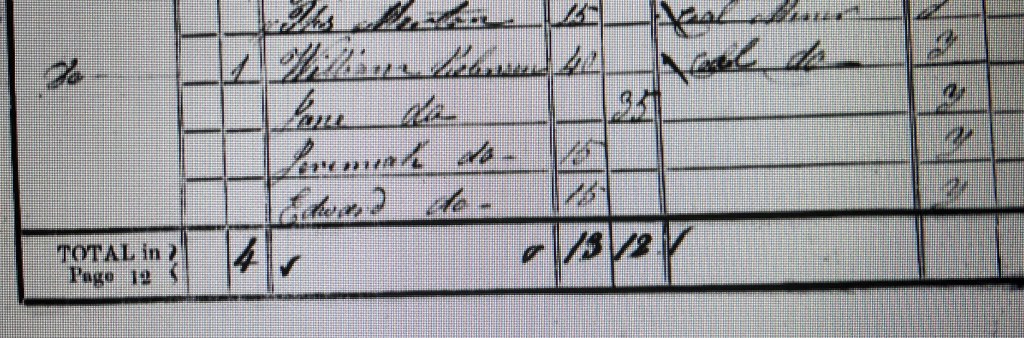
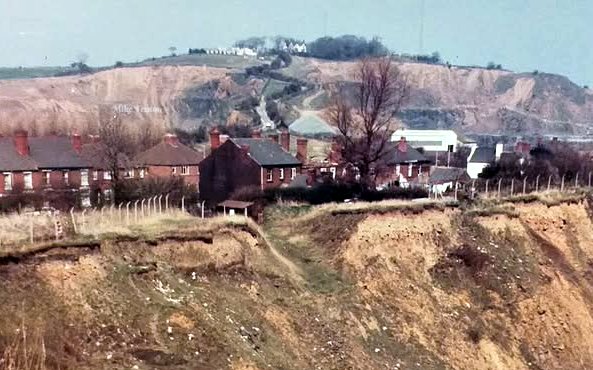


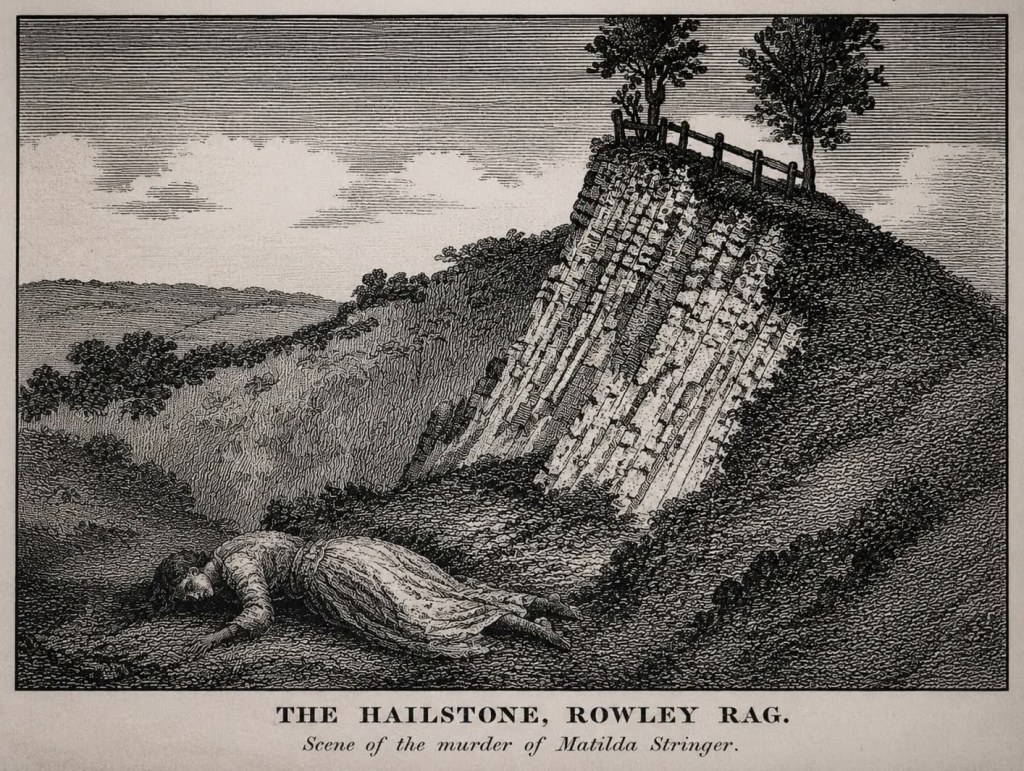
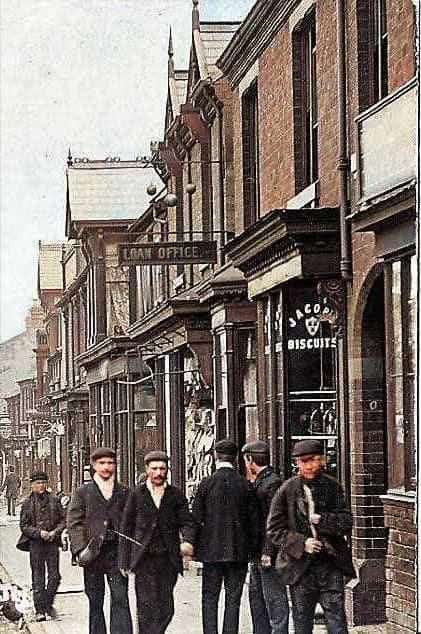
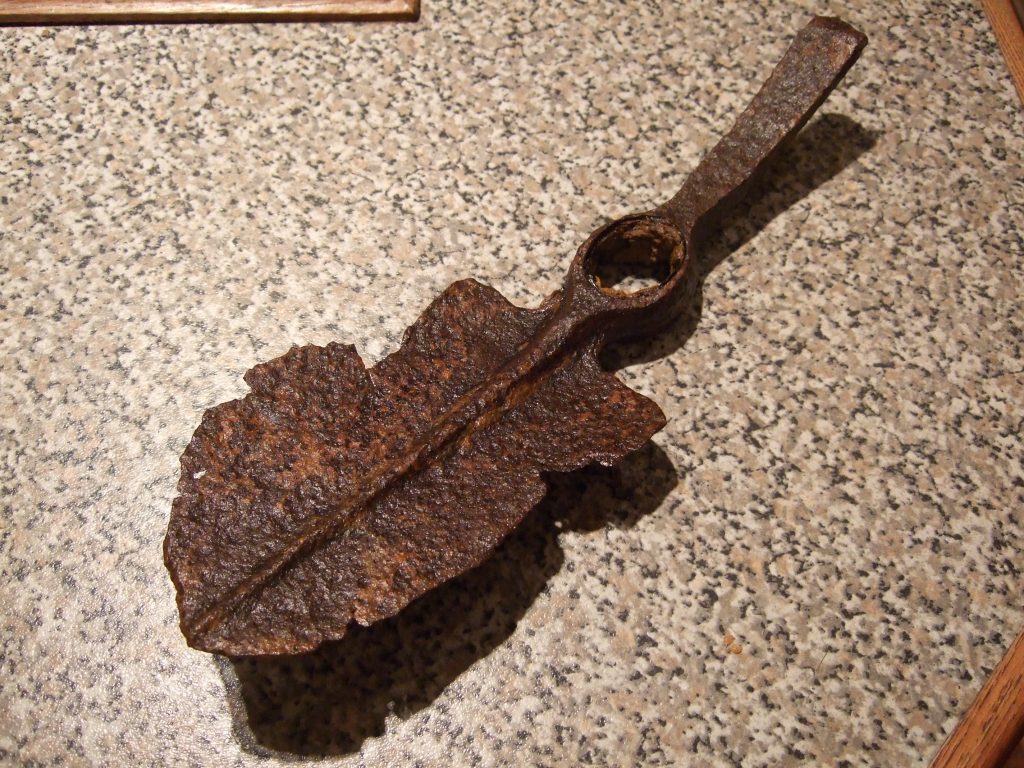
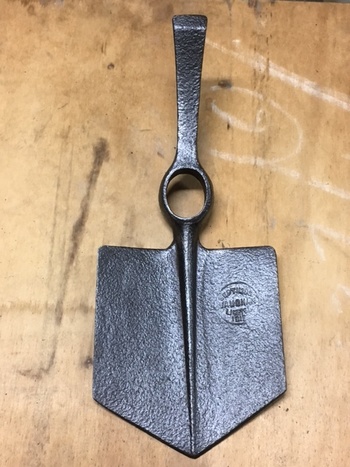
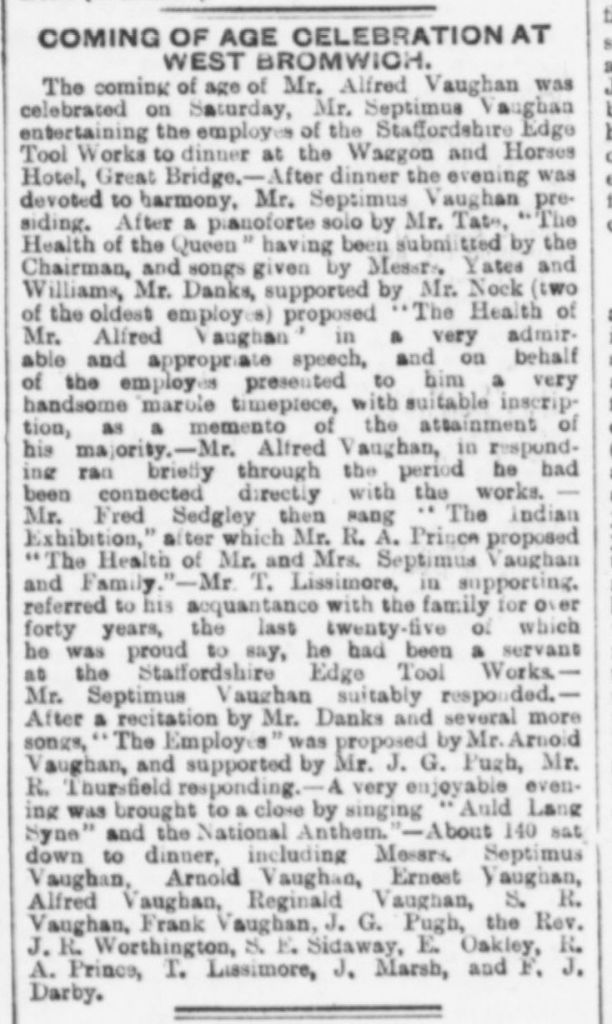
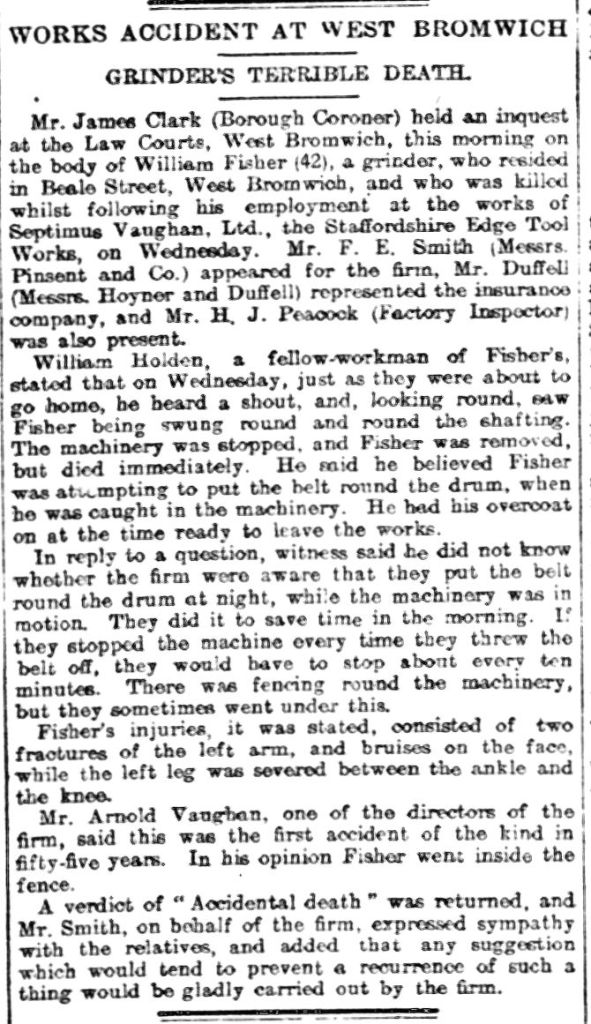
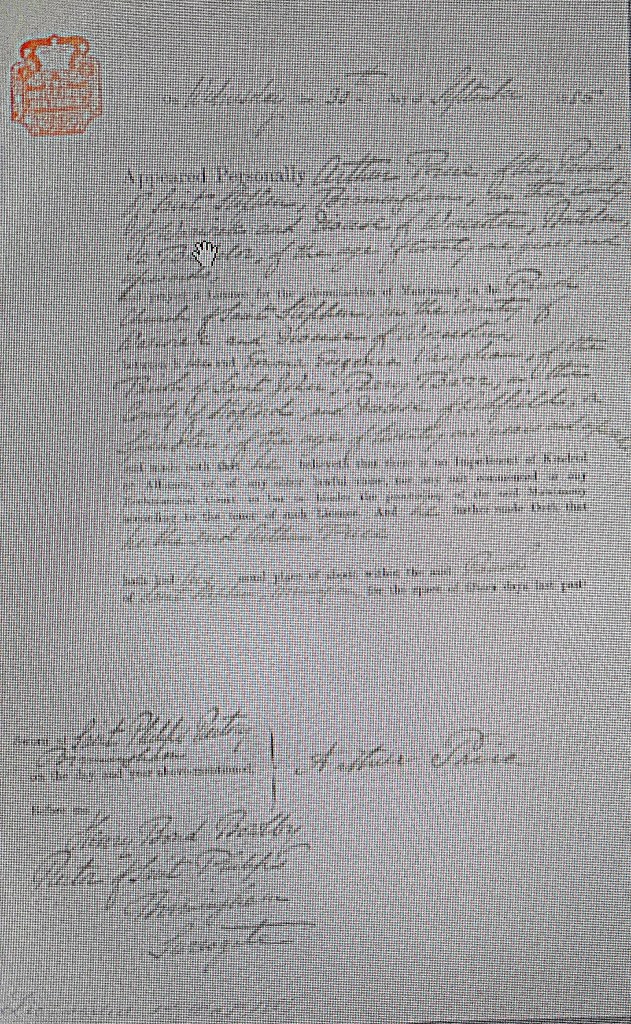
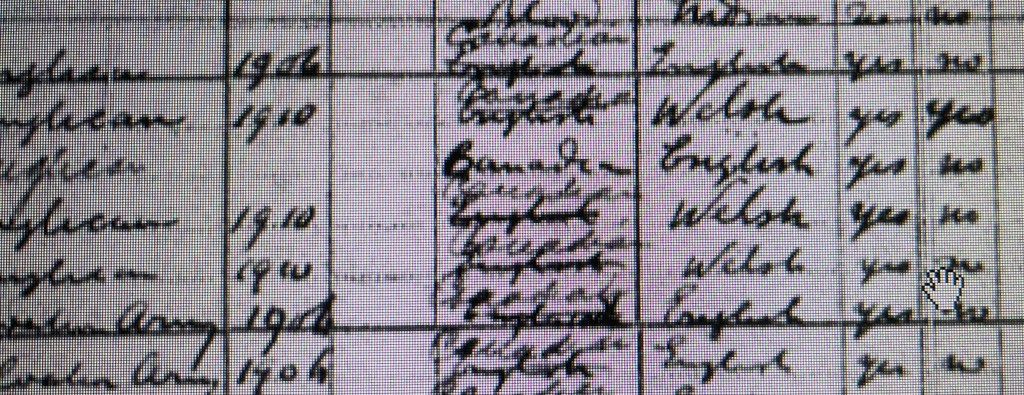
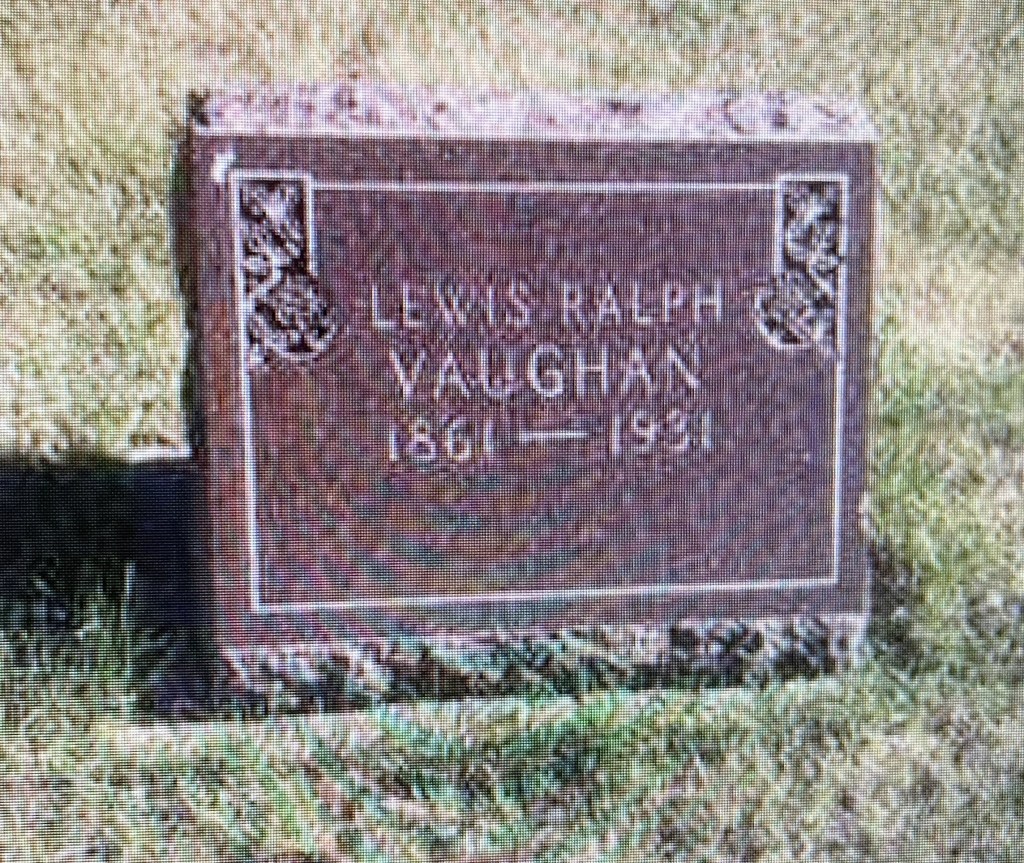
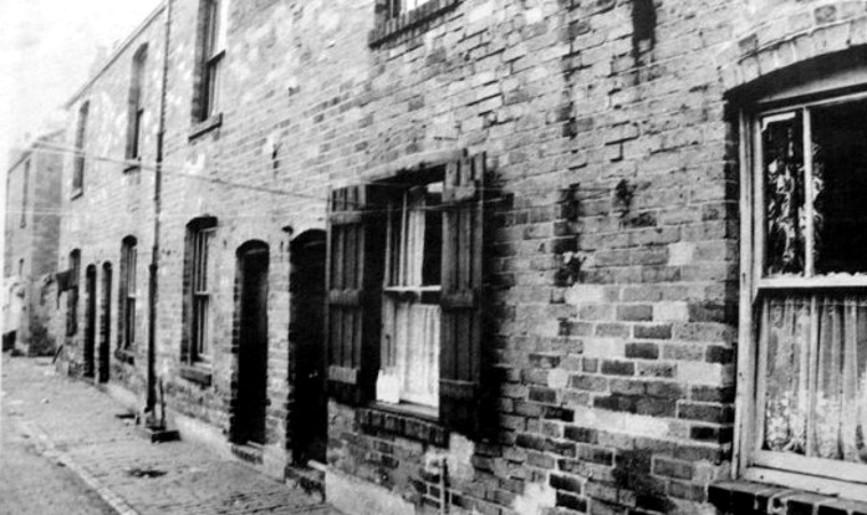
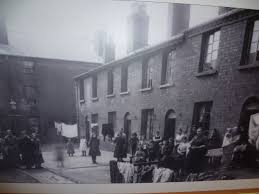
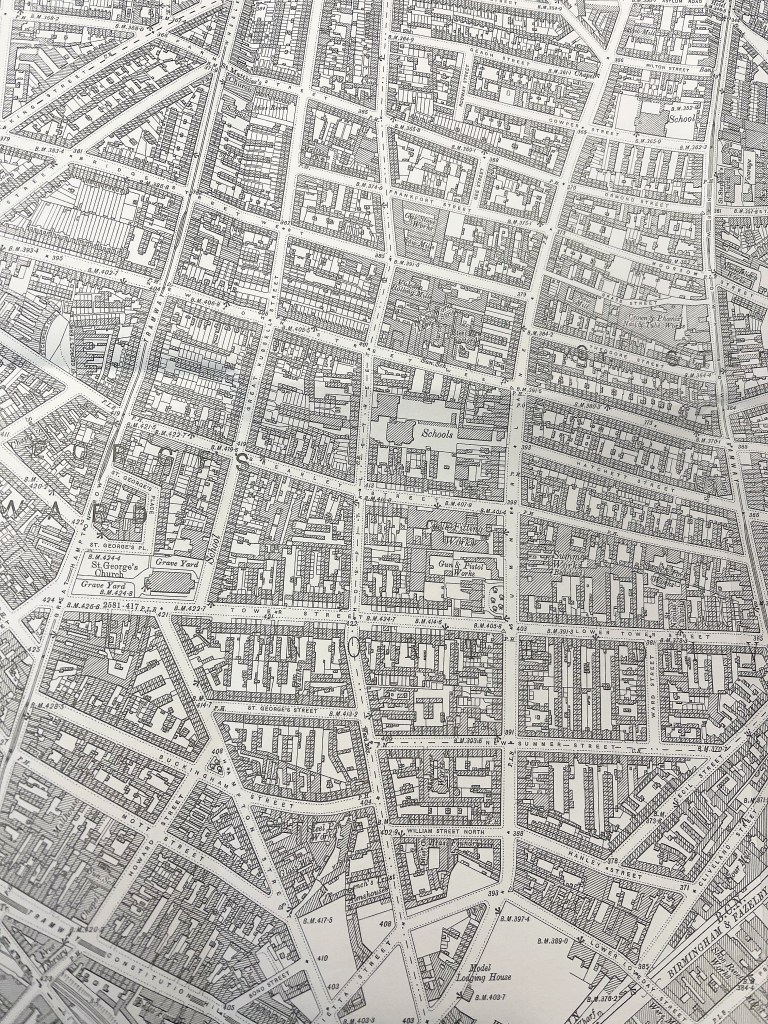
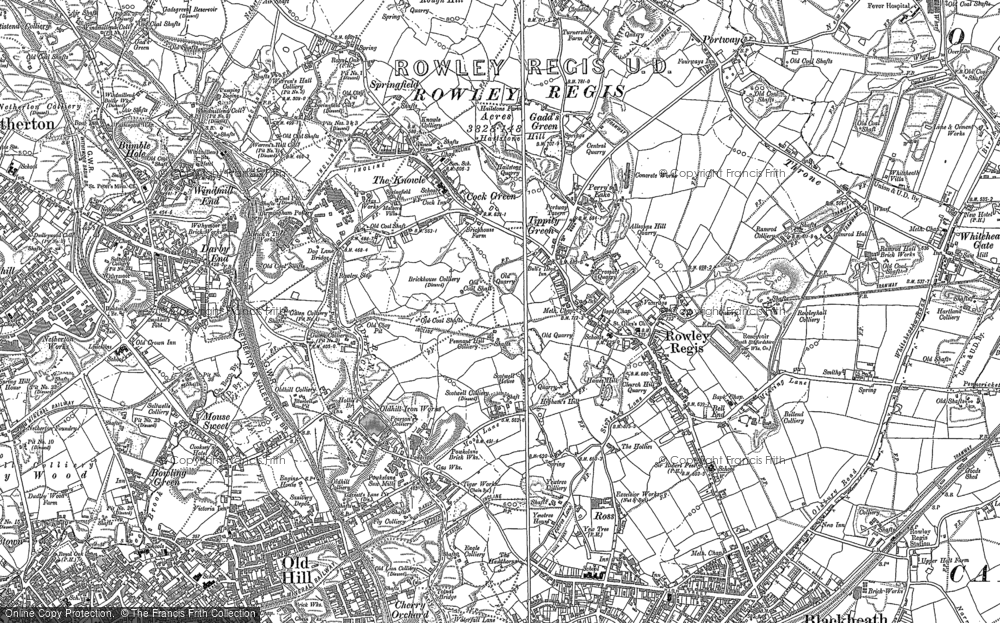
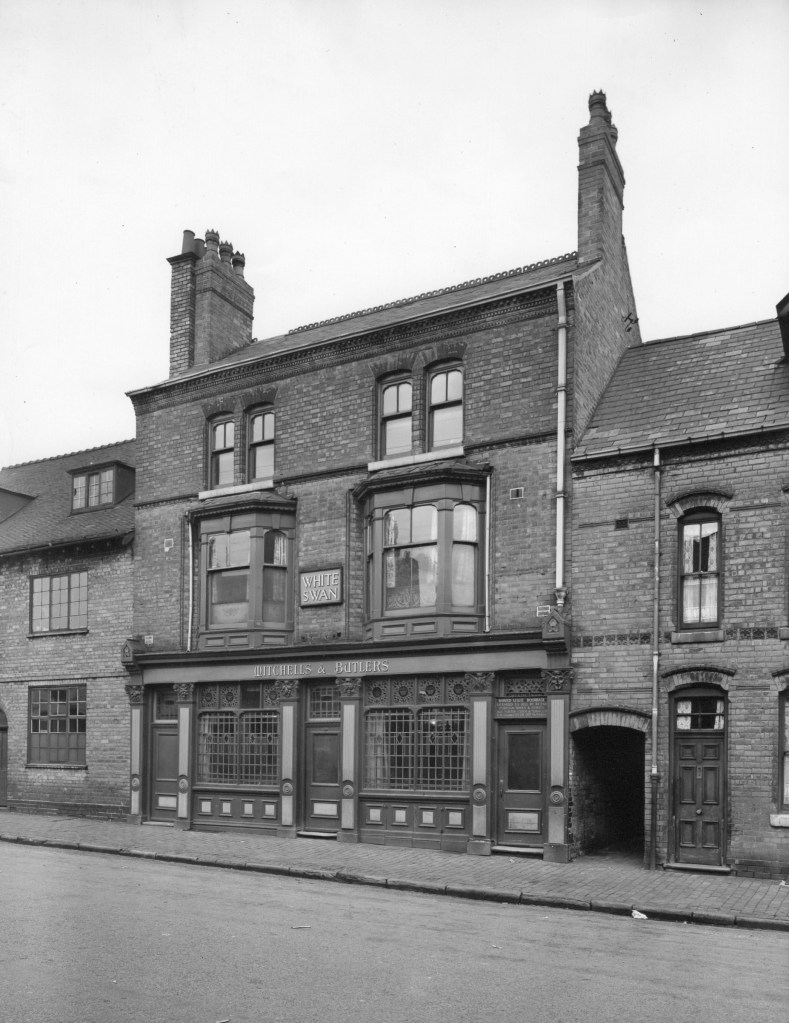
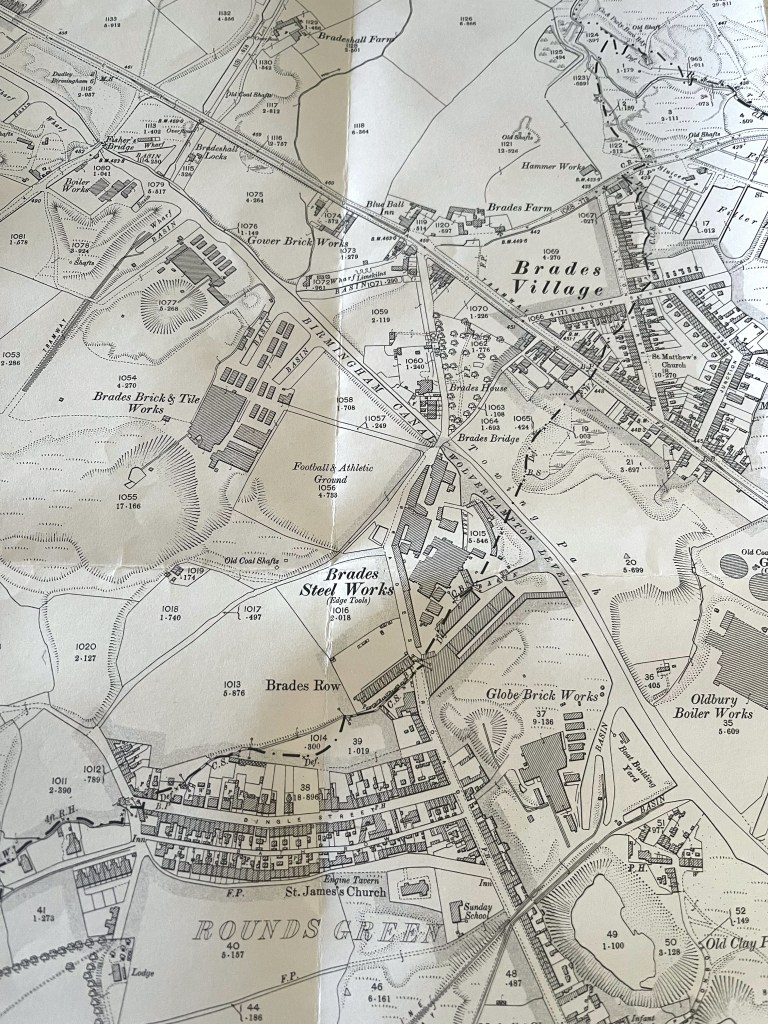
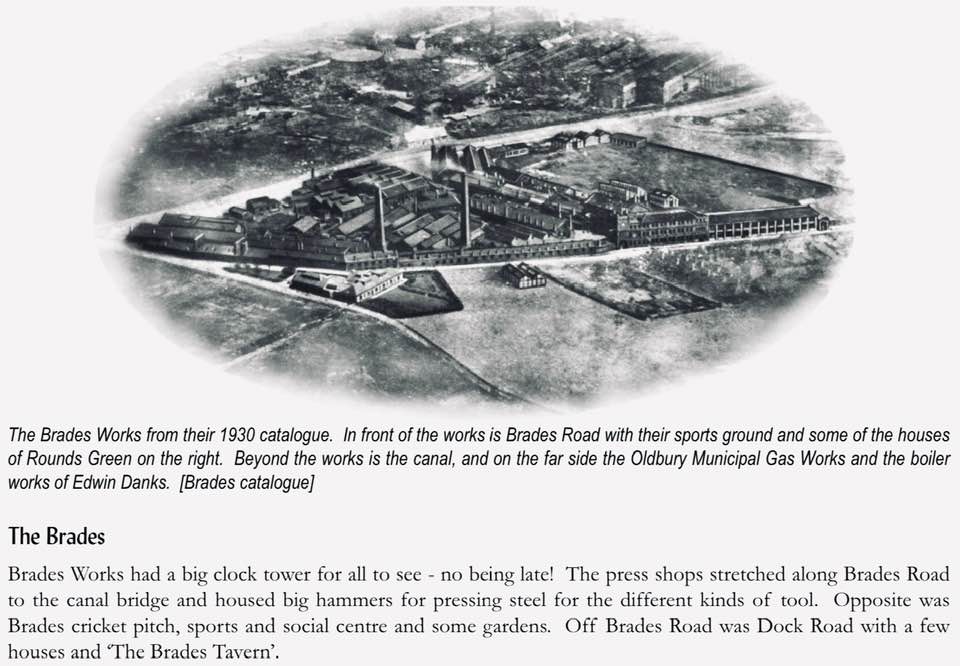
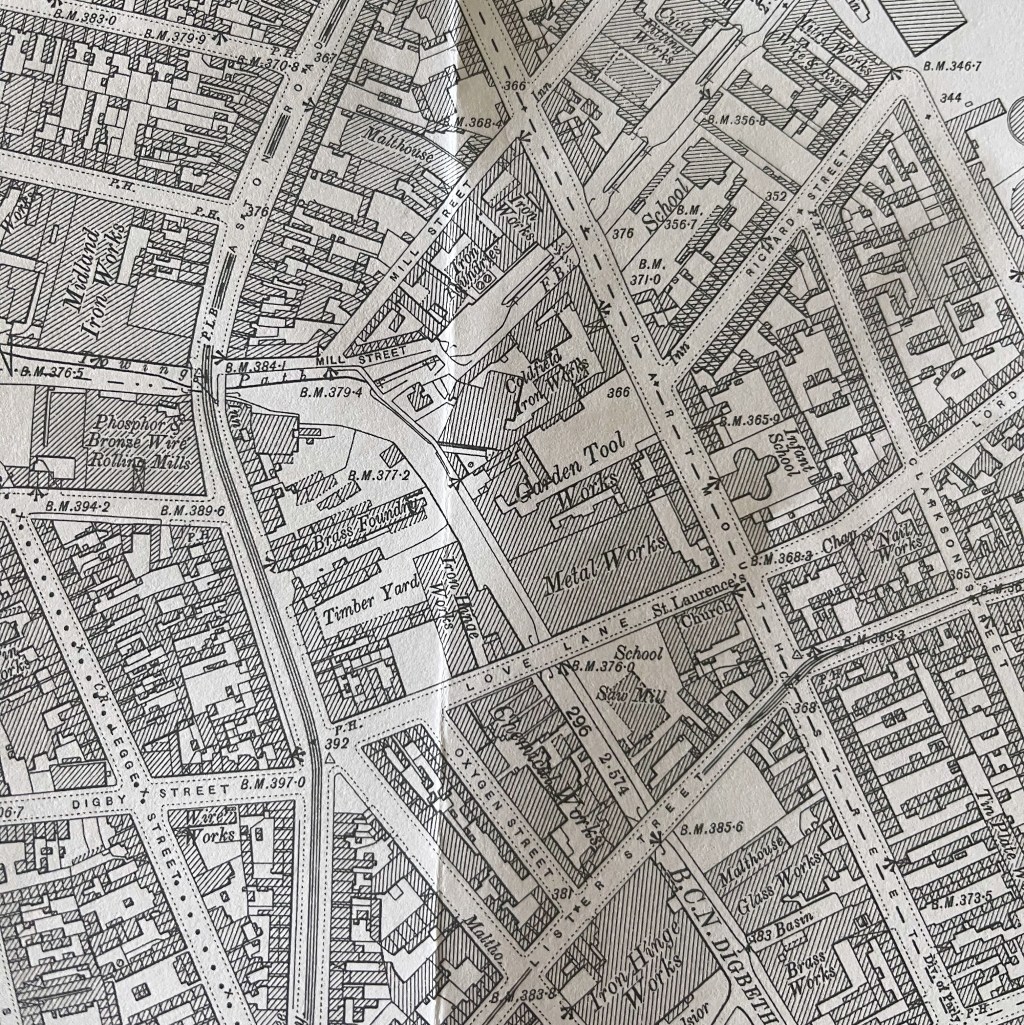
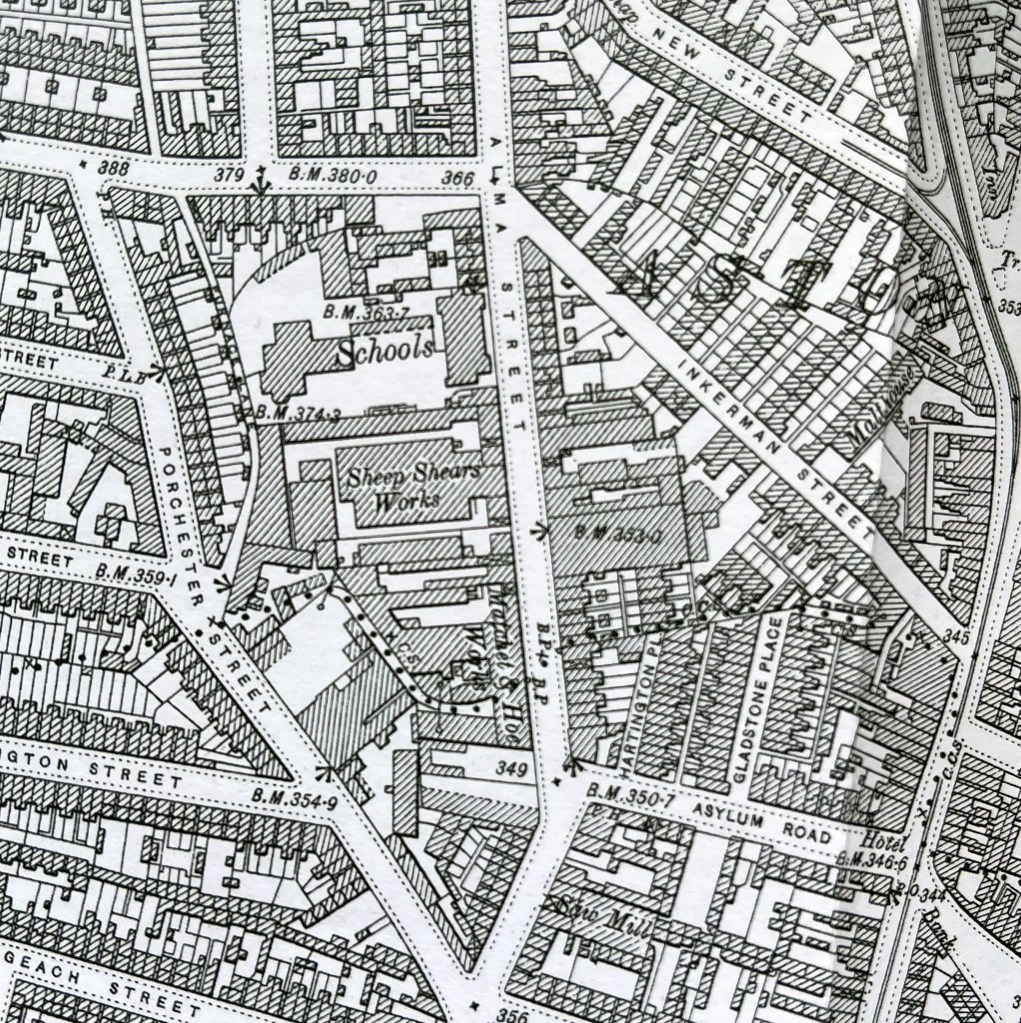
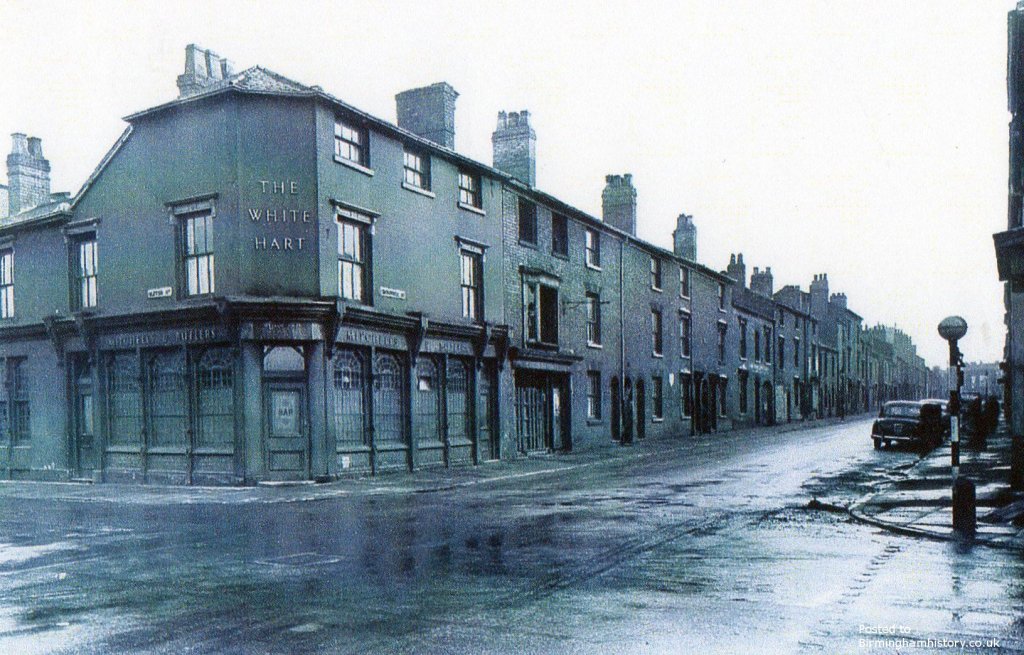
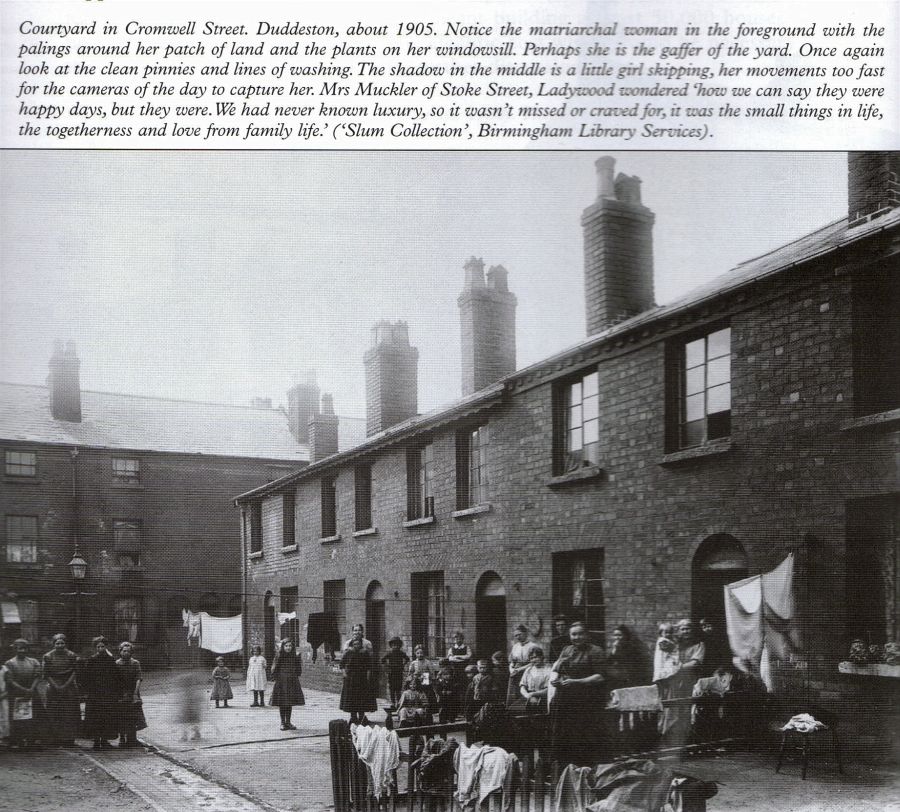
 rowleyregislosthamlets.co.uk